The Lucknow Super Giants and plenty of other IPL teams know this for sure — those Powerplay overs can set the tone for an entire match. In those first six overs, with just two fielders allowed outside the 30-yard circle, teams have turned what used to be a careful start into a wild, high-speed showdown. It’s not rare to see the game leaning one team’s way before the middle overs even roll around.
Understanding the Powerplay: Rules and Modern Significance
Don’t let the Powerplay rules fool you — they’re simple at first glance, but the tactics get complicated fast. During overs 1-6, only two fielders can stand outside the inner circle. That means every captain’s got to make bold decisions right from the start. Teams like the LSG IPL Lucknow franchise have gotten really good at this, realizing that picking the right field placements is just as important as how the bowlers deliver each ball.
Right now, the average Powerplay score in IPL 2026 floats around 55-60 runs. Still, the top teams typically clear the 70-run mark. What’s their secret? They don’t just react to the opposing batsmen — they set their fields aggressively to match their bowling plans from the first ball.
Modern Powerplay cricket really boils down to three things. First, bowlers mix up their lengths more often than old-school formats ever required. Then, batters look for those prime scoring zones made possible by the field restrictions. Also, captains have to think ahead, creating plans for rotating their fields based on all kinds of match situations. The Lucknow Super Giants coaching team? They’re known for using data to perfect these transitions.
Batting Approaches: Calculated Aggression vs. Wicket Preservation
Take a look at the way teams bat now compared to those early IPL days. Most aim for 10-12 runs per over in the Powerplay. A quick start up front means less pressure when the slog overs come later. The real trick is picking the right bowlers to go after, and knowing when to just collect singles.
Powerplay batting typically breaks down into three phases. In overs 1-2, openers focus on getting through the new ball and keep the scoreboard moving with singles. Overs 3-4? That’s the moment to push, hunting boundaries. Then, by overs 5-6, it’s all about taking smart risks — making the most out of those field restrictions before the spinners and change bowlers take control.
According to CricInfo, teams that hang onto at least nine wickets through the Powerplay end up winning 68% more matches than those that lose three or more wickets early. That stat shapes how most sides approach these overs today: working the gaps, picking the right balls to hit, and not just swinging for the fences every ball.
The Lucknow Super Giants really drive this point home. Their openers usually look for gaps, threading the ball through the field rather than trying to clear it every time. In their eyes, keeping the boundaries coming steady puts more pressure on the opposition than a couple of big sixes surrounded by a bunch of dot balls.
Bowling Tactics: Variations and Precision Under Pressure
Bowling during the Powerplay? That’s a serious test of skill now. With barely any fielders back, bowlers have to nail their lines and lengths and throw in the right changes of pace. There isn’t much room for mistakes — one bad ball can vanish over the ropes.
Top Powerplay bowlers usually stick to a three-part plan. First, they keep it tight around off-stump, making batters create their own scoring chances. Then, they mix up their pace with cutters, slower balls, even cross-seam deliveries, all without giving away what they’re about to do. Last but not least, they use the crease — changing angles to get the ball to behave in new ways.
Here’s the thing: teams like the Gujarat Titans IPL have taken Powerplay bowling to another level with a real focus on data. Their bowlers do their homework, studying which areas each batter likes to hit and then bowling accordingly. You can see the results in their Powerplay economy rates — they’re regularly among the best in the IPL.
Picking the right length matters a lot in Powerplay bowling. What might be a defensive option in Test matches can actually get wickets when batters are eager to lift the scoring rate. The secret? Stick to your lines, but don’t be predictable — just enough change to keep the batter thinking.
Optimal Field Settings: Defensive and Attacking Placements Explained
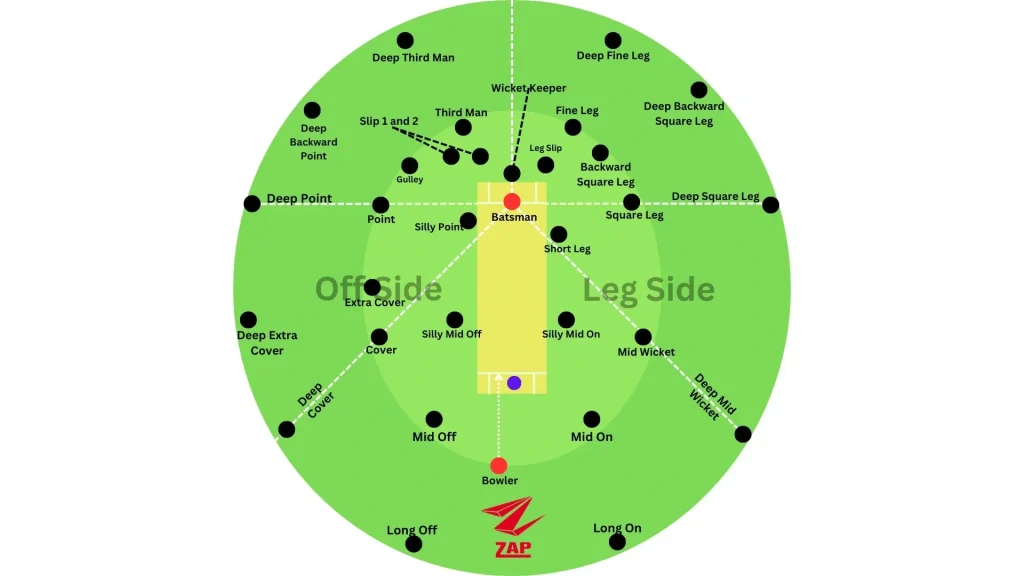
Setting the field for Powerplay overs really takes some finesse. With only two allowed outside the circle, every position on the field has to work double duty — cutting off runs and hunting for wickets. The best captains walk out there with a plan, adjusting their fields not just for the bowler, but also for whoever’s on strike.
Usually, you’ll see a Powerplay field with a slip, point, cover, mid-off, mid-on, square leg, fine leg, and two deep fielders. But teams have started getting creative based on their bowlers and the current match-up. Against big-hitting openers, a captain might keep a slip in place but drop the point fielder a bit deeper to plug the square drive.
| Field Position | Primary Purpose | When to Use |
|---|---|---|
| Slip + Gully | Catching chances | New ball, seaming conditions |
| Split Point | Cut off square drives | Against back-foot dominant batsmen |
| Deep Square Leg | Boundary protection | Against pull shot specialists |
| Third Man | Edge protection | Swing bowling, outside edges |
The Lucknow Super Giants stand out for how quickly they switch things up in the Powerplay. You’ll often see them shuffle their fielders from ball to ball, depending on who’s batting. That little bit of uncertainty gets in the batter’s head and can