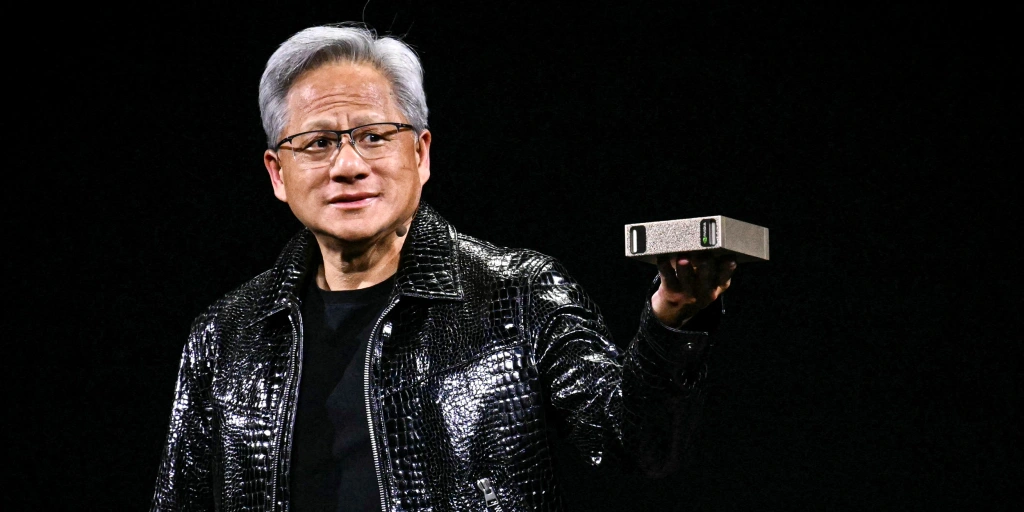
The world’s most valuable semiconductor company is waiting at China’s door. Nvidia CEO Jensen Huang joined President Donald Trump’s Beijing summit last week — and came away with cautious optimism, a cleared regulatory path, and zero confirmed shipments.
Speaking to Bloomberg Television on May 18, Huang said he expects Chinese authorities to eventually allow the import of AI chips from the US, stating: “The Chinese government has to decide how much of their local market do they want to protect. My sense is that over time the market will open.”
The confidence is real. So is the ceiling.
Table of Contents
What Has Actually Changed
During Trump’s China summit, Nvidia secured US approval to sell its H200 AI chips to 10 Chinese firms — including Alibaba, JD.com, ByteDance, and Lenovo — with each approved buyer permitted to purchase up to 75,000 units. The potential deals could open access to a Chinese AI market estimated at roughly $50 billion annually.
That is a significant policy shift from Washington’s side. The problem is that Washington is no longer the bottleneck.
The Commerce Department has already cleared around 10 Chinese companies, including Alibaba, Tencent, ByteDance, and JD.com, to purchase H200 chips. No deliveries have started. Commerce Secretary Howard Lutnick confirmed at a Senate hearing that the Chinese central government has not yet given its own companies the green light to buy.
The US side has opened the door. Beijing has not walked through it.
Why China Is Holding Back
The hesitation on Beijing’s side is strategic, not logistical. China’s domestic semiconductor industry — led by Huawei’s Ascend chips and state-backed manufacturers — is politically dependent on the AI chip market remaining closed to US suppliers. Every H200 that enters China is one less incentive for Chinese companies to rely on domestic alternatives.
Huang acknowledged this tension directly: “The Chinese government has to decide how much of their local market do they want to protect.” It is a choice between giving Chinese AI companies access to the world’s best hardware — and accelerating their capabilities — versus protecting an emerging domestic chip industry that is still years behind NVIDIA’s manufacturing process.
Huang was careful about what was discussed at the summit directly. “I didn’t discuss directly with them about H200,” he said. “President Trump had some conversations with the leaders.” He confirmed he is waiting to see what Beijing decides.
The $50 Billion Market Nvidia Cannot Touch — Yet
The Chinese AI market represents roughly $50 billion annually — and before export restrictions tightened, China accounted for 13% of Nvidia’s revenue, which translates to approximately $17.1 billion at current scale. Adding even a fraction of a reopened China opportunity could help extend Nvidia’s growth runway further into the decade.
This comes against a backdrop of global demand for advanced AI hardware that is already outpacing supply. Nvidia’s order books are full without China — but the Chinese market represents the single largest untapped revenue opportunity in the company’s addressable market.
Huang personally joined the US-China delegation at the last minute — which suggests Nvidia was not simply reacting to policy changes, but may be helping shape them. Nvidia’s ability to maintain dialogue with both Washington and Beijing simultaneously has become a competitive advantage in itself. Few semiconductor companies possess that level of geopolitical influence.
What This Means for India and the Global AI Supply Chain
For Indian cloud providers, AI startups, and enterprises competing globally, the Nvidia-China standoff has a direct consequence: as long as China remains locked out of H200 supply, global allocation stays tilted toward non-Chinese buyers.
Indian hyperscalers and AI infrastructure companies — including those building on AMD EPYC 8005 edge servers or running local inference on RTX 5060 Ti — benefit indirectly from a supply chain that is not competing with 75,000-unit Chinese mega-orders. If Beijing opens the door, that calculus shifts immediately.
Nvidia’s earnings call on Wednesday, May 21, is the next scheduled moment of clarity. Huang will almost certainly be asked about China guidance — and the answer will move markets.
The Bottom Line
Trump’s summit with Xi produced no immediate breakthrough for Nvidia. The H200 is legally cleared for sale in China by Washington, yet not a single unit has shipped. Until China decides that accessing the world’s leading AI chips matters more than protecting its own semiconductor industry, Nvidia is locked out of a $50 billion market it cannot touch.
Huang’s optimism is measured. The market will open — eventually. Whether that means Q3 2026 or 2028 is a question only Beijing can answer.
Stay tuned to TechnoSports for all Nvidia, AI chip, and semiconductor news.