
 NZ
 IND
 NAM
 IRE
 MOZ
 UGA
 Aston Villa
 Man City
 Rayo
 Elche
 GMB
 ZMB
 NGA
 LES
 Cagliari
 Bologna
 IPS1
 NFO1
 ALA1
 MCF1
 TOR3
 MON2
 BRE1
 NICE2
 TAS67/4 (15.4/50 ov, target 305)
 VIC304/7
 NZ-A133/1 (39.2 ov)
 IND-A113
 DHA
 RAJ
 MYMS
 CHATT
 RAN
 BAR
 SYL
 KHU
 UAE
 NED
 PAK
 ENG
 IND-W
 ZIM-W
 AFG170/3 (34.3/50 ov, target 170)
 ZIM169
 DOLPH56/0 (3.5/8 ov, target 56)
 SWD51/4 (8/8 ov)
 WSW1
 BRI1
 Como
 Sassuolo
 Augsburg
 Union Berlin
 Cologne
 Schalke
 Mainz
 Bremen
 RB Leipzig
 Elversberg
 VFB2
 BMG3
 AHL4
 KHA1

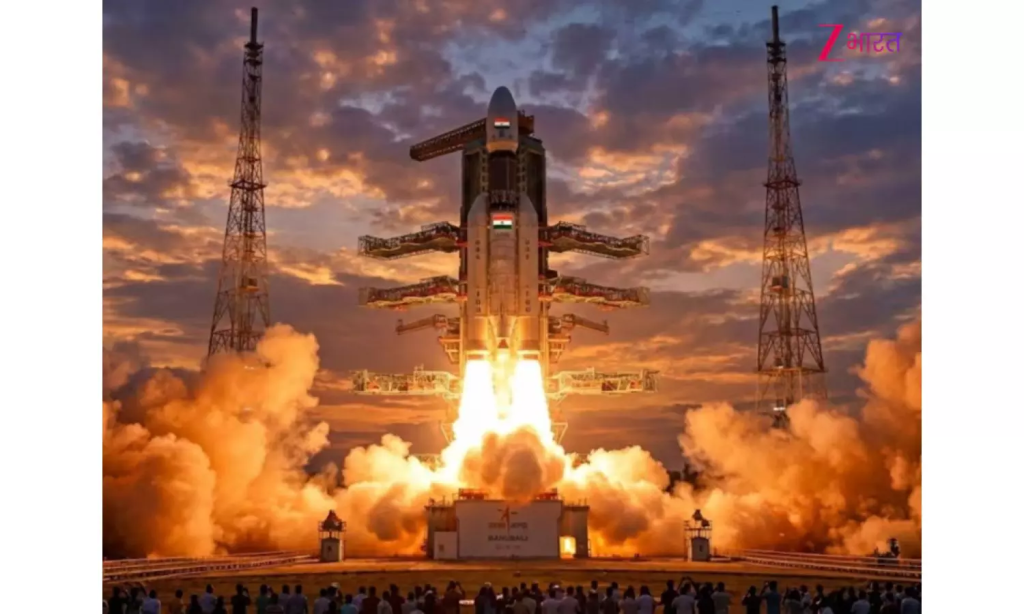
On May 28, 2026, the Indian Space Research Organisation (ISRO) launched a new quantum communication satellite. This mission signifies India’s entry into the exclusive group of nations capable of performing Quantum Key Distribution (QKD) from space.
Although ISRO hasn’t revealed the exact payload mass or the costs of this mission, the launch is a crucial step under the wider National Quantum Mission.
The real importance of this launch centers on QKD technology, which offers theoretically unhackable encrypted communications. By using quantum mechanics to send cryptographic keys, the system ensures that if anyone tries to intercept the data, it’s immediately detectable.
This capability plays a critical role in securing sensitive communications for government and defence against new threats, including future attacks from quantum computers.
Comparing Global Milestones and Technical Context
India is building on the groundwork laid by global peers over the past decade. A key example is China’s Micius satellite, launched on August 16, 2016, which was the first quantum communication satellite in the world.
The Micius mission successfully showcased QKD over a distance of 1,200 kilometers, proving that space-to-ground quantum links are feasible. India’s current mission seeks to refine these protocols for its own infrastructure, ensuring that the nation’s data sovereignty benefits from advanced technologies.
| Feature | Micius (China) | ISRO Quantum Satellite (India) |
|---|---|---|
| Launch Date | August 16, 2016 | May 28, 2026 |
| Primary Tech | QKD (Space-to-Ground) | QKD (Quantum Key Distribution) |
| Mission Goal | First-ever quantum link | Secure national infrastructure |
The Indian government officially approved the National Quantum Mission on April 19, 2023, setting aside a budget of ₹6,003.65 crore (~$730 million USD) for six years. This funding supports the research and development efforts that led to today’s successful launch, as reported by TechCrunch.
ISRO often uses the PSLV and GSLV launch vehicles for its missions, but the agency hasn’t confirmed which specific system was used for this high-security payload.
What’s Next for India’s Quantum Infrastructure
Getting this satellite into orbit is just the first step in a larger strategic rollout. With the hardware now in place, the upcoming tasks involve thorough ground-station testing to confirm the stability of the quantum channels, according to The Verge.
ISRO plans to start the calibration phase in the next few weeks, working with ground facilities that are part of the National Quantum Mission’s broader framework.
These improvements aren’t happening in isolation. The integration of quantum-secure links will eventually change how Indian startups and tech firms manage high-frequency data transfers.
By establishing this space-based system, India is laying down a foundation that could serve as a model for secure, long-distance communication throughout the Indian Ocean region. We’ll keep an eye on the mission’s progress as the first QKD test results from the ground terminals come in later this year.
FAQs
What is the primary purpose of the new ISRO satellite?
The satellite aims to test and implement Quantum Key Distribution (QKD) technology, offering a theoretically unhackable method for securing sensitive communications.
How does this compare to the Chinese Micius satellite?
The Micius satellite was the first to showcase space-to-ground QKD back in 2016. India’s mission builds on these established protocols to secure its national infrastructure.
What is the budget for India’s Quantum Mission?
The government allocated a budget of ₹6,003.65 crore (~$730 million USD) in April 2023 to support quantum research and infrastructure over the next six years.
What technology does the ISRO quantum communication satellite utilize to ensure data security?
The ISRO quantum communication satellite employs Quantum Key Distribution (QKD) technology to create secure, unhackable communication channels. By applying quantum mechanics, the satellite ensures that any interception attempts are immediately flagged, protecting India’s national infrastructure from cyber threats.
When did the Indian Space Research Organisation launch the quantum communication satellite?
ISRO successfully launched the next-generation quantum communication satellite on May 28, 2026. This mission marks a significant achievement for India, setting a solid foundation for a secure, quantum-encrypted national communication network.




