India has achieved a remarkable telecommunications milestone, crossing 400 million 5G subscribers just over three years after commercial launch, Union Communications Minister Jyotiraditya Scindia announced on January 16, 2026. This makes India the world’s second-largest 5G market after China, surpassing the United States, European Union, and Japan combined.
Table of Contents
India’s 5G Achievement: By the Numbers
| Metric | India’s Status |
|---|---|
| Total 5G Subscribers | 400+ million (40 crore) |
| Global Ranking | #2 (after China’s 1.21 billion) |
| Launch Timeline | October 2022 – January 2026 (39 months) |
| 5G Base Stations | 469,000 (4.69 lakh BTSs) |
| District Coverage | 99.6% of India’s districts |
| Population Coverage | 85% of Indian population |
| Data Consumption | 36 GB per smartphone/month (world-leading) |
Historic Announcement: Setting Global Benchmarks
Minister Jyotiraditya Scindia took to X (formerly Twitter) on Friday to share the momentous achievement: “With over 400M+ 5G users, India today stands as the world’s second-largest 5G subscriber base and among the fastest adopters globally.”
The minister emphasized that India is “setting new global benchmarks in scale, speed and digital transformation,” highlighting the unprecedented pace of 5G adoption since its commercial launch in October 2022 by Prime Minister Narendra Modi at the India Mobile Congress.
According to official Ministry of Communications data, India exceeded the projected 394 million subscribers by end-2025, demonstrating adoption rates faster than industry forecasts.
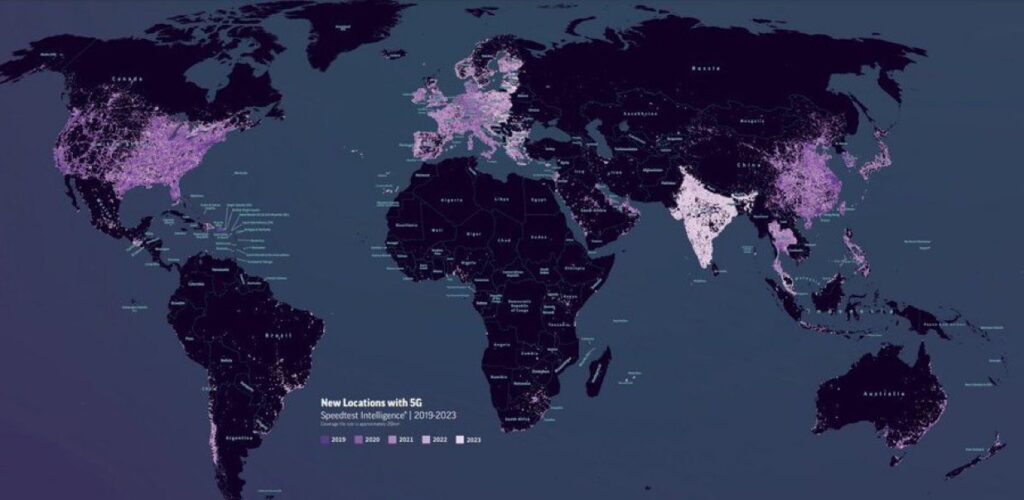
India vs. The World: Comparative Analysis
India’s 400 million 5G subscriber base positions it ahead of several major economies:
Global 5G Subscriber Rankings:
- China: 1.213 billion subscribers (clear leader)
- India: 400+ million subscribers
- United States: ~350 million subscribers
- European Union: ~250 million subscribers (combined)
- Japan: ~190 million subscribers
In just 39 months since launch, India has outpaced markets that started their 5G rollout years earlier, validating the country’s digital infrastructure investments and consumer appetite for next-generation connectivity.
Infrastructure Backbone: 469,000 Base Stations
The rapid subscriber growth is supported by aggressive infrastructure deployment. As of March 2025, Telecom Service Providers (TSPs) have installed 469,000 (4.69 lakh) 5G Base Transceiver Stations across India—one of the fastest network rollouts globally.
Infrastructure Highlights:
- Reliance Jio: Leading deployment with 200,000+ 5G sites
- Bharti Airtel: 200,000+ 5G sites across India
- Vodafone Idea: Selective metro and key city rollout
- BSNL: Preparing indigenous 4G/5G stack deployment
Coverage Achievement: ✅ 99.6% district coverage (653 of 656 districts) ✅ 85% population coverage ✅ All major metros fully 5G enabled ✅ Tier-2 and Tier-3 cities rapidly expanding ✅ Rural telephony growth of 42.9% year-over-year
What’s Driving Unprecedented Adoption?
Several factors explain India’s rapid 5G uptake:
1. Affordable Data Plans: Jio and Airtel offer 5G at 4G prices, with unlimited 5G data in many plans. Average data costs in India remain among the world’s lowest at ₹10-15 per GB.
2. Compatible Device Ecosystem: Over 500 5G-capable smartphone models available, with entry-level 5G phones starting at ₹8,000-10,000, making technology accessible to mass market.
3. World-Leading Data Consumption: Indians consume an average of 36 GB per smartphone monthly—the highest globally—creating strong demand for faster speeds and lower latency.
4. Network Quality: Both Jio and Airtel offer standalone 5G (SA) architecture, providing true 5G experience rather than non-standalone (NSA) networks deployed in many markets.
5. Zero Premium Pricing: Unlike markets where 5G commands premium pricing, Indian operators bundle 5G access free with existing 4G plans, eliminating cost barriers.
Economic Impact: Digital Transformation Catalyst
The 400 million 5G subscriber milestone has far-reaching economic implications:
Direct Economic Benefits:
- Telecom Infrastructure: ₹2 lakh crore+ invested by operators
- Employment: 100,000+ direct jobs in network deployment
- Tower Industry: ₹50,000+ crore investment in tower infrastructure
- Device Manufacturing: Boosting India’s PLI scheme for mobile manufacturing
Enabler for Emerging Technologies:
- AI/ML Applications: Low-latency 5G enables real-time AI inferencing
- IoT Deployment: Smart cities, industrial IoT, connected vehicles
- Cloud Gaming: Mobile gaming revolution with cloud streaming
- Telemedicine: Remote surgeries and diagnostics
- AR/VR Applications: Immersive education and entertainment
Indigenous 4G/5G Stack: Atmanirbhar Bharat Success
Beyond subscriber numbers, India’s telecom story includes a strategic win—the development of indigenous 4G/5G technology stack in just two years.
Key Achievements:
- C-DOT: Development of 4G/5G core and RAN
- TCS: Indigenous telecom software solutions
- Tech Mahindra: 5G Open RAN deployments
- BSNL Rollout: Testing Made-in-India 4G/5G stack
This reduces dependency on foreign equipment suppliers (Ericsson, Nokia, Huawei, Samsung) and represents a massive strategic advantage for national security and technology sovereignty.
Rural Revolution: The Silent Success Story
While metros grab headlines, rural telephony growth of 42.9% represents a quiet revolution:
Rural 5G Impact:
- Agricultural Tech: Precision farming, weather forecasting, crop monitoring
- Education: Online learning reaching remote villages
- Healthcare: Telemedicine bridging urban-rural healthcare gap
- E-commerce: Direct farmer-to-consumer platforms
- Financial Inclusion: Digital payments reaching unbanked populations
Travelers report significantly improved video call quality when connecting with family in villages—a practical benefit transforming millions of lives.
The Road to 1 Billion 5G Users by 2030
Industry analysts project India could reach 1 billion 5G subscribers by 2030, driven by:
Growth Catalysts:
- Device Affordability: 5G phones expected under ₹5,000 by 2027
- Network Densification: Targeting 1 million 5G towers by 2028
- 4G Migration: 750+ million 4G users upgrading to 5G devices
- Rural Penetration: Expanding beyond current 85% coverage
- Use Case Proliferation: Killer applications driving 5G necessity
Projected Timeline:
- 2026: 550-600 million 5G subscribers
- 2027: 700-750 million 5G subscribers
- 2028: 850-900 million 5G subscribers
- 2029-2030: 1 billion+ 5G subscribers
Challenges Despite Success
Despite the impressive numbers, challenges remain:
Service Quality Concerns:
- Battery drain issues reported by users
- Patchy coverage in some areas
- Indoor penetration challenges with 3.5 GHz spectrum
- Network congestion during peak hours in metros
Strategic Imperatives:
- Content Creation: Need more Indian apps leveraging 5G infrastructure
- Value Addition: Beyond consumption, creating local solutions
- Monetization: Operators need revenue growth beyond subscriber additions
- Spectrum: Additional mid-band spectrum needed for capacity
Global Implications: India as 5G Testbed
India’s 5G success has global ramifications:
For Equipment Vendors: India’s massive scale makes it the ultimate testing ground for 5G technology at population scale, influencing global standards and deployment strategies.
For App Developers: 400 million 5G users represent a massive developer ecosystem opportunity, with potential to create India-specific applications scalable globally.
For Policy Makers: India’s model of affordable 5G without premium pricing challenges Western monetization strategies and offers blueprint for developing nations.
What’s Next: 6G on the Horizon
Even as 5G adoption accelerates, India is already preparing for 6G:
6G Roadmap:
- Bharat 6G Vision Document: Released outlining R&D priorities
- Target Launch: 2029-2030 commercial rollout
- Indigenous Development: Focus on Made-in-India 6G stack
- Global Standards: Active participation in ITU 6G standardization
The Department of Telecommunications (DoT) aims to leverage the 5G infrastructure investments as foundation for seamless 6G transition.
Bottom Line: India’s Digital Decade Accelerates
India’s achievement of 400 million 5G subscribers in just 39 months represents more than a numerical milestone—it’s validation of the country’s digital infrastructure strategy, operator investment commitment, and consumer readiness for next-generation technology.
As Minister Scindia emphasized, India is setting global benchmarks in scale, speed, and digital transformation. With 85% population coverage and 99.6% district availability, 5G is rapidly becoming ubiquitous rather than premium, democratizing access to high-speed connectivity.
For consumers, this means faster downloads, smoother streaming, better video calls, and emerging applications in gaming, AR/VR, and IoT. For the economy, it means enabling smart cities, industrial automation, precision agriculture, and AI-powered services that will define India’s growth trajectory through 2030.
The 400 million milestone isn’t the destination—it’s just the beginning of India’s 5G journey toward universal connectivity and digital empowerment.
For more technology news, digital infrastructure updates, and telecom industry analysis, stay connected with Technosports.co.in—your source for India’s tech revolution.
Related Reading: