SA329 & 387 (134.4 ov)
 AUS429
 BAN272 & 79/6 (29 ov)
 WI245
 ELV3
 M050
 VIL0
 ESP0
 LILL0
 RCL0
 SHU0
 WXM0
 CPAC0
 SCP0
 UAE
 NED
 PAK
 SL
 Chennaiyin
 Kerala
 Chelsea
 Man Utd
 Levante
 Atlético
 Al Taawoun
 Al Ettifaq
 Bologna
 Monza
 Mohun Bagan
 Punjab FC
 HAC1
 PSG5
 NICE5
 REN2
 SHA6
 AHL1
 DIR1
 NEOM2
 SOA154 & 182/1 (48 ov, target 422)
 WA406/5d & 169
 TAS335/5 (96 ov)
 NSW
 NZ
 IND
 NAM
 IRE
 AS-W
 MS-W
 PS-W
 MR-W
 ST-W
 BH-W
 SS-W
 HH-W
 AFG221/7
 ZIM202/5 (20 ov, target 222)
 BRB186/9 (20 ov, target 200)
 VAG199/6
 ENG121/0 (6 ov, target 160)
 GRA0
 HAR4
 GRE0
 DIJO2
 METZ0
 PAU1
 NAN1
 CLE0
 AVE1
 DUN0
 SLFC1
 BOU0
 VOL1
 GRA0
 Leverkusen
 Stuttgart
 Gladbach
 Paderborn
 NEU1
 BFC1
 ABH1
 ITT1

When Liam Rosenior penned a column for The Guardian in 2018, he articulated a coaching philosophy that would define his managerial career: combining “the beautiful with the practical.” Praising not just Pep Guardiola and Jurgen Klopp but also their tactical opposite Jose Mourinho, Rosenior revealed his appreciation for tactical flexibility over dogmatic adherence to a single style. Now, as Chelsea’s new head coach, that philosophy will be put to its ultimate test at Stamford Bridge.
The Beautiful and the Practical: Rosenior’s Core Philosophy
Rosenior’s tenure at Strasbourg perfectly embodied his stated philosophy. His teams blended possession football with purposeful transition-focused attacks, guiding Strasbourg into the UEFA Conference League through tactical adaptability rather than rigid systems. Strasbourg were neither counter-attacking specialists nor possession-dominant controllers—they occupied the middle ground, excelling through flexibility.

Opta’s team style graphic for Ligue 1 positioned Strasbourg precisely in the center, demonstrating how Rosenior balanced competing tactical approaches. They pressed hard without manic final-third hunting. They held possession for extended periods without dominating in the opponent’s half. They moved quickly through thirds without being classified as a pure counter-attacking side.
This tactical pragmatism represents exactly what Chelsea need following Enzo Maresca’s departure. The Blues possess a young, talented squad capable of adapting to various styles, and Rosenior’s flexibility should maximize their potential.
Possession with Purpose: The Emery Comparison
Rosenior’s Strasbourg favored short passing sequences, using possession to create entertainment rather than suffocate opponents. His approach closely resembles Unai Emery’s Aston Villa, where possession serves a specific purpose: manipulating space to arrive in the final third at speed, mimicking counter-attacks despite building from the back.
Strasbourg’s Possession Statistics in Ligue 1
| Metric | Strasbourg’s Ranking | Details |
|---|---|---|
| Long balls attempted | Lowest in Ligue 1 | 504 total |
| Switches of play | Lowest in Ligue 1 | 12 total |
| Long pass percentage | 3rd lowest in Europe’s top five leagues | 6% (only PSG and Barcelona lower) |
| Total passes completed | 3rd in Ligue 1 | 8,257 (behind only Marseille and PSG) |
| Average possession | 7th in Ligue 1 | 52.9% |
| Through-balls | 1st in Ligue 1 | 56 total |
| Take-ons attempted | 2nd in Ligue 1 | 321 total |
| Take-ons completed | 2nd in Ligue 1 | 143 total |
The statistics reveal a fascinating paradox. Strasbourg completed extensive passing sequences in their own half but averaged only 52.9 percent possession—seventh-most in Ligue 1. This suggests Rosenior’s teams deliberately recycle possession at the back, manipulating opposition positioning before suddenly accelerating forward with incisive passes.
Strasbourg topped Ligue 1 for through-balls and ranked second for dribbles, demonstrating their commitment to vertical progression. However, they recorded the second-fewest fast breaks in the division—only nine all season. In contrast, Chelsea have recorded the second-most fast breaks in the Premier League with 30, indicating their squad possesses abundant pace and counter-attacking instincts.
This bodes well for Rosenior’s appointment. Chelsea players already demonstrate the raw speed and transitional quality required for his system. The adjustment involves controlling possession more deliberately before exploiting spaces, rather than constantly seeking immediate vertical passes. For talented players like Cole Palmer, Pedro Neto, and Estevao Willian, this tactical evolution should feel natural.
Defensive Organization: The Flexible Midblock
Rosenior’s out-of-possession approach balances aggressive ball-winning with pragmatic positioning. Strasbourg weren’t manic pressers but recovered possession effectively through intelligent counter-pressing immediately after losing the ball and maintaining a compact 4-4-2 midblock.
Five Ligue 1 teams recorded more high turnovers than Strasbourg’s 143, but only PSG scored more goals from these turnovers than Rosenior’s side. This efficiency reflects tactical intelligence—pressing at the right moments rather than constantly chasing the ball.
Strasbourg conceded the fourth-lowest Expected Goals in Ligue 1 this season (21.43 xG), demonstrating defensive solidity despite modest resources. Their passes per defensive action (PPDA) of 11.8 positioned them ninth in the league—almost exactly middle-of-the-road for pressing intensity.
Defensive Comparison: Rosenior’s Strasbourg vs Maresca’s Chelsea
| Team | PPDA | Pressing Style |
|---|---|---|
| Chelsea (Maresca) | 10.0 (lowest in Premier League) | Most intense pressing in the league |
| Strasbourg (Rosenior) | 11.8 (9th in Ligue 1) | Balanced midblock with selective pressing |
Chelsea under Maresca employed the Premier League’s most intense pressing. Rosenior’s historically lower pressing intensity at Strasbourg might suggest less aggressive defensive approaches at Stamford Bridge. However, context matters significantly. Managing a midtable club demands different tactical choices than coaching a title-challenging side with superior resources.
Rosenior’s pragmatism means he’ll likely adapt his pressing intensity upward at Chelsea. His Strasbourg and Hull City teams couldn’t realistically dominate possession or press aggressively given their squad quality. With world-class players at his disposal, expect more ambitious defensive strategies that maintain his core principles while matching Chelsea’s competitive ambitions.
The Goalkeeper Revolution: High-Risk, High-Reward
Rosenior’s most distinctive tactical innovation involves goalkeeper positioning. Mike Penders at Strasbourg averaged 39.4 touches outside his penalty area per 90 minutes—more than any other Ligue 1 goalkeeper with at least 900 minutes played. Rosenior essentially deploys his goalkeeper as an auxiliary outfield player during possession phases.
This extreme positioning creates numerical advantages in build-up play, providing an extra passing option and facilitating progression through defensive lines. It also deliberately baits opposition presses, creating space for Strasbourg’s press-resistant center-backs to exploit with vertical passes.
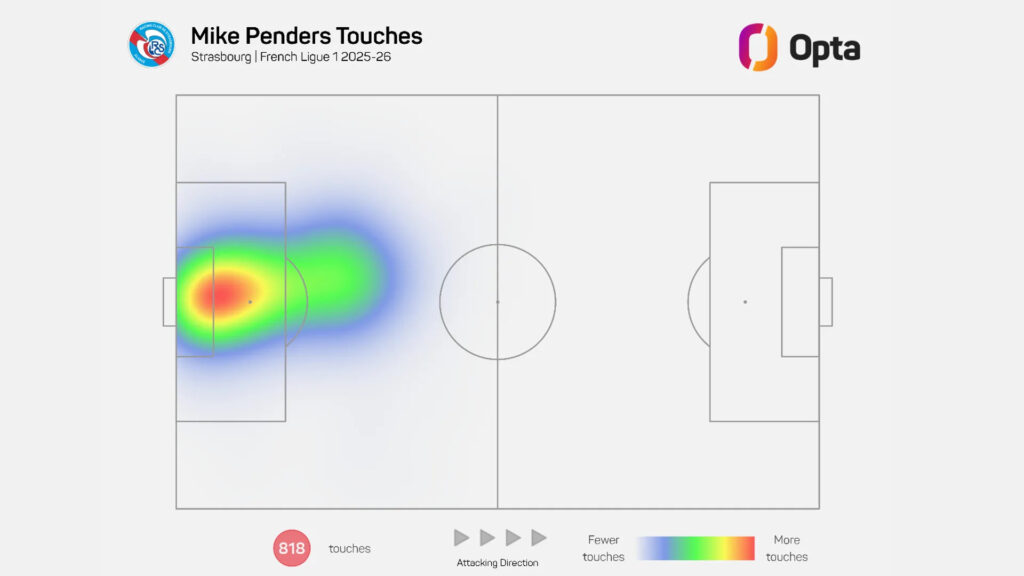
The strategy carries inherent risks. Strasbourg topped Ligue 1 for errors leading to shots with 17, directly resulting from their high defensive line and aggressive goalkeeper positioning. For Chelsea, a young team already prone to mistakes, this approach could prove problematic initially.
However, Robert Sanchez was specifically recruited for his distribution skills, and Chelsea’s transfer strategy consistently prioritizes ball-playing center-backs. Wesley Fofana, Trevoh Chalobah, and Levi Colwill (once fit) excel at progressive passing under pressure. If Rosenior establishes a consistent defensive partnership—something Maresca struggled to achieve—Chelsea should manage the risks associated with inviting pressure.
Chelsea’s Error Record Under Maresca
| Team | Errors Leading to Shots/Goals Since Maresca’s Appointment |
|---|---|
| Tottenham, Aston Villa | 65 |
| Chelsea | 61 |
| Manchester City | 53 |
| Southampton | 51 |
| Newcastle | 49 |
Chelsea ranked third for errors under Maresca, reflecting ongoing concerns about defensive consistency from a youthful squad. Rosenior inherits this challenge and must balance his aggressive tactical approach with the reality of Chelsea’s defensive vulnerabilities.
Formation and Predicted Starting XI
Despite favoring a 3-4-3 at Strasbourg, Rosenior will likely adopt the 4-2-3-1 formation he utilized at Hull City and that Maresca established at Chelsea. Pragmatic assessment of available personnel dictates this choice, maintaining continuity while implementing subtle tactical adjustments.
Predicted Chelsea Starting XI Under Rosenior (4-2-3-1)
| Position | Player | Rationale |
|---|---|---|
| Goalkeeper | Robert Sanchez | Excellent distribution suits high positioning |
| Right-back | Reece James | Will invert or overlap based on opposition |
| Center-backs | Wesley Fofana, Levi Colwill | Progressive passing under pressure |
| Left-back | Marc Cucurella | Tactical flexibility to invert or advance |
| Defensive midfield | Enzo Fernandez, Moises Caicedo | Perfect blend of possession recycling and ball-winning |
| Right wing | Estevao Willian | Rosenior invests heavily in youth development |
| Attacking midfield | Cole Palmer | Natural No. 10 with creative freedom |
| Left wing | Pedro Neto | Pace and dribbling for vertical transitions |
| Striker | Liam Delap | Sharp, piercing attacker suits vertical style |
Moises Caicedo and Enzo Fernandez form the ideal midfield partnership for Rosenior’s system. Caicedo provides all-action defending and ball-winning, while Fernandez recycles possession and bursts forward with progressive dribbles. Both players offer the dynamism required for controlled possession that can suddenly explode into vertical attacks.
Cole Palmer remains the obvious choice as No. 10, operating with creative freedom in the half-spaces. Estevao Willian should start on the right wing, reflecting Rosenior’s commitment to youth development—a core principle from his Strasbourg tenure where he fielded historically young lineups.
Pedro Neto likely occupies the left wing ahead of Alejandro Garnacho, whose tendency to track back slowly conflicts with Rosenior’s balanced defensive approach. Neto’s work rate and dribbling ability better suit the system’s requirements.
Liam Delap emerges as the preferred striker over Joao Pedro due to his sharper movement and more direct attacking style. From summer 2026, he’ll compete with Emmanuel Emegha, Strasbourg’s captain who flourished under Rosenior and has agreed to join Chelsea.
Andrey Santos impressed during his Strasbourg loan under Rosenior but will struggle for minutes ahead of Caicedo and Fernandez. His familiarity with the system provides valuable squad depth.
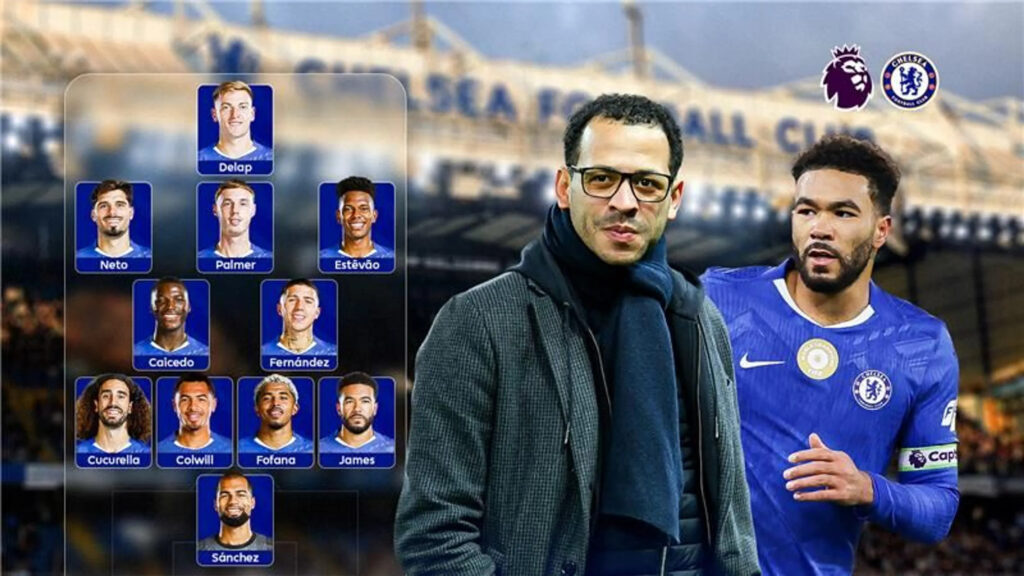
The full-backs deserve special mention. Marc Cucurella and Reece James (or Malo Gusto) will continue Maresca’s innovative full-back usage, inverting into central midfield or overlapping depending on opposition structure. Rosenior will surely maintain this tactical innovation while adding his own variations.
Evolution, Not Revolution
Rosenior’s appointment represents continuity rather than upheaval for Chelsea. The squad already understands composed, controlled possession from Maresca’s tenure. Rosenior’s added emphasis on verticality and purposeful transitions should prove easily learnable for players who already counter-attack explosively.
The subtlety lies in how possession functions. Where Maresca sometimes employed slower, chess-like possession, Rosenior favors a more purposeful approach—using possession to manipulate opposition positioning before striking decisively. Think of it as accelerating the tempo at key moments rather than maintaining constant speed.
His tactical flexibility means Chelsea could appear significantly different depending on opponents. Against aggressive pressing teams, expect patient build-up that baits pressure before exploiting spaces. Against deep-blocking opponents, anticipate more direct vertical passing and increased dribbling through compact defenses. Against possession-dominant sides, Chelsea might sit deeper in their midblock, controlling transitions rather than dominating the ball.
This adaptability represents a significant upgrade from Maresca’s more rigid approach. While Maresca established excellent foundations, his inflexibility sometimes limited Chelsea’s tactical options. Rosenior’s pragmatism should unlock additional dimensions from the same talented squad.
Read More: Bukayo Saka Agrees Improved 5-Year Arsenal Contract Until 2031