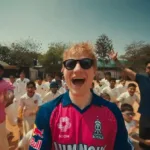
Dailon Livramento was slumped on the floor. Pico Lopes was looking for his dad in the crowd. Stopira was hugging everyone. Steven Moreira didn’t know what to do with himself.
“For the moment, I don’t think I know how I feel,” Moreira, the Columbus Crew defender, told The Athletic, with a massive grin on his face that suggested he’d figure it out soon enough.

It is difficult to know how you are supposed to feel when you have just helped your country qualify for the World Cup for the first time. And particularly when you are the second-smallest nation ever to make it to the biggest sporting event on the planet, after Iceland.
Cabo Verde — a collection of 10 islands off the west coast of Africa with a population of around 525,000, which was a Portuguese colony until 1975 — had done something improbable.
Table of Contents
The Night It Happened: Eswatini, Nerves, and a Nation’s Breakdown
They needed a win in their final qualification game against Eswatini to finish the job and top a group featuring Cameroon — a team who have been at eight of the past 11 World Cups. On paper, the match looked close to a walkover against a side who last won a World Cup qualifier in 2015. But for the first half, it did not feel like that. Forty-five minutes that was less a football match and more an entire nation having a nervous breakdown.
Officially, there were around 15,000 people inside the stadium. Given how packed the aisles and gangways were, the real figure was probably higher. Tickets were tough to come by — sold at petrol stations and pastry shops around Praia, the capital city. Some were sold online to diaspora members, but many of those ended up in the hands of relatives back in Cabo Verde. Wherever they had bought their tickets, they were tense.

All of that tension dissipated three minutes after the break when Livramento forced home a loose ball — at which point everyone in the stadium lost their minds. They were just recovering their senses six minutes later when Willy Semedo turned home a second.
The remainder of the half was a celebration. Passes were being greeted with an ‘Olé!’ as early as the 65th minute. A policeman began whipping the crowd up, the occasion overriding his professional duties.
And in stoppage time, it was capped perfectly by 37-year-old Stopira — who had retired a couple of years ago but returned for this campaign — forcing home the third at the back post. The team celebrated with him as if they had scored the goal themselves.
“We needed him, so he came back, gave us good vibes, good energy,” said Moreira. Off came Stopira’s shirt and his heart monitor vest. The referee stood there with his yellow card for what felt like ten minutes, waiting for Stopira to come back down to earth. It is likely nobody has ever cared less about being booked.
What This Moment Meant
Zito de Pina travelled to Praia from Boston to witness the game. Massachusetts is home to a large Cabo Verdean population, and he runs Criolo Sports, a website dedicated to the country’s sporting exploits. He reckons there were 50 people on his flight making the same pilgrimage.
When asked whether qualifying for the World Cup would be the greatest sporting achievement in the country’s history, he barely needed to think.
“We got to the basketball and handball World Cups, but this would beat all of that.”
A fan called Ulysses went further: “It would be the greatest thing ever to happen in Cabo Verde.” In sport? “In everything!”
How the Team Is Built: Diaspora, Federation Policy, and Two Decades of Growth
Cabo Verde’s success has not happened by accident.
A few years ago, the country’s football federation made a concerted effort to maximise the talent available through its diaspora. There was widespread migration from the islands in the 1960s and 1970s, before independence, meaning small corners of Cabo Verde exist all over the world. It is from these corners that a football team has been assembled.
The squad for the Eswatini game featured players born in Portugal, France, Ireland, and the Netherlands, as well as Cabo Verde itself. The 25 players plied their trade in 15 different countries — from Moreira in the United States to Ailson Tavares in Israel via Lopes in Ireland.

“We have changed a lot,” Cabo Verde technical director Rui Costa told The Athletic. “The under-17s are doing well, the women’s team could qualify for AFCON. We have a playing philosophy now. The next step is bringing through young players. Everybody wants to play for Cabo Verde now.“
The trajectory is clear. At the turn of the century, Cabo Verde were ranked 182nd in the world. They were 70th at the time of qualifying, and have been as high as 27th. They have qualified for the Africa Cup of Nations four times, reaching the quarter-finals of the last edition in Ivory Coast.
Funding from FIFA has helped upgrade facilities. Investment from China helped build the national stadium where the triumph over Eswatini was achieved — which explains why many of the signs around the ground are in English and Chinese, not Portuguese or Creole.
The Stadium That Almost Had a Different Name
When Pelé died in December 2022, Cabo Verdean Prime Minister Ulisses Correia e Silva announced the stadium would be renamed in the Brazilian legend’s honour — a response to FIFA president Gianni Infantino’s suggestion that every country should name at least one stadium after Pelé.
It was then delicately pointed out that Pelé had never been to the stadium — or, as far as anyone could tell, to Cabo Verde at all. They kept the name Estádio Nacional.
The Morning Before: No Tension, Just Laughter
The atmosphere before the Eswatini game told its own story. On the morning of the match, the players gathered as if preparing for a day at the beach — laughing loudly, engaged in a light-hearted argument about something on someone’s phone. No sense of tension.
The coach, Bubista — born on the island of Boa Vista, who has spent his entire career in Cabo Verde and carries the vibe of a cool uncle who needs no encouragement to tell stories — stalked the touchline in a pair of jeans. The day before, at his pre-match press conference, he was asked if this was the biggest game of his life. There was a pause, a stare, a small grin. Next to him, forward Ryan Mendes stifled a laugh. It was the easiest answer he would ever give.

The evening before the game, the entire squad went on a walkabout at a market on the Avenue Cidade de Lisboa in the centre of Praia. It was mildly chaotic — a couple of low-key security guards, no real barriers between the players and the public. A woman lurched forward and enveloped midfielder Yannick Semedo in a huge hug without anyone stopping her. Applause, selfies, spontaneous shirt-twirling. A woman produced a two-metre Cabo Verde flag and waved it for photographers. Talk of a possible Netflix documentary.
A young kid called Lucas had wandered into the team hotel and handed the squad a poster featuring pictures of himself with virtually all the players and a good luck message. One of the players carefully took it out of the breakfast room for safekeeping.
These players belong to the nation, for now at least.
Pico Lopes: LinkedIn, Ireland, and a 98-Year-Old Grandfather
The week of qualification was quite a period for Roberto ‘Pico’ Lopes.
Famously recruited to the national team via a LinkedIn message in 2019 — which he initially thought was spam — the Ireland-born centre-back’s wife Leah gave birth to their first child a few days after the qualifying match. He flew overnight back to Ireland immediately after the game, missing most of the celebrations.

“Football isn’t the first thing on my mind,” he told The Athletic before the Eswatini game, noting that impending fatherhood had helped him manage the pressure. “My motivation is to get the job done so I can get home and hopefully see the birth of my first child. What better first family holiday than America for the World Cup?“
Lopes qualifies for Cabo Verde because his father is Cabo Verdean. He still has relatives on the islands — aunts, uncles, cousins, and a grandfather still working on the family farm at 98.
“I’ve learned so much about the culture, the people, the music, the food — what it means to be Cabo Verdean. To go back now to Ireland and share those experiences is amazing. Every day, I feel a bit more Cabo Verdean.”
The Almost-Moment a Week Earlier
They came agonisingly close to sealing qualification a week before they actually did. They went 3-1 down away to Libya, before one of the worst goalkeeping blunders imaginable and a bundled Willy Semedo goal drew them level. They thought they had done it when Jamiro Monteiro slotted home, but the linesman raised his flag for an offside you would charitably describe as tight.
Doing it anywhere other than at home would have felt wrong.
The Celebrations: Beer, Buses, and a Dutch Rapper
After the game, the players celebrated with friends, relatives, and those who had travelled from far and wide. Livramento — born and raised in Rotterdam — had 15 cousins in attendance.
As Bubista attempted to answer media questions, the players burst in and soaked him with various liquids, at least one of which was the beer he emerged from the melee drinking. They piled onto the team bus, which in short order was literally rocking as the team danced inside. Bubista was absolutely furious that they were boxed in by another bus.
All week, players had been carrying a speaker capable — when cranked up — of taking down buildings. By the time they returned to the hotel, someone had hooked a microphone to it and the players were taking turns to address their teammates.

The celebrations went deep into the night. At the old national stadium, a concert was put on featuring DJs, live music, and Livramento’s brother — a Dutch rapper who is part of the group Broederliefde.
At the headquarters of the Cabo Verde Football Federation, next to pictures of teams from years past, there is a display case of key artefacts from the national team’s history. One of the more prominent items is a pennant from a friendly against Georgia. You suspect there will be slightly more glamorous trinkets in that cabinet before too long.
“It’s for the people,” said Moreira. “They’ve been watching the team for a long time. I’m very proud to make history for them.”
Read More: FIFA World Cup 2026: Argentina Preview – Can Messi Do What No World Champion Has Managed Since 1962?
Also Read: FIFA World Cup 2026: Jordan Preview – Their 40-Year World Cup Dream Is Finally a Reality
FAQs
How did Cabo Verde qualify for the 2026 World Cup?
Cabo Verde topped their African qualifying group, which included Cameroon, by beating Eswatini 3-0 in their final group game. Goals from Livramento, Willy Semedo, and Stopira sealed a historic first World Cup qualification.
How small is Cabo Verde as a nation?
Cabo Verde is an archipelago of 10 islands off the west coast of Africa with a population of approximately 525,000. They are the second-smallest nation to have qualified for the World Cup, after Iceland.
Who is Bubista and why is he significant?
Bubista (Pedro Leitão Brito) is Cabo Verde’s head coach, born on the island of Boa Vista. He has spent his entire coaching career in Cabo Verde and is considered the architect of the team’s growth. He led them to two Africa Cup of Nations appearances before securing World Cup qualification.
How was Pico Lopes recruited to the Cabo Verde squad?
Lopes — an Ireland-born centre-back — was contacted by former coach Rui Águas via LinkedIn in 2019. He initially thought it was spam and ignored it. Águas tried again the following year, Lopes said yes, and he is now one of Cabo Verde’s most important defenders.
What is Cabo Verde’s historical football ranking trajectory?
At the turn of the century, Cabo Verde were ranked 182nd in the world. By the time of their World Cup qualification, they had risen to 70th and have been as high as 27th — a remarkable rise driven by diaspora recruitment, federation investment, and improved player development.