Indian football stands at a precarious crossroads, with the future of the ISL hanging in the balance and players facing unprecedented uncertainty. National team captain Gurpreet Singh Sandhu has broken his silence on the crisis that threatens to derail Indian football’s progress, delivering a passionate defense of why Indian players must fight for their domestic league rather than simply seeking opportunities abroad.
Table of Contents
The Grim Reality Facing ISL Players
In an exclusive interview with sports journalist Boria Majumdar on Backstage with Boria, Gurpreet Singh Sandhu painted a sobering picture of life for Indian footballers caught in limbo without a functioning league. The goalkeeper, who captains both Bengaluru FC and the national team, acknowledged that the situation has reached critical levels.
| ISL Crisis Impact | Details |
|---|---|
| League Status | Suspended/Uncertain |
| Months Without Football | 9 months (as of January 2026) |
| Players Affected | Entire ISL ecosystem |
| Young Players | Most vulnerable to crisis |
| Women’s Team | On verge of World Cup qualification |
“It’s evidently a very grim situation, and being a player, there are only so many things that you can do,” Gurpreet Singh Sandhu explained. “We were sitting on the sidelines waiting for some positive development, so making the video was the only thing we could do from our side.”

The video he references is the “Save Indian Football” campaign that players launched to create awareness about their plight. This collective action represented one of the few tools available to footballers who find themselves powerless to control their professional destinies.
Young Players Bear the Heaviest Burden
While established stars like Gurpreet Singh Sandhu have built financial cushions and support systems, the ISL crisis hits hardest on younger players who recently turned professional. These aspiring footballers entered the system expecting to build careers, only to find their livelihoods threatened before their careers could begin.
“Players like us have a substantial environment around us to soften the blow, but I cannot begin to imagine what the aspiring footballers or the ones who just turned professional must be going through in this tough phase,” Gurpreet acknowledged. “So we need to look out for everyone in the ecosystem.”
The goalkeeper revealed that many support staff and younger players have little understanding of how dire the situation truly is. Telling them that the salaries their households depend on might not materialize creates impossible ethical dilemmas for senior players trying to maintain morale.
“A lot of these staff have little idea of how bad the situation really is, and it is detrimental to tell them that the salary their household is operating on is not very reliable,” he explained. “So we try to keep them motivated by keeping their trust that things are being looked at and worked on.”
Training Without Purpose: The Mental Challenge
Perhaps the most psychologically taxing aspect of the ISL crisis involves maintaining fitness and motivation when there’s no competition on the horizon. For professional athletes whose entire identities revolve around preparing for matches, training without a target creates existential challenges.
“It is honestly very hard because there is nothing we are moving towards,” Gurpreet Singh Sandhu admitted. “And as players, we only know how to play football and do not have an MBA or a PhD. And at the peak of our careers, we don’t really think of life after football.”
Despite the lack of clarity, the national team captain continues training based on simple logic—if the ISL suddenly resumes, he wants to be somewhat prepared. However, even this preparation exists in a vacuum of uncertainty, as nobody knows what format the league might take if it returns.
| Player Challenges | Impact |
|---|---|
| No Match Targets | Difficult to maintain motivation |
| Career Peak Wasted | Players idle during prime years |
| Unknown League Format | Can’t prepare specifically |
| Financial Uncertainty | Household income unreliable |
| Limited Career Options | Only know how to play football |
The mental toll of this situation cannot be overstated. Professional footballers spend their entire lives working toward peak performance during their twenties and early thirties. Having those crucial years stolen by administrative failures represents not just financial loss but the erosion of limited career windows that can never be recovered.
Why Moving Abroad Isn’t the Solution
When the ISL crisis erupted, a common refrain from armchair critics suggested Indian players should simply seek opportunities with foreign clubs. Gurpreet Singh Sandhu addressed this suggestion with barely concealed frustration, explaining the harsh realities that outsiders fail to comprehend.
“There is no point in explaining it to a person who has never kicked a football in their life how difficult it is for an Indian player to go outside India and play,” he stated bluntly. “People who say so should know that it is not that easy.”
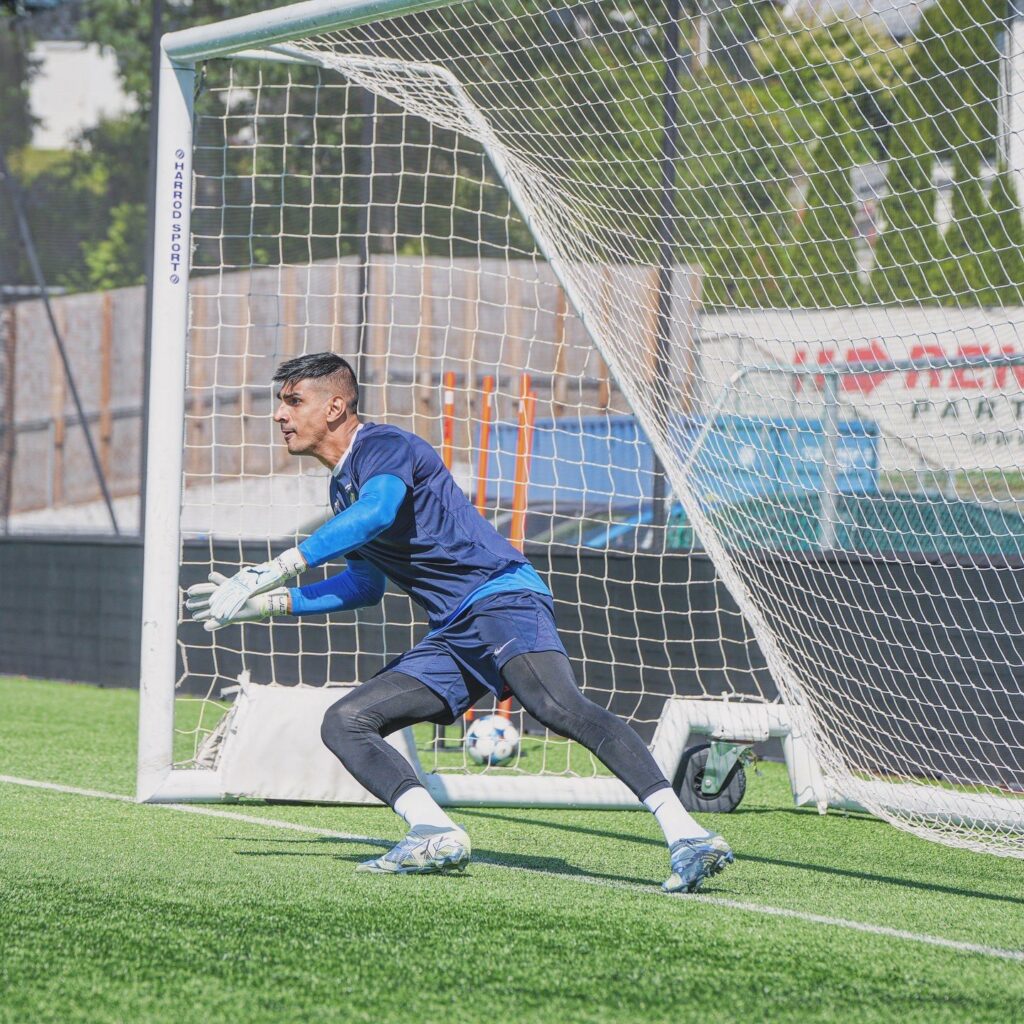
The goalkeeper outlined several barriers that make foreign opportunities unrealistic for most Indian players. European clubs aren’t eagerly awaiting Indian footballers to replace their current rosters. The level gap, combined with visa restrictions, work permit requirements, and simple economics, creates nearly insurmountable obstacles.
“To be honest, European players are not keen to come to India and play,” Gurpreet observed. “Also, foreign clubs would not suddenly be interested in replacing their player with me.”
This asymmetry highlights a fundamental truth about global football economics. While Indian clubs sometimes attract foreign talent looking for lucrative contracts in emerging markets, the reverse situation—established European clubs viewing Indian players as valuable acquisitions—remains extremely rare.
Fighting for Indian Football’s Own League
Rather than abandoning ship, Gurpreet Singh Sandhu insists Indian players must advocate for their domestic competition. The ISL isn’t just employment for footballers; it’s the foundation of an entire ecosystem including coaches, staff, academies, and most importantly, the next generation of talent.
“Players who can go and play for foreign clubs should go for sure, but we should also fight for our own league,” the captain emphasized. “I’ll not say that BFC is not going to work out, so let’s go somewhere else in India to play, as 13 other clubs are also going through the same thing.”
His argument centers on collective responsibility rather than individual escape routes. If every capable player pursued foreign opportunities, the infrastructure supporting Indian football would collapse, eliminating pathways for future generations.
“We need to create awareness and demand an Indian league for our Indian sports scenario,” Gurpreet continued. “We need to think about the youngsters who just signed a contract, women’s team who are on the verge of qualifying for the World Cup—we cannot just take away the stage.”
This perspective reflects maturity often lacking in crisis situations, where self-preservation typically trumps collective welfare. By framing the ISL crisis as an ecosystem issue rather than just a player employment problem, Gurpreet Singh Sandhu elevates the conversation beyond immediate concerns.
India Cannot Survive Without Domestic Football
Despite the bleak present circumstances, the national team captain maintains optimism rooted in practical reality. India simply cannot afford to abandon domestic football for an extended period without devastating consequences.
“I am a very optimistic person, and I know for a fact India is a sporting country and we cannot go a season without a league,” Gurpreet declared. “At least, the ripple effect of that would not be good.”
This assessment reflects understanding of how interconnected India’s sporting infrastructure has become. The ISL doesn’t exist in isolation—it feeds the national team, provides aspirational content for young athletes, generates employment across multiple sectors, and contributes to India’s soft power on the international stage.
“So the clubs, federation and everyone is doing their bit and trying to make this happen,” he added, suggesting ongoing efforts behind the scenes to resolve the crisis.
The Broader Context: ISL’s Troubled History
To understand the current crisis, one must examine the ISL’s turbulent history since its launch in 2014. The league represented Indian football’s most ambitious project—a franchise-based system modeled partly on cricket’s IPL, designed to professionalize the sport and attract both domestic and international talent.
For several years, the ISL appeared successful. It attracted significant sponsorship, television viewership, and stadium attendance. Foreign stars like Roberto Carlos, Alessandro Del Piero, and David Trezeguet brought glamour while helping raise the league’s profile. Meanwhile, Indian players gained exposure to higher competitive standards.
However, structural problems persisted beneath the surface. The relationship between the ISL and the existing I-League created governance conflicts. Financial sustainability remained questionable for several franchises. And questions about the league’s actual contribution to national team development generated ongoing debate.

The current crisis represents these unresolved tensions reaching a breaking point. Whether through governance failures, financial mismanagement, or some combination thereof, the ISL now faces an existential threat that could undo a decade of progress.
Read More: East Bengal FC Has Mutually Parted Ways with Hamid Ahadad
FAQs
What is the current status of the ISL?
The ISL is facing an uncertain future with the league suspended or delayed, leaving players without competitive football for approximately nine months as of January 2026. Gurpreet Singh Sandhu describes it as “evidently a very grim situation” with no clear timeline for resumption.
Why can’t Indian players just move to foreign clubs?
Gurpreet Singh Sandhu explains that moving abroad isn’t realistic for most Indian players. Foreign clubs aren’t actively seeking to replace their players with Indian footballers due to the competitive level gap, visa restrictions, and simple market economics. “It is not that easy,” he emphasizes.
How are young players coping with the ISL crisis?
Young players who recently turned professional are the most vulnerable, as they lack the financial cushions established players have built. Many support staff and aspiring footballers have limited understanding of how precarious their situation is, with household incomes potentially unreliable.
Is Gurpreet Singh Sandhu still training despite no league?
Yes, Gurpreet continues training despite the uncertainty, reasoning that if the ISL suddenly resumes, he wants to be somewhat prepared. However, he admits “it is honestly very hard because there is nothing we are moving towards” and players don’t know what format the league might take.
Does Gurpreet think the ISL will return?
Gurpreet remains optimistic, stating “I know for a fact India is a sporting country and we cannot go a season without a league.” He believes the ripple effects of extended absence would be too damaging, and that clubs, federation, and stakeholders are working to resolve the crisis.