NZ
 IND
 NAM
 IRE
 MOZ
 UGA
 Aston Villa
 Man City
 Rayo
 Elche
 GMB
 ZMB
 NGA
 LES
 Cagliari
 Bologna
 IPS1
 NFO1
 ALA1
 MCF1
 TOR3
 MON2
 BRE1
 NICE2
 TAS67/4 (15.4/50 ov, target 305)
 VIC304/7
 NZ-A135/3 (41 ov)
 IND-A113
 DHA
 RAJ
 MYMS
 CHATT
 RAN
 BAR
 SYL
 KHU
 UAE
 NED
 PAK
 ENG
 IND-W
 ZIM-W
 AFG170/3 (34.3/50 ov, target 170)
 ZIM169
 DOLPH56/0 (3.5/8 ov, target 56)
 SWD51/4 (8/8 ov)
 WSW1
 BRI1
 Como
 Sassuolo
 Augsburg
 Union Berlin
 Cologne
 Schalke
 Mainz
 Bremen
 RB Leipzig
 Elversberg
 VFB2
 BMG3
 AHL4
 KHA1

A foldable phone with a truly invisible front camera used to sound like vaporware. Not anymore. The latest breakthrough in foldable smartphone under-display camera technology has finally moved from prototype to something you can actually buy, and it changes how we think about screen space. If you’ve been following the foldable evolution, our coverage of the Samsung Rollable Display Smartphone shows where things were headed before this moment arrived.
The Road to an Invisible Camera
For years, punch-holes and notches have been the industry’s way of dealing with front cameras. Manufacturers cut into the display to fit a selfie camera, then spent millions convincing people that smaller holes are actually better. Under-display camera (UDC) tech did exist on phones like the ZTE Axon 40 Ultra and Samsung Galaxy Z Fold 5, but the results were rough — soft edges, lens flare, and washed-out colors made those cameras feel like afterthoughts.
The real game-changer is the pixel transparency layer. New UDC panels use a transparent pixel matrix that lets light through with way less diffraction. You get sharper images and a display that looks completely normal when it’s on.
Specs, Features & What We Know
The device spearheading this shift features a 6.9-inch inner foldable OLED display with 120Hz adaptive refresh and 2,200 nits peak brightness — bright enough that the under-display camera area basically disappears in normal light.
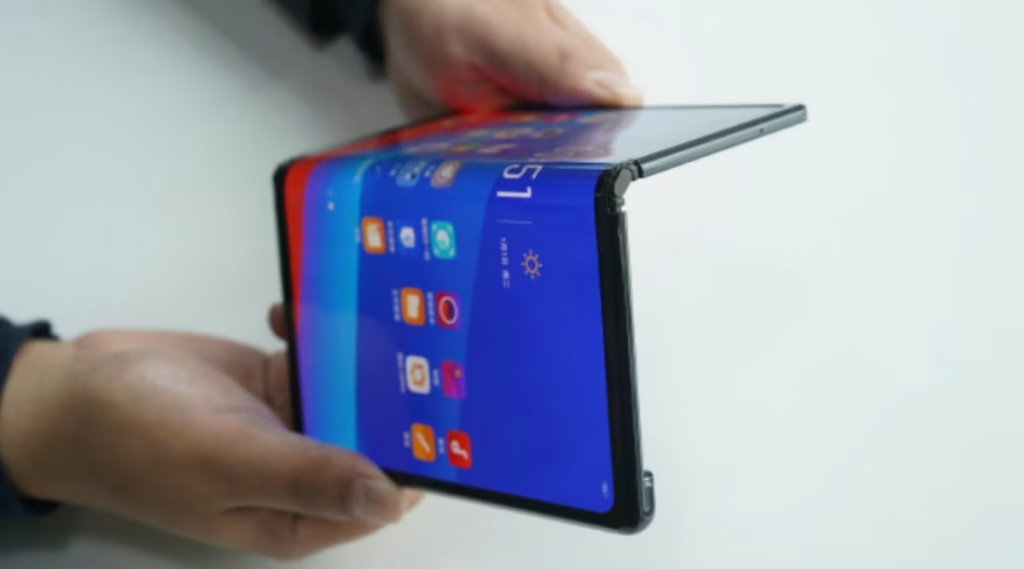
What sets this apart from older attempts? The under-display selfie sensor hits 20MP with an f/2.2 aperture, and it uses dedicated AI dehazing that cleans up the diffraction blur in post-processing. Early shots from pre-launch demos show a real leap forward compared to the Fold 5’s implementation.
The outer cover display is a 6.1-inch AMOLED panel — no cutout needed there because a 10MP periscope camera handles cover-screen shots. The rear camera setup includes a 50MP main, 12MP ultrawide, and 10MP 5x telephoto.
You’re looking at $1,799 for the base 256GB model, stepping up to around $1,949 for 512GB. It’s supposed to ship in Q2 2026.
Why Under-Display Camera on a Foldable Actually Makes Sense
On a regular phone, under-display cameras are cool. On a foldable, they’re actually practical. That inner display is where you watch videos, read, and run split-screen apps. A punch-hole cutting into that space is way more annoying than it is on a normal phone.
Think about it this way: foldable buyers paid extra specifically for that seamless screen. Losing 6–8mm to a camera hole feels like a bad deal at $1,800.
The AI dehazing here is solid engineering. It processes everything on-device using a dedicated image signal processor (ISP) built for sub-pixel light capture. The real test will be low-light selfies — that’s where previous UDC phones really struggled. We’ll know the full story once the reviews hit at launch.
One more thing: because it’s a foldable, you can prop it up at an angle for hands-free video calls. That makes the inner camera actually useful instead of just a gimmick.
People Also Ask
What is under-display camera technology in smartphones?
Under-display camera (UDC) technology puts the front-facing camera behind the screen instead of cutting a hole through it. Special transparent pixels let light reach the sensor while the display stays unbroken. Older versions had worse image quality, but new AI processing is closing that gap.
Does under-display camera affect display quality?
Early UDC phones showed slightly lower brightness and color accuracy in the camera zone. Modern versions with denser transparent pixel grids have fixed most of that. Once you hit 2,000 nits brightness, the difference basically disappears in real life.
Is a foldable phone with under-display camera worth buying in 2026?
If you care about a clean inner display — and you’re already spending $1,800 on a foldable anyway — then probably yes. The selfie camera won’t match a flagship punch-hole setup yet, but it makes way more sense on a foldable than anywhere else.