Cricket fans across India ask the same question before every big game: kya AI sach mein winner predict kar sakta hai?
With the IPL 2026 auction cycle done and bilateral series heating up across formats, the answer has moved from “maybe” to “mostly” — and the technology behind it is now freely accessible to anyone with a browser tab.
Here’s the full picture, from how the models learn to where the numbers actually come from.
AI Cricket Match Prediction Ka Core Process Kya Hai?
According to a detailed explainer by AllCric, the engine behind every modern prediction runs on three mechanical steps: training, learning, and testing. Developers feed the model historical match data spanning thousands of completed games, the algorithm spots patterns humans miss, and only then is it released to score a fresh fixture.
The realistic pre-match accuracy ceiling sits between 80% and 90%, the same guide notes — a sharp downgrade from the headline-grabbing 95%+ claims floating around social media. Published accuracy figures range from around 65% to above 95%, depending on dataset size, algorithm choice, and testing rigor. Worth noting: high numbers mean nothing if the test set was small or the model only saw one season. Independent verification matters more than the percentage on the homepage.
Kaunsa Algorithm Sabse Accurate Maana Jata Hai?
Random Forest is consistently one of the top performers in cricket studies, usually landing in the 84%–90% accuracy range on properly tested multi-season datasets. A 2023 study published via IEEE found Random Forest and Decision Tree models reaching up to 98% accuracy on certain IPL datasets.
That said, context matters. A 98% IPL figure on a curated dataset is not the same as 90% across Tests, ODIs, and T20Is against a global playing pool. Those IPL conditions are narrow — short player list, two divisions, repeated matchups — and do not automatically transfer to red-ball or 50-over cricket.
Live Match Mein AI Kaam Kaise Karta Hai?
The model studies thousands of past matches before being trusted on a new game, but live win-probability trackers operate differently once the first ball is bowled. Live prediction inputs include runs needed to win, wickets remaining, balls remaining, current run rate, required run rate, and similar historical outcomes.
Live win-probability trackers update ball by ball as the match unfolds, recalculating the chasing side’s chances with every dot, boundary, and wicket. The same AllCric guide on toss influence notes that toss weight in prediction is usually only about 1.3% to 6% depending on format — far less than most casual fans assume. For a deeper breakdown of pre-game factors, BBC Sport Cricket’s dedicated section covers pitch, weather, and team news angles that any good model also ingests as raw input.
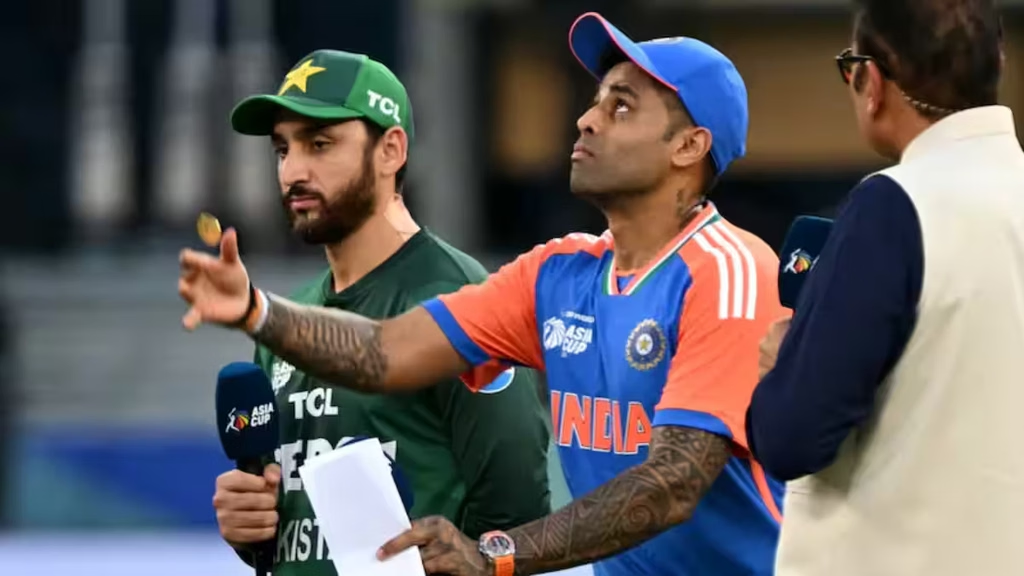
Toss Ka Weightage Kitna Hota Hai Prediction Mein?
Toss weight in prediction is usually only about 1.3% to 6% depending on format, with Tests sitting at the higher end where pitch behaviour swings both ways across five days. T20s, by contrast, treat the toss almost as noise — dew, chase totals, and powerplay wickets matter more.
That said, dew-heavy venues like Chennai or Lucknow can push the toss influence closer to the upper bound. The figure is a guideline, not a law.
Prediction Sites Pe Trust Kaise Karein?
Look for three things before trusting any cricket match prediction tool. First, check the dataset size — a model trained on one IPL season will not survive a World Test Championship cycle.
Second, demand transparent accuracy numbers split by format, not a single “95% accurate” badge. Third, ask whether it is being tested on data it has never seen, since training and testing on the same matches inflates scores artificially. A trustworthy tool will publish its methodology, not just its hit rate.
Final Word
Cricket match prediction is no longer fortune-telling dressed in tech jargon. The model studies thousands of past matches, learns the patterns, and applies them ball by ball — but the realistic ceiling sits at 80%–90%, not the viral 98% that gets shared on WhatsApp groups.
Use the numbers, do not worship them. Smart fans treat AI as a second opinion, not a verdict.
Related Articles
- Prediction
- Ishan Kishan Test Comeback Hope: Enjoys Red-Ball Cricket
- Top 10 Batsmen with Most Sixes in Test Cricket — Updated 2026 Rankings
FAQs
AI cricket match prediction mein accuracy kitni hoti hai?
Realistic pre-match accuracy sits between 80% and 90%, with published figures ranging from 65% to above 95% depending on dataset size, algorithm choice, and testing rigor.
Kaunsa algorithm cricket prediction ke liye sabse best hai?
Random Forest leads the field, usually landing in the 84%–90% accuracy range on properly tested multi-season datasets.
Live match mein win probability kitni baar update hoti hai?
Live win-probability trackers update ball by ball as the match unfolds, recalculating with every dot, boundary, and wicket.
Toss ka weightage prediction mein kitna hota hai?
Toss weight in prediction is usually only about 1.3% to 6% depending on format, with dew-heavy venues sitting closer to the upper bound.
How Does AI Analyze Live Ball-by-Ball Inputs in Cricket?
AI analyzes live ball-by-ball inputs by collecting real-time data on player performance, pitch conditions, and match situations. This data is processed using algorithms like Random Forest to predict outcomes based on historical trends and current game dynamics.
What Role Does Toss Weightage Play in Cricket Match Predictions?
Toss weightage plays a crucial role in cricket match predictions as it can influence team strategies and match outcomes. The AI model assigns a weightage of 1.3–6% to the toss result, reflecting its impact on the likelihood of a team’s success in the match.
Was this article helpful?
Your feedback directly improves future articles on this site.