RIY1
RIY1 TAA0
TAA0 LAZ0
LAZ0 PAR0
PAR0 RCL0
RCL0 PAR0
PAR0 MEX-W
MEX-W ARG-W
ARG-W ATM0
ATM0 DEP0
DEP0 MTL0
MTL0 NSH1
NSH1 ADO0
ADO0 HEE0
HEE0 UAE
UAE NED
NED PAK
PAK ENG
ENG IND-W
IND-W ZIM-W
ZIM-W GMB
GMB LES
LES MOZ
MOZ ZMB
ZMB Inter Milan
 Fiorentina
 Churchill
 Punjab FC
 NGA
NGA UGA
UGA CHE0
CHE0 TOT2
TOT2 VAL1
VAL1 VIL2
VIL2 DOR1
DOR1 SGE0
SGE0 NAP3
NAP3 ROMA3
ROMA3 NZ-A135/3 (41 ov)
 IND-A113
 SYL
SYL KHU
KHU MYMS299/4 (87 ov)
 CHATT
CHATT DHA293/3 (84.1 ov)
 RAJ
RAJ RAN320/5 (80 ov)
 BAR
BAR DEN
DEN PNG
PNG NAM321/6
 IRE290 (47.3/50 ov, target 322)
 NZ180/5
 IND181/6 (19.5/20 ov, target 181)
 VEN0
VEN0 JPN1
JPN1 ZAM0
ZAM0 FRA1
FRA1 Athletic
 Getafe
 C Palace
 Newcastle
 Hull
Hull Brentford
 Liverpool
 Brighton
 Man United
 Bournemouth
 Atalanta
 Frosinone
 KHO0
KHO0 ETT3
ETT3 RAC2
RAC2 ESP1
ESP1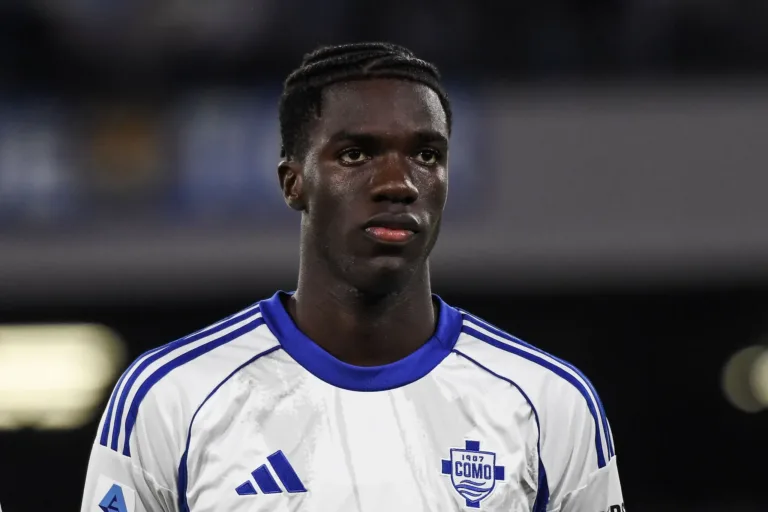
Como head coach Cesc Fabregas finds himself at the center of an international controversy after Senegal forward Assane Diao suffered a devastating injury just days before the Africa Cup of Nations, ruling the 20-year-old out of his first major international tournament. The former Arsenal, Barcelona, and Chelsea midfielder has faced a wave of online harassment from Senegalese supporters following comments he made about the player’s call-up and subsequent injury during Como’s Serie A defeat to AS Roma on December 15, 2025. The incident has sparked an intense debate about club-versus-country conflicts, player welfare, and the responsibilities of coaches when dealing with injury-prone talent.
Cesc Fabregas defended his decision to field Assane Diao against Roma despite the player being scheduled to join Senegal’s national team just one day later, stating his frustration over what he perceived as an impossible situation for Como.
The Spanish coach revealed the controversial circumstances surrounding his decision, explaining that the club was caught between financial obligations and the risk of losing a key player for five weeks during a critical period of the Serie A season. Assane Diao was forced off the pitch in tears during the 37th minute after suffering a grade 2 hamstring muscle injury while sprinting from his own half on a counter-attack, an injury that would ultimately sideline him for six to eight weeks and end his AFCON 2025 dreams.
Cesc Fabregas Explains Controversial Decision to Play Assane Diao
In a revealing post-match press conference, Cesc Fabregas addressed the difficult circumstances that led to his decision to start Assane Diao against Roma despite knowing the player would depart for international duty the following day. The Como coach’s comments laid bare the financial pressures facing clubs when international tournaments interrupt domestic seasons, particularly when dealing with players returning from long-term injuries.

“I feel sorry for the boy because perhaps he shouldn’t have played,” Cesc Fabregas admitted with evident frustration. “Tomorrow, however, he would have left for the national team for 5 weeks. We’re paying his salary. He’s been out for 8 months, and he’s a very strong player for us. We tried to take a risk.” The statement encapsulated the impossible position many club managers face when valuable players are called up for international duty while still regaining full match fitness.
Cesc Fabregas revealed that he had engaged in what he described as an “unpleasant conversation” with Senegal head coach Pape Thiaw before the Roma match, attempting to convince the national team coach to reconsider Assane Diao’s inclusion in the AFCON squad. The Como manager explained his reasoning behind the request, emphasizing the player’s limited game time and ongoing recovery from a serious foot fracture that had ended his previous season prematurely in April 2025.
“I prefer not to touch on the subject too much. Diao is called up and I spoke to him after the match against Inter. He knows my opinion well, I also spoke to the coach, but it didn’t end with a very pleasant conversation,” Cesc Fabregas stated. “They have all the strength. Diao will go, if he wants to handle it that way. He leaves on Tuesday.” The comments suggested deep frustration with what the Como coach perceived as inflexibility from the Senegalese federation regarding player welfare.
| Cesc Fabregas Key Quotes | Context |
|---|---|
| “I feel sorry for the boy because perhaps he shouldn’t have played” | Post-match comments after Assane Diao injury |
| “We’re paying his salary. He’s been out for 8 months” | Explaining Como’s financial investment and risk calculation |
| “Tomorrow, however, he would have left for the national team for 5 weeks” | Justifying decision to use Diao before AFCON departure |
| “It didn’t end with a very pleasant conversation” | Describing exchange with Senegal coach Pape Thiaw |
| “They have all the strength. Diao will go, if he wants to handle it that way” | Acknowledging national team’s legal right to call up player |
The Tense Exchange Between Cesc Fabregas and Senegal Coach
The relationship between Cesc Fabregas and Senegal national team coach Pape Thiaw deteriorated significantly in the days leading up to the Roma match, with both coaches taking firm stances on what was best for Assane Diao. Cesc Fabregas revealed additional details about their conversation, including what he characterized as a threat from the Senegalese coach regarding the player’s international future.
“I asked for the favor of not taking him because he has played 3 matches in 8 months,” Cesc Fabregas explained, emphasizing the limited competitive action Assane Diao had experienced since returning from his foot fracture. The Como coach elaborated on Pape Thiaw’s response, which he found particularly troubling: “The coach’s response? That if he doesn’t go, he won’t go to the World Cup. It was unpleasant. If the player plays with fear at 20 years old when he has a career ahead of him, it’s a mistake.“
The comments from Cesc Fabregas suggested that Pape Thiaw had indicated to Assane Diao that refusing the AFCON call-up could jeopardize his selection for the 2026 World Cup qualifiers, putting enormous pressure on the young forward to participate despite his incomplete recovery. Cesc Fabregas argued this approach was detrimental to a player at such an early stage of his career, potentially creating psychological pressure that could affect his long-term development.
Senegal coach Pape Thiaw addressed the controversy directly during an appearance on RTS’ “Yoony AFCON” program, offering his perspective on the dispute. “If he’s not happy, we, Senegal, are happy and proud,” Thiaw responded to Cesc Fabregas’s objections. “Assane Diao is doing great things at Como, and I can understand why they want to keep him. Personally, I spoke with Fabregas. He tried to convince me not to call up Assane, but I defend the interests of my country above all else. I explained to him that we are completely professional and that we had to manage Assane as best we could. The player himself clearly expressed his determination to come.”
Assane Diao’s Injury History and AFCON Absence
Assane Diao’s journey to his first Africa Cup of Nations has been plagued by injury setbacks that ultimately prevented him from participating in the tournament. The 20-year-old forward made his international debut for Senegal in March 2025 during the 2026 World Cup qualifiers against Sudan and Togo, choosing to represent Senegal despite being eligible for Spain. However, his promising start to international football was immediately derailed by a foot fracture in April 2025 that prematurely ended his season.

The young striker returned to action at the start of the 2025-2026 campaign but was limited to just three appearances for Como over an eight-month period, as Cesc Fabregas carefully managed his reintegration into competitive football. The limited playing time reflected Como’s cautious approach to protecting their investment in the talented forward, who had been acquired as a key part of their Serie A squad.
The injury against Roma on December 15, 2025 proved to be the devastating blow that ended Assane Diao’s AFCON hopes. Medical evaluations revealed a grade 2 hamstring muscle injury that would require six to eight weeks of recovery, meaning the forward would miss the entire tournament, including the final scheduled for January 18, 2026. The diagnosis was particularly cruel timing, coming just one day before Assane Diao was scheduled to join the Senegal squad for their pre-tournament training camp.
The injury represented a significant setback not only for Assane Diao’s international ambitions but also for Senegal’s AFCON preparations. Coach Pape Thiaw had named the Como forward in his 28-man squad despite concerns over his fitness, gambling that the player would be able to contribute to Senegal’s title defense. The loss of Assane Diao added to Senegal’s injury concerns, with right-back Ilay Camara from Anderlecht also suffering a hamstring injury that ruled him out of the tournament.
| Assane Diao Injury Timeline | Details |
|---|---|
| March 2025 | Made international debut for Senegal vs Sudan and Togo |
| April 2025 | Suffered foot fracture, season ended prematurely |
| May-November 2025 | Recovery period, limited training |
| 2025-26 Season Start | Returned to action but limited to 3 matches in 8 months |
| December 13, 2025 | Named in Senegal’s 28-man AFCON squad by Pape Thiaw |
| December 15, 2025 | Injured in 37th minute vs Roma (grade 2 hamstring) |
| December 16, 2025 | Officially ruled out of AFCON 2025 (6-8 weeks recovery) |
| Expected Recovery | Late January/Early February 2026 |
Online Backlash and Racist Abuse Directed at Cesc Fabregas
The controversy surrounding Assane Diao’s injury triggered a massive wave of online harassment directed at Cesc Fabregas, with the Como coach’s Instagram account flooded with angry reactions from Senegalese supporters. The backlash intensified after the injury, with thousands of users blaming Cesc Fabregas for fielding a player who was not fully fit and thereby jeopardizing Senegal’s chances at AFCON 2025.
The online abuse quickly escalated beyond simple criticism, with numerous insults and some racist messages appearing on Cesc Fabregas’s social media accounts. Much of the harassment came from individuals identifying as Senegalese fans who held the Spanish coach responsible for what they perceived as a deliberate attempt to sabotage their national team’s tournament preparations. The vitriolic nature of the abuse drew condemnation from football observers and renewed calls for stronger measures to combat online harassment in football.
The incident highlighted the growing problem of social media abuse directed at players and coaches during high-stakes international periods. Cesc Fabregas, who enjoyed a distinguished playing career representing Spain at multiple World Cups and European Championships, found himself subjected to personal and discriminatory attacks that went far beyond legitimate criticism of a coaching decision. The abuse was particularly intense given that Senegal supporters believed Cesc Fabregas had acted against their national team’s interests by playing an injury-prone player just before a major tournament.
Football authorities and social media platforms faced renewed pressure to implement more effective safeguards against online harassment. The Cesc Fabregas case demonstrated how quickly legitimate sporting debates can deteriorate into personal attacks and hate speech, particularly when nationalist emotions are involved around international tournaments like AFCON.
Como’s Perspective: Financial Investment and Club Interests
From Como’s perspective, the Assane Diao situation represented a difficult balancing act between respecting international obligations and protecting their significant financial investment in a talented young player. Cesc Fabregas emphasized that Como had been paying Assane Diao’s salary throughout his eight-month injury layoff and had carefully managed his return to competitive action with the club’s long-term interests in mind.
The Como coach argued that releasing Assane Diao to Senegal for five weeks during a crucial period of the Serie A season, when the player had only recently returned to fitness and had played just three matches, represented an unacceptable risk for the club. The decision to field him against Roma was framed as an attempt to extract some value from the player before losing him to international duty, though Cesc Fabregas acknowledged in hindsight that this risk-taking approach had backfired spectacularly.

“I asked for some common sense, please, not to take him because in eight months he’s only played three games, half-baked,” Cesc Fabregas stated, articulating Como’s position that the national team call-up was premature given the player’s limited match fitness. “If he leaves, we’ll pay his wages and find ourselves with a player out.” The comments reflected the fundamental tension between clubs and national teams over player availability, particularly when dealing with injury-recovering talent.
| Club vs Country Conflict Breakdown | Como’s Position | Senegal’s Position |
|---|---|---|
| Financial Argument | Como paying salary for 8 months while player injured | National team has FIFA-mandated right to call up players |
| Playing Time | Only 3 matches in 8 months, insufficient fitness | Player expressed determination to participate in AFCON |
| Risk Assessment | Too risky to release injury-prone player for 5 weeks | Professional management would ensure player safety |
| Career Perspective | Playing with fear/pressure harmful at age 20 | AFCON participation crucial for World Cup selection |
| Timing | Critical Serie A period with player just returning | AFCON 2025 defending champions need all talent available |
Senegal’s Response and Player’s Personal Choice
Senegal national team coach Pape Thiaw maintained a firm stance throughout the controversy, emphasizing that his primary responsibility was defending the interests of his country rather than accommodating club concerns. The Senegalese coach stressed that Senegal’s medical and coaching staff were fully professional and capable of managing Assane Diao’s fitness appropriately during the tournament, dismissing Cesc Fabregas’s concerns as overblown.
Critically, Pape Thiaw revealed that Assane Diao himself had expressed clear determination to participate in AFCON 2025, making the player’s personal wishes a key factor in the decision to include him in the squad. “The player himself clearly expressed his determination to come. So the problem is resolved,” Thiaw stated, indicating that Assane Diao had agency in the decision and chose international duty despite his club coach’s reservations.
This player preference complicated the narrative around Cesc Fabregas’s complaints, as it suggested the Como coach was attempting to override his player’s own wishes regarding international representation. For a 20-year-old forward who had chosen to represent Senegal over Spain and was eager to participate in his first major tournament, the opportunity to play at AFCON 2025 was understandably compelling despite the fitness concerns.
The situation raised questions about the extent to which clubs can or should prevent players from joining their national teams, particularly when the players themselves are eager to participate. FIFA regulations clearly establish that clubs must release players for international duty during designated windows, though the Como-Roma match fell just outside this technical requirement because it was scheduled for Monday evening, beyond the FIFA-mandated release period.
The Broader Implications for Player Welfare
The Cesc Fabregas and Assane Diao controversy exemplifies the ongoing tensions in modern football between club and international commitments, particularly during major tournaments that interrupt domestic seasons. The incident raised important questions about player welfare, with legitimate concerns expressed on both sides regarding what was truly in the best interests of a 20-year-old forward recovering from serious injuries.
Cesc Fabregas argued that subjecting Assane Diao to the psychological pressure of potentially missing World Cup selection if he declined AFCON participation was harmful to a young player’s development. The Como coach suggested that playing with fear or under duress at such a tender age could have long-term negative effects on the player’s career trajectory. From this perspective, Cesc Fabregas positioned himself as protecting his player’s long-term welfare against short-term national team pressures.
However, Pape Thiaw and Senegal’s perspective emphasized that international opportunities at major tournaments are rare and precious, particularly for African players who have limited chances to showcase their talents on the continental stage. For Assane Diao, who had made the significant decision to represent Senegal over Spain, missing his first AFCON could have represented a major setback to his integration into the national team setup and his standing within Senegalese football.
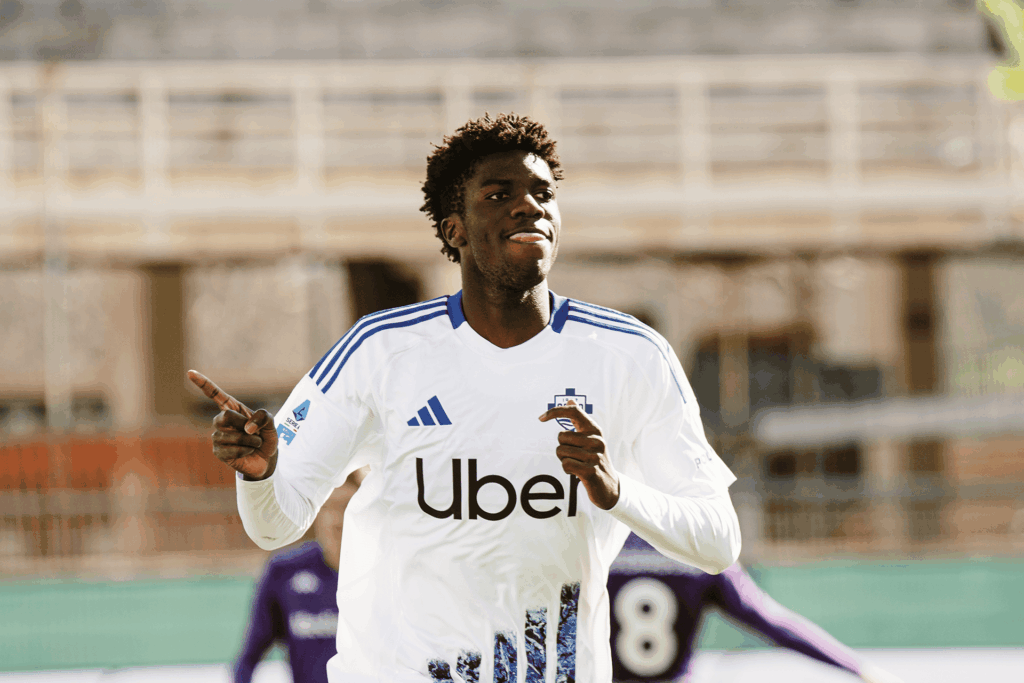
The unfortunate reality is that the injury suffered during the Roma match proved both sides’ concerns to be simultaneously valid: Cesc Fabregas was correct that the player was not sufficiently fit to handle the physical demands of competitive football, while Senegal lost a promising talent for the entire tournament anyway due to Como’s decision to field him in the final pre-AFCON match. The lose-lose outcome satisfied no one and left Assane Diao as the ultimate casualty of the dispute between his club coach and national team coach.
Read More: Paulo Dybala Set to Leave Roma as Free Agent at End of Season