Punjab Kings may have left the Narendra Modi Stadium with empty hands and moist eyes last June, but just their presence there was vindication enough. A franchise that had not made the playoffs since 2014 had rebuilt itself from the ground up, reached the final, and in doing so, established something more durable than a one-season run: a philosophy, a playing identity, and a dressing room culture worth building on.
The proof that it was no fluke arrived on March 31 at the Maharaja Yadavindra Singh International Cricket Stadium in Mullanpur. Chasing 163 against Gujarat Titans in their IPL 2026 opener, debutant Cooper Connolly played a match-winning knock of 72 not out off 44 balls, guiding Punjab home with five deliveries to spare. Connolly finished things in style, smashing a boundary off Washington Sundar on the first ball of the final over to take Punjab home. The identity Ricky Ponting and Shreyas Iyer built last season had its first statement moment of 2026.
In a wide-ranging conversation, PBKS assistant coach Brad Haddin pulls back the curtain on how it was all put together — the thinking behind their mega auction recruitment, the advantages of having Ricky Ponting in the building, what Shreyas Iyer’s captaincy looks like up close, a dramatic six-day stretch that tested everyone, the Josh Inglis decision, and why he is not worried about second-season syndrome.
Table of Contents
The Starting Point: A Clear Vision From Day One
When Haddin reflects on what changed at Punjab Kings, he keeps coming back to one word: clarity. Ponting and his coaching staff arrived with a defined style of play and the conviction to stick to it regardless of short-term results.
“I think we were really lucky that Ricky and all the guys had come in together and they had a really clear vision of the style of play that they wanted Punjab Kings to play,” Haddin says. “There was a lot of care from the coach and the captain around the playing group, there was a lot of trust put in the players and then the players responded.”
That response was visible to anyone watching. PBKS played with an attacking intent that was consistent and recognisable throughout the season — not just when conditions allowed it, but as a non-negotiable starting position. The entertainment value was almost incidental. The point was that it was a style capable of challenging for trophies, and they found out by the end of the season that it was.
The Mega Auction: Talent, Character, and Complementary Fit
Getting the philosophy right was one thing. Populating the squad to execute it was another. Haddin is candid about how much time and thought went into the recruitment process ahead of what was the franchise’s first proper reset cycle.
“Recruitment takes a lot of time and you recruit obviously on talent and character and you recruit on what could complement your environment,” he says. “We needed a strong leader and we got that obviously with Iyer and Ricky.”
The clearest expression of that recruitment philosophy was their investment in young Indian batting talent. PBKS retained Prabhsimran Singh for INR 4 crore, then went hard for Priyansh Arya at INR 3 crore and Nehal Wadhera at INR 4.20 crore. By the end of the season, no team had more contribution from their Indian batters.
PBKS Key Retention and Auction Buys
| Player | Role | Fee |
|---|---|---|
| Prabhsimran Singh | Top-order batter | INR 4.00 crore |
| Priyansh Arya | Top-order batter | INR 3.00 crore |
| Nehal Wadhera | Middle-order batter | INR 4.20 crore |
| Shreyas Iyer | Captain / batter | — |
| Cooper Connolly | Batting allrounder | INR 3.00 crore |
For IPL 2026, the additions were surgical rather than sweeping. PBKS retained 21 players and released just four, including Glenn Maxwell and Josh Inglis. They brought in Cooper Connolly, the attacking Australian batter who bowls left-arm spin, for both depth and flexibility, while BBL star Mitchell Owen adds raw hitting power. Connolly’s debut on March 31 was an immediate reminder of why they wanted him.

“We were very clear in the talent that we got in the auction and we’re very measured in the style of play that we wanted and I think that was shown with the way the players played out in the middle,” Haddin says. The results proved the thinking right. None of it surprised him.
Ponting’s Influence: More Than Just Cricket Sense
Ricky Ponting’s reputation as a cricket mind precedes him everywhere he goes. At PBKS, Haddin says, his impact extended well beyond the technical and tactical.

“I think that one thing that they got most of all is the care he has for every individual,” Haddin says of what Ponting gave the younger players in the squad. “And I think that rubbed off in not only the way that they played and performed but how they contributed to the whole group and the whole organisation in everything that we’re trying to achieve.”
There is something in that observation worth sitting with. Ponting’s public image is that of an aggressive, win-at-all-costs competitor. What Haddin is describing is a coach who has translated that same intensity into an investment in people — one that creates an environment where players feel safe enough to play freely and fail without fear.
Shreyas Iyer: The Captain Who Shone From Day One
Haddin is not a man given to hyperbole. So when he is asked at what point in the season Shreyas Iyer’s leadership shone through, and he answers “Day one” without hesitation, it lands with weight.
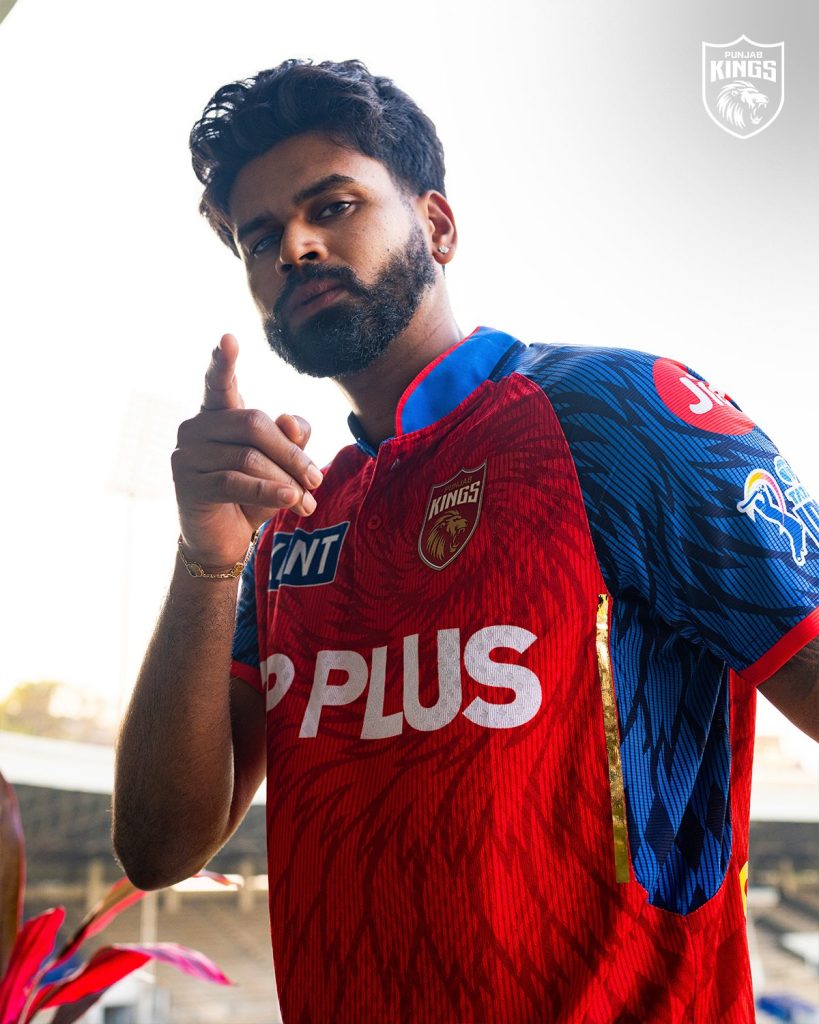
“He’s really clear in his message around the playing group. We all see how world-class of a batter he is. He can influence a game on the way he plays. Tactically he’s as good a captain as I’ve seen in the IPL,” Haddin says. “You only have to look at his record — he’s taken three different teams to three different finals.”
Shreyas Iyer’s Record as IPL Captain
| Team | Year | Result |
|---|---|---|
| Delhi Capitals | 2020 | Final |
| Kolkata Knight Riders | 2024 | Champions |
| Punjab Kings | 2025 | Final |
But Haddin’s deeper point is not about the trophies or the tactics. It is about what Iyer is like with the twenty players who do not make the playing XI. “Those guys that come into the squad who don’t get the opportunities that some of the others do, they’re part of the team’s success,” he says. “Off the field, he’s making sure everyone is contributing in their role to make our job easy.”
When everyone skips into training, Haddin argues, that is when you know you are building something real. It is a joyful environment, and joy, counterintuitively, is one of the things that makes great teams.
Six Days That Tested the Group
Every team that goes deep into a tournament faces a moment that could unravel them. For PBKS last season, it arrived across a brutal six-day stretch. They scored 245 in Hyderabad and could not defend it — largely because of an Abhishek Sharma innings (141* off 55 balls) that Haddin freely acknowledges you would go a long way to find a better one in this format. Three days later, they defended 111.
“The one thing the leaders have done is that the group stays pretty consistent with their tempo,” Haddin says. “They understand now what’s required to prepare, what’s required to win matches. And if they stick to that, keep trusting that, we’ll get the results we need.”
The same temperament was on show in Mullanpur. Punjab slipped to 121 for 6 after 15 overs before recovering to 142 for 6 after 17, with Connolly anchoring the innings throughout. They did not panic. They found a way. That belief — that they are never out of a game — is one of the things Haddin is most proud of building into this group.
The Josh Inglis Decision
One off-field story that attracted attention was PBKS releasing Josh Inglis ahead of this season, only for the wicketkeeper-batter to eventually be picked up by LSG for INR 8.60 crore — considerably more than Punjab would have paid.
Haddin is matter-of-fact about it. “It was really clear actually. It was clear that he wasn’t available for a certain amount of the tournament and we just had to make a decision on what was the best for our squad.“
When pressed on whether Inglis would have been retained had availability not been an issue, Haddin declines to engage with the hypothetical. “You just got to talk in fact. And we had all the facts in front of us. And that’s how we made the decision. There’s no point talking about what ifs. In this level you can only deal on facts.”
Data, Individuals, and Knowing What Each Player Needs
PBKS, like every modern franchise, use data extensively. Haddin’s view on it is measured and pragmatic — it is a tool, not a gospel.
“Some players use it quite a lot, some just need minimal. Some guys like a lot, some guys like short snippets… other guys like a coffee and talk more about the game,” he says. “I think that’s the beauty of the coaching group here. We’ve got it all covered.”
The principle behind that approach is straightforward: understand the individual first, then decide how to communicate with them. There is no single template. A world-class preparation environment is one that looks different for each player and works for all of them.
Will PBKS Be Found Out in Year Two?
The question Haddin is most careful with is also the most relevant one. Sunrisers Hyderabad played a similar brand of high-octane, aggressive batting cricket in 2024, reached the final, and then dropped sharply in 2025 as opponents adjusted.
“From any tournament, you’ve got to understand the trends of the game and you want to never stand still,” Haddin says. “It’s important to take some of the good learnings we had from last season and then add on that and that’s what we’re about.”
For this season, that has meant building on rather than overhauling. The squad looks similar. The coaches are familiar to the players. The messages have been reinforced in high-quality pre-season camps. The young players who got their first IPL taste last year have come back, by Haddin’s account, as noticeably more mature, more self-aware cricketers.
“They’ve got a much clearer understanding on their game, they’ve had some success obviously with the franchise last year but also in their domestic cricket. They’ve matured a lot so it was really exciting to see the progress of all the playing group over the last 12 months.”
The opening win over GT was an early, encouraging answer to that question. Earlier in the match, Vijaykumar Vyshak led the bowling attack with three wickets, while Yuzvendra Chahal took two to restrict Gujarat to 162 for 6. The bowling was disciplined, the chase required nerve, and when the game was on the line at 121 for 6, a debutant held his nerve. That is not the behaviour of a team being found out. That is the behaviour of a team that knows exactly who it is.
Whether that progress is enough to go one step further this season — to actually win the trophy Punjab Kings have never held — remains to be seen. Haddin would not trade the foundation they have built for anything.
Read More: “Be Yourself – Just Don’t Get Banned”: Digvesh Rathi Won’t Stop Celebrating Or Taking Wickets
FAQs
When did Punjab Kings last reach the IPL final before 2025?
PBKS had not made the playoffs since 2014 before their run to the final last season — an eleven-year wait that made the achievement all the more significant for the franchise.
What was PBKS’ recruitment philosophy heading into the mega auction?
The franchise prioritised talent, character, and squad fit above all else. They invested heavily in young Indian batting talent — Prabhsimran Singh, Priyansh Arya, and Nehal Wadhera — and sought strong leadership through Shreyas Iyer’s captaincy.
Why did PBKS release Josh Inglis?
Inglis had availability concerns for a portion of the tournament, and the coaching staff made a decision based purely on what was best for the squad at that time. Haddin declined to speculate on what might have happened in different circumstances.
What makes Shreyas Iyer stand out as a captain according to Brad Haddin?
Beyond his tactical sharpness and batting impact, Haddin highlights Iyer’s care for every player in the squad — including those who do not make the XI — as what truly sets him apart from other IPL captains.
Is PBKS worried about second-season syndrome after their 2025 final run?
Haddin acknowledges the risk but says the answer is to never stand still. The franchise is focused on building on last season’s learnings rather than repeating them, and the pre-season camps have shown encouraging signs of growth across the squad.