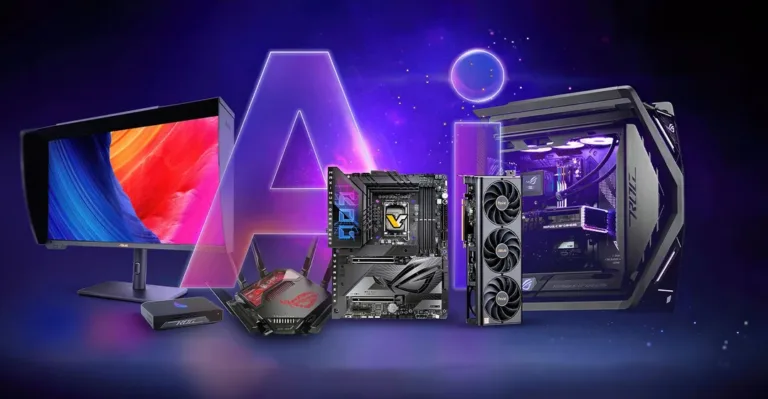
ASUS officially confirmed strategic price adjustments across select products starting January 5, 2026—just one day before CES 2026 kicks off. The Taiwanese tech giant cited soaring DRAM and NAND storage costs driven by AI datacenter demand, joining Dell and Framework as the first major PC manufacturers to pass inflated component prices directly to consumers.

What’s Affected and Why
| Component | Price Impact | Products Affected |
|---|---|---|
| DRAM/RAM | +170% since late 2025 | Laptops, desktops, Mini PCs |
| NAND/SSD | Significant increase | All storage-equipped devices |
| GPUs | Possible increases | Graphics cards, gaming laptops |
| Handhelds | Expected hikes | ROG Ally series |
AI Demand Creates Supply Crunch
The root cause traces to AI infrastructure buildouts consuming vast quantities of memory components. High Bandwidth Memory production for AI servers uses the same manufacturing lines as consumer RAM, creating what industry insiders call a “supply-chain cannibalism” effect. For every gigabyte of AI memory produced, approximately three gigabytes of consumer RAM supply effectively disappears.
ASUS explained capacity realignments, heavier spending on advanced processes, and booming AI demand together are creating structural supply gaps that ripple through system costs industry-wide. The company absorbed these pressures for months before determining price adjustments were unavoidable to maintain supply stability and product quality.

No Specific Products Named Yet
ASUS hasn’t disclosed which models face increases or by how much, stating only that “certain product combinations” and “configurations” will change. Business representatives will contact partners with specifics, but analysts expect widespread impact across laptops, pre-built systems, graphics cards, and devices containing memory or storage—essentially most of ASUS’s consumer lineup.
The timing landing immediately before CES 2026 means new products unveiled at the show will launch at elevated prices, potentially dampening enthusiasm for hardware announcements.

Industry Follows Dell’s 30% Lead
Dell previously warned partners about increases reaching 30% on select systems, while Framework doubled RAM module prices and stopped selling standalone memory kits. ASUS Co-CEO Samson Hu told Commercial Times that memory prices are unlikely to ease before the first half of next year, suggesting sustained pressure through at least mid-2026.
ASUS is reportedly ramping DDR4 motherboard production for AM4 and LGA 1700 platforms, offering budget-conscious builders an escape route from the “DDR5 pricing apocalypse.” This strategy acknowledges that older technology may represent better value until memory markets stabilize.
For official ASUS product information and updates, visit ASUS’s official site. For more PC hardware news and buying guides, explore TechnoSports.