RIY1
RIY1 TAA0
TAA0 LAZ0
LAZ0 PAR0
PAR0 RCL0
RCL0 PAR0
PAR0 MEX-W
MEX-W ARG-W
ARG-W ATM0
ATM0 DEP0
DEP0 MTL0
MTL0 NSH1
NSH1 ADO0
ADO0 HEE0
HEE0 UAE
UAE NED
NED PAK
PAK ENG
ENG IND-W
IND-W ZIM-W
ZIM-W GMB
GMB LES
LES MOZ
MOZ ZMB
ZMB Inter Milan
 Fiorentina
 Churchill
 Punjab FC
 NGA
NGA UGA
UGA CHE0
CHE0 TOT2
TOT2 VAL1
VAL1 VIL2
VIL2 DOR1
DOR1 SGE0
SGE0 NAP3
NAP3 ROMA3
ROMA3 NZ-A135/3 (41 ov)
 IND-A113
 SYL
SYL KHU
KHU MYMS299/4 (87 ov)
 CHATT
CHATT DHA293/3 (84.1 ov)
 RAJ
RAJ RAN320/5 (80 ov)
 BAR
BAR DEN
DEN PNG
PNG NAM321/6
 IRE290 (47.3/50 ov, target 322)
 NZ180/5
 IND181/6 (19.5/20 ov, target 181)
 VEN0
VEN0 JPN1
JPN1 ZAM0
ZAM0 FRA1
FRA1 Athletic
 Getafe
 C Palace
 Newcastle
 Hull
Hull Brentford
 Liverpool
 Brighton
 Man United
 Bournemouth
 Atalanta
 Frosinone
 KHO0
KHO0 ETT3
ETT3 RAC2
RAC2 ESP1
ESP1
Aston Villa’s remarkable transformation from September strugglers to genuine title contenders represents one of the Premier League’s most compelling narratives this season. After their worst start to a league campaign in 28 years—managing just two points and zero goals from their opening four matches—Villa have orchestrated a stunning turnaround. Their recent shift from long-range speculation to close-range efficiency has made their championship challenge far more sustainable, positioning them just three points off top spot heading into the festive period.
From Long-Range Reliance to Clinical Finishing
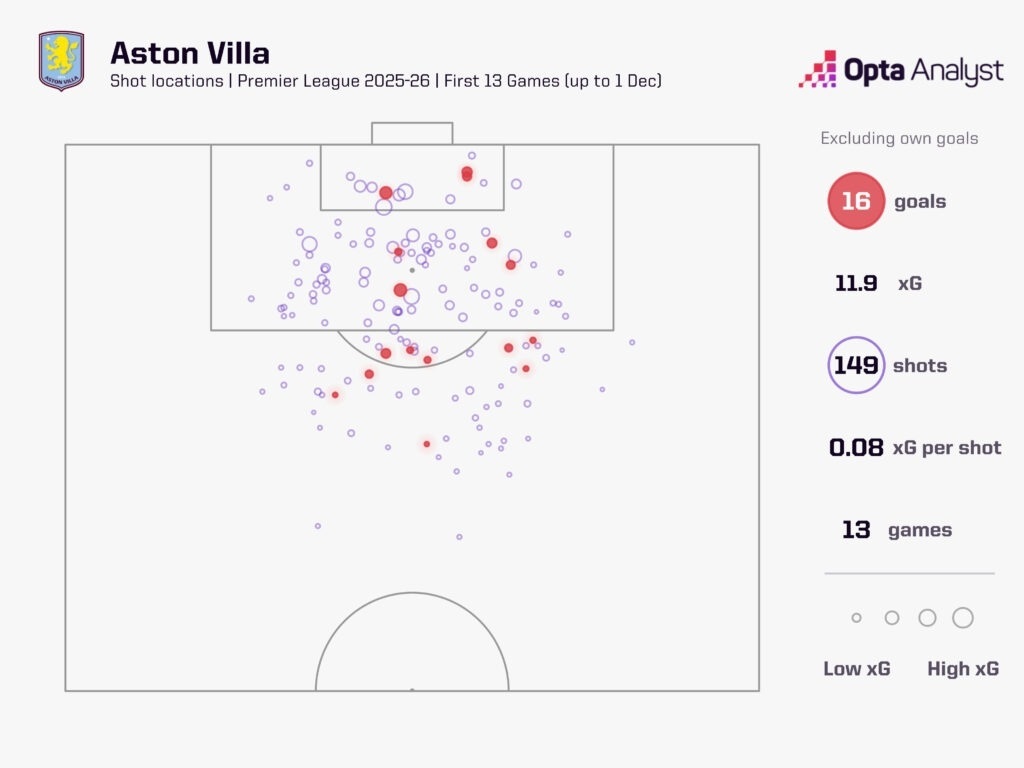
Aston Villa’s early-season success defied traditional analytics. Throughout much of their winning streak, Villa relied heavily on spectacular long-range strikes, scoring more goals from outside the box than any other team in the Premier League this season. With 10 goals from distance at a remarkable 23.8% conversion rate from just 42 shots, they were on course to shatter Chelsea’s 2006-07 seasonal record of 23 long-range goals at their current rate of 0.63 per game—the highest in Premier League history.
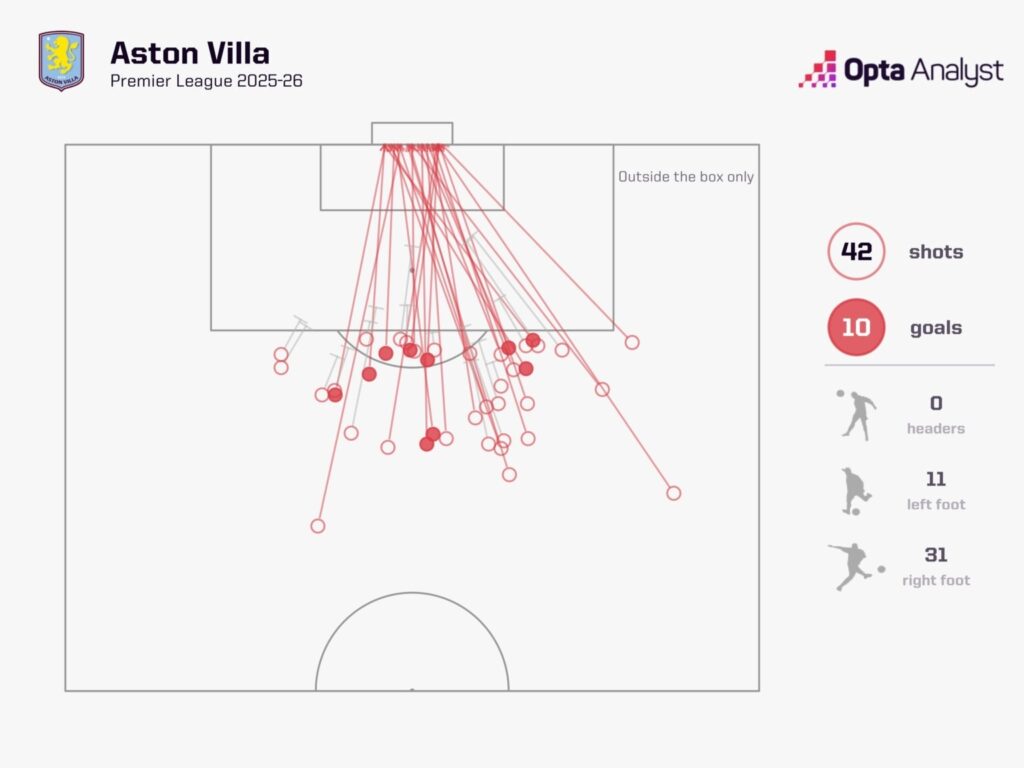
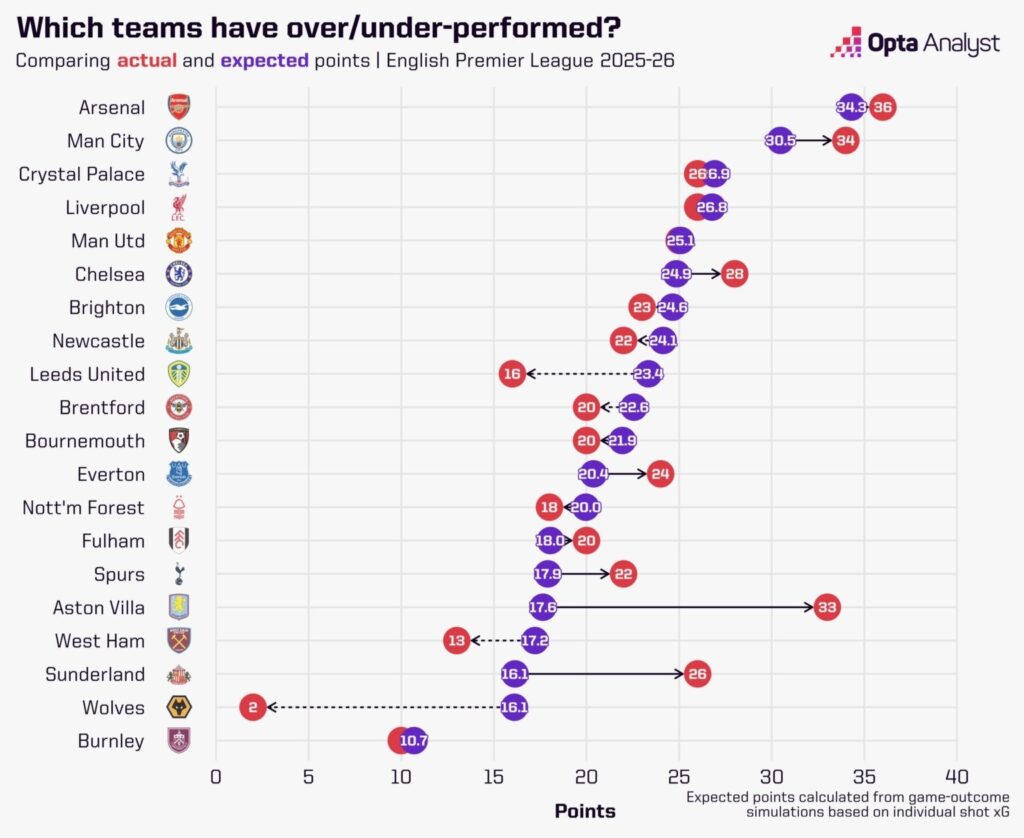
This approach saw Villa climbing the table despite having the second-lowest expected goals in the league, ahead only of relegated Burnley. The average xG value of their shots was lower than that of any other side in the Premier League.
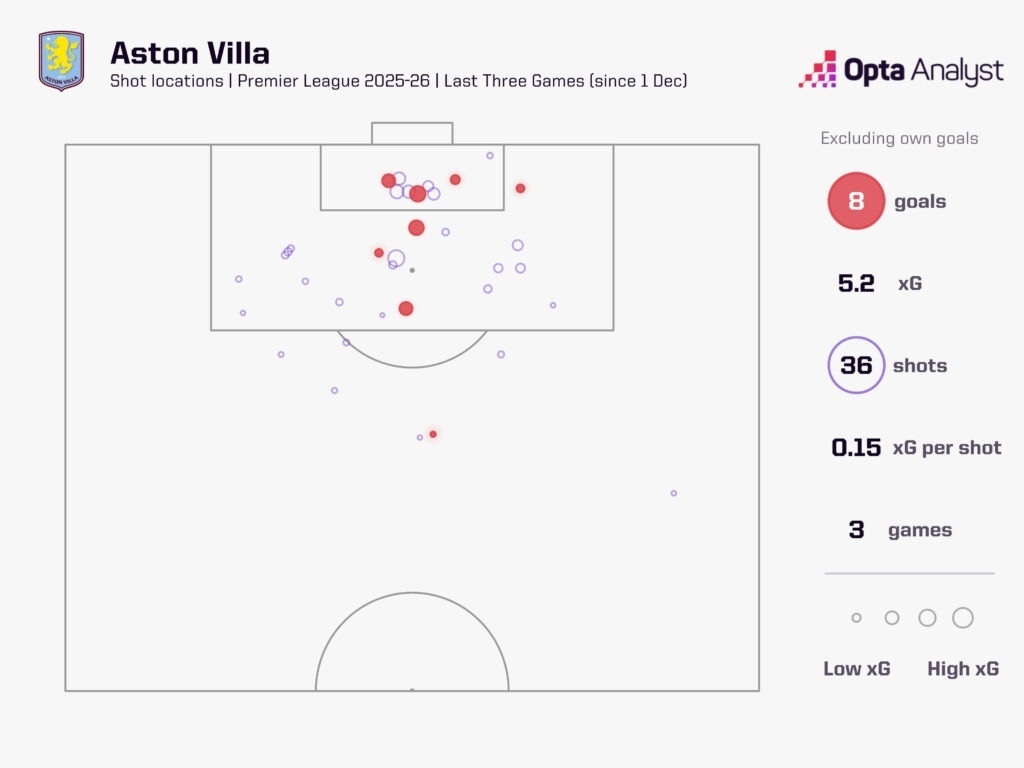
However, recent performances signal a crucial tactical evolution for Aston Villa. Their victories over Brighton, Arsenal, and West Ham showcase a dramatic shift toward higher-quality chance creation. Against Brighton, Villa scored four goals—all from inside the penalty area, with three coming from the six-yard box. They generated six big chances in that match, having managed no more than two in 12 of their 13 previous matches, and only three in the other.
The Arsenal victory featured two goals from inside the box alongside five big chances and their highest expected goals tally of the season at 2.16. Against West Ham, despite managing just 0.67 xG and only one big chance, Villa scored twice from inside the box before Morgan Rogers’ long-range winner. This transformation demonstrates Villa’s growing maturity as genuine Premier League contenders rather than fortunate overachievers.
| Aston Villa Scoring Evolution | First 13 Games | Last 3 Games |
|---|---|---|
| Average xG per Game | 1.2 | 1.7 |
| Average Shot Quality (xG) | 0.08 | 0.15 |
| Big Chances Created per Game | 0-2 (typically) | 5-6 |
| Goals from Inside Box | Limited | Majority |
| Expected Points Position | 19th | 16th |
The Numbers Behind Villa’s Resurgence
The statistical evidence supports Aston Villa’s improved performances. After losing the expected goals battle in eight of their first 10 Premier League matches, Villa have won the xG count in four of their last six games. Their average shot quality has nearly doubled from 0.08 to 0.15 expected goals per attempt, indicating far superior chance creation. This improvement reflects Villa’s evolution from a team scoring against the statistical odds to one creating opportunities that merit their results.
Villa’s six-game winning streak in the Premier League represents their longest in the competition’s history. Across all competitions, nine consecutive victories place them among elite company. They’ve accumulated 30 points from a possible 33 in their recent run—the 220th instance of such achievement in Premier League history. However, unlike many previous teams on similar runs who eventually faded, Villa’s underlying metrics suggest sustainability rather than temporary overperformance.
The transformation becomes even more impressive when examining Aston Villa’s wider context. Following their 1-0 defeat at Liverpool on November 1st, Villa have won every subsequent league match. This represents the first time in Premier League history that Villa have recorded 10 wins from an 11-game stretch, with their last comparable top-flight run dating back to 1920. Their current third-place position, just three points behind Arsenal, carries genuine title implications rather than merely representing a temporary peak.
Tactical Adjustments Driving Success
Unai Emery’s tactical refinements have proven crucial to Aston Villa’s enhanced chance creation. The deployment of John McGinn on the right flank has revolutionized their attacking patterns. McGinn, a left-footed central midfielder who likes to take up central positions and come inside, has delivered 21 crosses in Villa’s last five matches—more than any teammate—while right-back Matty Cash has contributed 17, benefitting from McGinn’s movement infield. This crossing frequency has directly impacted scoring, with Villa netting six open-play goals within 10 seconds of crossing into the box across their last three games (2.0 per game), compared to just one such goal in the previous 13 matches (0.08 per game).
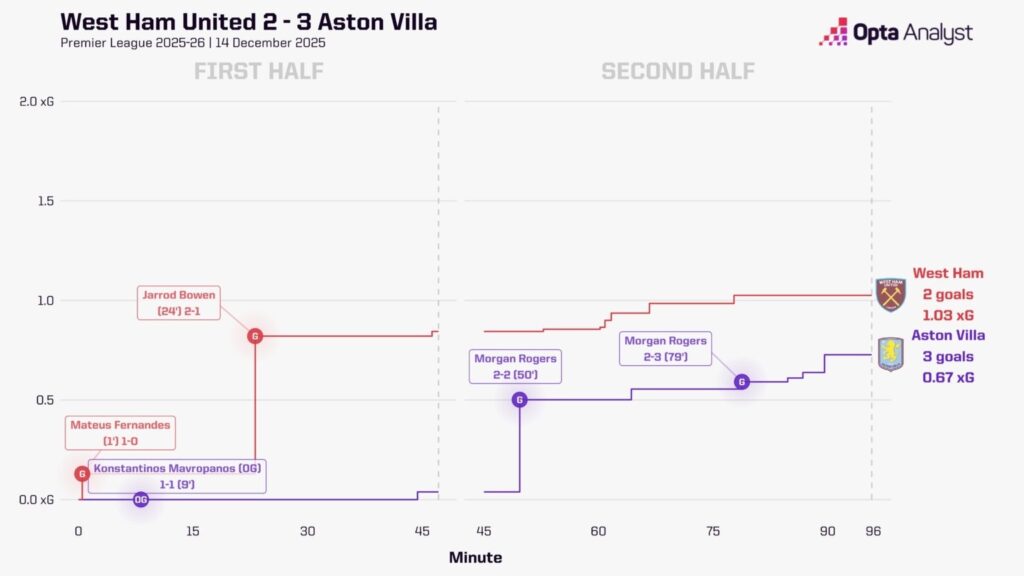
The West Ham victory perfectly encapsulated Aston Villa’s resilience and tactical maturity. Twice falling behind after defensive lapses—first in the opening minute when Ezri Konsa was easily dispossessed inside his own box, then again when Jarrod Bowen turned a Freddie Potts shot into the net from behind most of the Villa defence, played onside by Konsa—Villa demonstrated championship mentality. Rather than panicking or abandoning their gameplan, they maintained composure and tactical discipline. This marked only the second time in Premier League history that Villa won after trailing twice, with the only previous occasion coming back in September 2013 at home to Manchester City. The mark of a team who fully believes in what they are doing.
Emery’s halftime message emphasized maintaining their strategic approach despite the deficit. As he explained after the match: “Two times, we [went] behind. How we came back, in that moment, those goals, I think, is fantastic, because we were getting balance, even losing, and keeping our gameplan, like we planned before the match. And in the dressing room, we were speaking about it. Keep calm, focus again [in] the second half, the gameplan.”
The response vindicated his faith, with Villa scoring twice from inside the box before Morgan Rogers sealed victory with his third long-range goal of the season—more than any other player. This blend of close-range efficiency and retained long-distance threat represents the ideal combination—Villa can create quality chances while maintaining their spectacular shooting option when needed.
Championship Credentials Under Scrutiny
Aston Villa’s title credentials face legitimate scrutiny despite their impressive form. The Opta supercomputer currently assigns them a 6.4% championship probability—modest but reflective of genuine contention. Historical context provides cautionary tales: Arsenal (2023-24), Liverpool (2021-22), and Leicester (2019-20) all enjoyed similar 10-win runs from 11-game stretches yet fell short of titles, with Leicester fading to fifth despite early promise.
However, several factors distinguish Villa’s challenge from previous pretenders. They lack the psychological burden of recent failures that weighs on Arsenal after three consecutive title near-misses. Their Europa League commitments, while demanding, allow greater squad rotation than Champions League participation would require. Most significantly, Villa possess genuine belief without expectation—a liberating mindset for sustained challenges. Emery’s post-match comments reflect this approach: “We are not feeling under pressure. We are feeling ambitious and we try to challenge in Europe and in the Premier League.”
The pressure for success becomes more acute when examining Emery’s managerial record. Among managers with 100+ games at a single Premier League club, Emery’s 1.85 points-per-game rate at Aston Villa ranks 12th all-time. Of the 11 ahead of him, eight won titles with their respective clubs. The three exceptions represent cautionary tales: Mikel Arteta at Arsenal (1.97 PPG, still seeking first title), Rafael Benítez at Liverpool (1.90 PPG), and Mauricio Pochettino at Tottenham (1.89 PPG)—arguably the Premier League’s greatest “nearly men.” The challenge facing Emery involves preventing Villa from joining that distinguished yet ultimately disappointed group.
Sustainability Factors
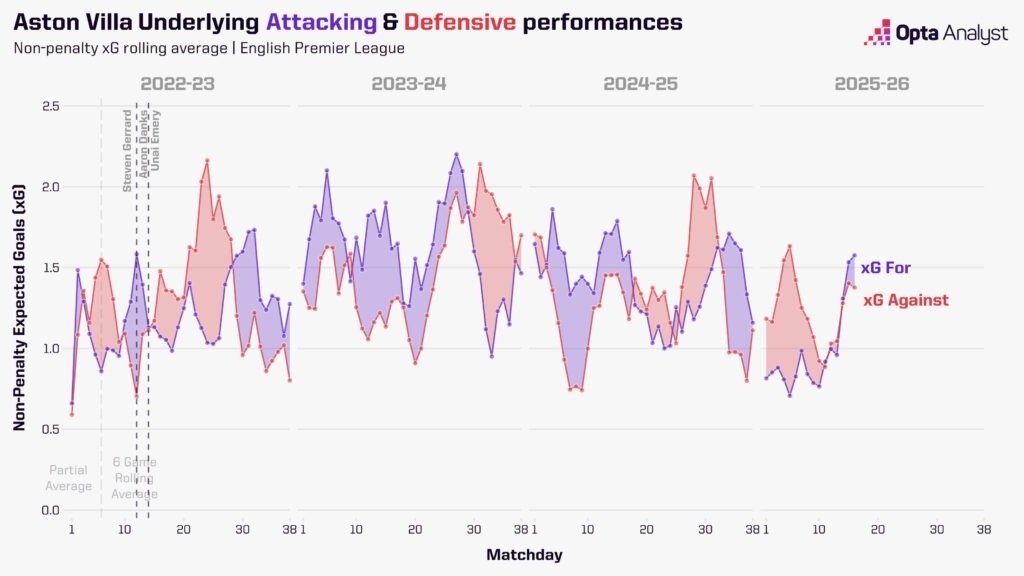
Multiple elements suggest Aston Villa’s challenge possesses genuine sustainability beyond mere hot streak. Their improved expected goals generation indicates performances merit results rather than fortunate outcomes. The six-game rolling average under Emery shows their recent xG for finally exceeding xG against—a crucial indicator of sustainable success. Previously, Villa’s defensive xG significantly outweighed their attacking output throughout most campaigns, making their table position seem fortunate rather than earned.
Villa’s tactical flexibility provides additional sustainability. They can dominate games through superior chance creation, exemplified by the Brighton (2.41 xG) and Arsenal (2.16 xG) victories. When struggling to create, they possess proven long-range threat through players like Morgan Rogers, who delivers crucial goals from distance. This dual capability—creating quality chances while maintaining spectacular shooting option—differentiates Villa from one-dimensional contenders who fade when primary approaches fail.
The squad’s belief represents perhaps the most crucial sustainability factor for Aston Villa. Their West Ham comeback—recovering twice after defensive errors—demonstrates championship mentality. Lesser teams panic after early setbacks; Villa maintained tactical discipline and executed their gameplan. This psychological resilience, combined with improved underlying metrics, suggests their challenge possesses foundation beyond temporary overperformance.
Looking Ahead
Aston Villa face unprecedented opportunity. Against Arsenal, who appear wobbling slightly under championship pressure, and Manchester City, who are rediscovering form under Pep Guardiola, Villa benefit from underdog status. Nobody expects them to maintain title pace—a liberating reality that removes psychological burden plaguing more established contenders.
The question becomes whether Villa represent genuine contenders or another cautionary tale of a brilliant team falling just short. Three points behind Arsenal with improved underlying metrics, tactical flexibility, and championship mentality, Villa possess all necessary ingredients. However, maintaining this standard across an entire Premier League campaign requires sustained excellence that few achieve.
Emery’s challenge involves converting this remarkable opportunity into tangible success. Villa may not encounter many better championship chances than this season’s alignment of form, squad quality, and competitive landscape. The shift from long-range reliance to close-range efficiency makes their challenge more sustainable, but ultimately, Villa must prove they belong among the Premier League’s elite by maintaining this standard until May.
As Villa continue their record-breaking run, their evolution from struggling starters to genuine title contenders represents one of the season’s most compelling narratives. Whether they ultimately succeed or join the ranks of brilliant teams who fell short remains to be determined, but their recent transformation from long-range gamblers to clinical finishers suggests this challenge possesses genuine sustainability rather than temporary fortune.