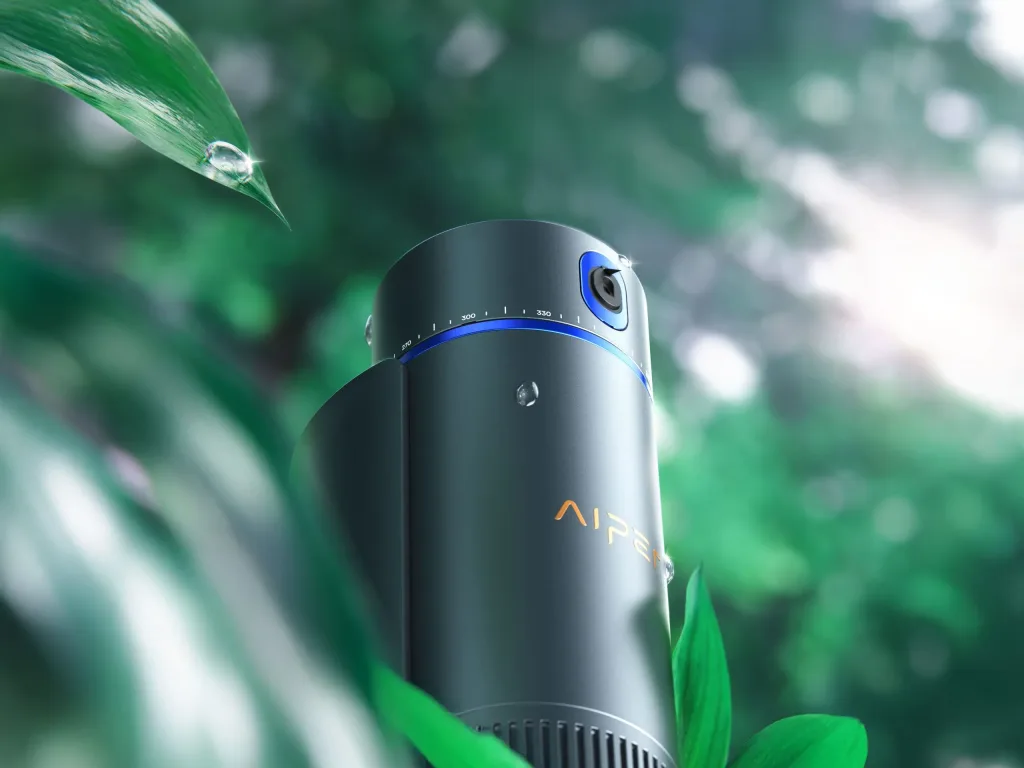
Irrigation technology just got a serious AI upgrade — and it’s complicated. The Aiper IrriSense 2 is a smart irrigation system that uses AI-driven scheduling to water your garden based on real-time weather data, soil conditions, and plant profiles. It’s clever in ways that genuinely impress. But as Wired found in its hands-on review, clever doesn’t always mean consistent. For anyone tracking how AI is reshaping everyday home systems, this one’s worth paying close attention to.
What the Aiper IrriSense 2 Actually Does — and Why AI Makes It Different
Here’s the thing most coverage misses: the IrriSense 2 isn’t just another smart sprinkler timer. It’s an AI-native irrigation controller — meaning its core value proposition is machine learning, not just app control.
The device connects to your home Wi-Fi and pulls in hyperlocal weather forecasts. It then cross-references that data against your manually entered plant and soil profiles to generate a custom watering schedule. Rain predicted Tuesday? The system skips Monday’s cycle automatically. Soil flagged as sandy? It adjusts duration and frequency without you touching anything.
That’s the pitch. For a garden gadget, it’s genuinely ambitious. The kind of AI systems we’ve seen tackle enterprise contexts is now showing up in consumer hardware — and the IrriSense 2 is one of the clearest examples of that shift reaching your backyard.
Setup is straightforward: connect the controller to your outdoor spigot, download the Aiper app, input your zone details, and let the AI take over scheduling. You can manage up to 12 zones, which covers most residential gardens.
IrriSense 2 Specs, Price, and Irrigation Performance by the Numbers
Let’s get specific. The specs tell a story the marketing glosses over.
| Feature | IrriSense 2 Details |
|---|---|
| Price | $149.99 (approx. ₹12,500) |
| Zones Supported | Up to 12 |
| Connectivity | Wi-Fi (2.4GHz) |
| Weather Integration | Real-time hyperlocal forecasts |
| Soil Sensor Support | Optional add-on (sold separately) |
| App Platform | iOS and Android |
| Voice Assistant | Amazon Alexa, Google Home |
At $149.99, it’s positioned against Rachio 3 and RainBird’s smart controllers — both well-known names. Wired’s testing found the AI scheduling worked well roughly 70% of the time. The other 30%? Watering cycles that fired during light rain, or skipped sessions on dry days when forecast data lagged behind.
That inconsistency is a real problem. These errors don’t just waste water — they can damage plants or spike your utility bill. The soil sensor add-on (priced separately, exact cost not yet public) is almost mandatory for reliable performance. That effectively raises the real cost of ownership.
One bright spot: the app UI is clean and genuinely easy to navigate, even for non-technical users. That counts for something.
What Tech Analysts Are Saying About AI-Powered Irrigation
The IrriSense 2 represents a broader trend that AI observers have been tracking. AI is moving from cloud servers into physical consumer devices — and the performance gaps are becoming obvious fast.
The real question: can AI scheduling ever be reliable enough to fully replace manual oversight for something as important as home irrigation? Right now, the answer is “not quite.”
As VentureBeat AI has covered extensively, AI in consumer hardware often suffers from what engineers call “last-mile failure” — the model works great in controlled conditions but falters when real-world variables stack up (patchy Wi-Fi, inaccurate local weather APIs, user input errors). The IrriSense 2 fits that pattern almost exactly.
Still, the innovation here is real. Aiper is one of the few consumer hardware companies actually building AI scheduling from the ground up rather than bolting an app onto a dumb timer. That distinction matters.
The comparison that actually fits: think of the IrriSense 2 as the early Nest Thermostat — promising concept, rough first execution, but pointing clearly at where the category is going. The challenges of AI-in-hardware are fundamentally the same: ambition outpacing infrastructure.
Verdict: impressive for early adopters, frustrating for anyone who needs it to just work.
FAQ: Smart Irrigation Systems and the IrriSense 2
Q: Is the Aiper IrriSense 2 worth buying in 2026?
If you’re an early adopter comfortable with occasional quirks, yes — the AI-driven scheduling is genuinely ahead of most competitors. If you need rock-solid reliability from day one, wait for a firmware update or consider Rachio 3.
Q: How does AI improve scheduling compared to traditional timers?
Traditional timers run on fixed schedules regardless of weather. AI-powered systems like the IrriSense 2 pull real-time forecast data and adjust automatically — skipping cycles before rain, extending them during dry spells. When it works, it can cut water usage by an estimated 30-50%.
Q : Does the IrriSense 2 work without the soil sensor add-on?
Technically yes, but performance drops noticeably. The AI relies heavily on soil moisture data to make accurate decisions. Without the sensor, it’s working from weather forecasts alone — which explains the 30% inconsistency rate found in testing.
Q: How does the IrriSense 2 compare to Rachio 3 on price?
The Rachio 3 (8-zone) retails at around $229.99, making the IrriSense 2 at $149.99 the more affordable entry point. But Rachio’s scheduling reliability is better-established. You’re paying less with Aiper and accepting some performance trade-offs in return.
Q: Will AI-powered systems become the standard?
Almost certainly. As weather API accuracy improves and on-device AI chips get cheaper, the performance gaps will close. The IrriSense 2 is an early signal of where smart home technology is heading — even if it hasn’t fully arrived yet.
The irrigation category is changing fast, and the IrriSense 2 is proof that AI can make a real difference in how we manage water at home — even if the technology still needs time to mature. For anyone watching how AI embeds itself into physical systems, this device is a genuinely interesting case study. Just go in with realistic expectations.