NZ113/3 (14.4 ov)
 IND
IND NAM321/6
 IRE208/5 (37.3/50 ov, target 322)
 KHO
KHO ETT
ETT NAP
NAP ROMA
ROMA CHE
CHE TOT
TOT VAL
VAL VIL
VIL DOR
DOR SGE
SGE RIY
RIY TAA
TAA LAZ
LAZ PAR
PAR RCL
RCL PAR
PAR MOZ19
MOZ19 UGA23/0 (0.5/20 ov, target 20)
 Ipswich1
 Nottm Forest1
 Alavés1
 Málaga1
 Torino3
 Monza2
 KENYA
KENYA QAT
QAT SWD-W
SWD-W EPR-W
EPR-W TTN-W
TTN-W WPR-W
WPR-W BOR135/3 (18/20 ov, target 137)
 WAR136/8
 NZ-A135/3 (41 ov)
 IND-A113
 DHA293/3 (84.1 ov)
 RAJ
RAJ MYMS299/4 (87 ov)
 CHATT
CHATT RAN320/5 (80 ov)
 BAR
BAR SYL
SYL KHU
KHU MEX-W
MEX-W ARG-W
ARG-W UAE
UAE NED
NED PAK
PAK ENG
ENG IND-W
IND-W ZIM-W
ZIM-W GMB
GMB LES
LES ZMB
ZMB NGA
NGA AFG170/3 (34.3/50 ov, target 170)
 ZIM169
 Brest1
 Nice2
Nice2 Stuttgart2
 Gladbach3
 Al Ahli4
 Al Khaleej1
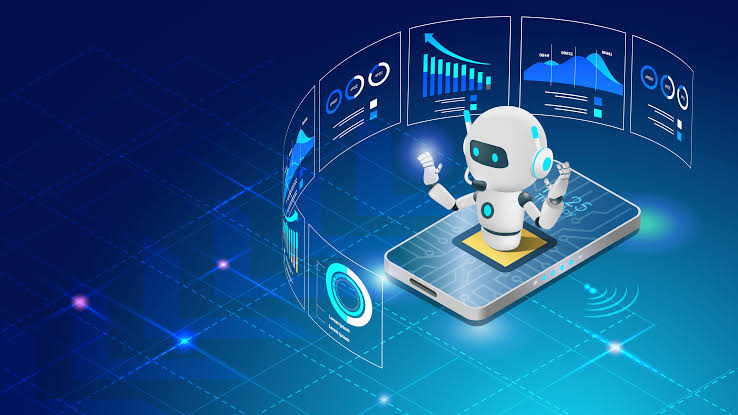
The Acceleration of Agentic Capabilities
Agents Ready Act: OpenAI shipped GPT-4o on May 13, 2024. That release boosted multimodal interactions, letting agents process visual and audio inputs right alongside text. Then, on May 20, 2024, Microsoft unveiled Copilot+ PCs with neural processing units capable of delivering more than 40 trillion operations per second.
That hardware shift lowered the barrier for running inference locally. It also enabled faster decision loops inside office applications. Meta released Llama 3 on April 18, 2024, offering open-weight architectures that let developers fine-tune specialized agents for niche enterprise workflows. Meanwhile, Apple introduced Apple Intelligence on June 10, 2024, weaving generative capabilities directly into iOS 18, iPadOS 18, and macOS Sequoia. The integration showed just how fast things can go wrong — coverage of OpenAI’s Agents Targeted highlighted vulnerabilities when autonomous scripts interact with external infrastructure without adequate containment protocols.
Operational Logic Versus Organizational Context
The divergence between technical execution and business reality creates significant exposure. An agent can approve a supplier payment by verifying that the invoice matches the purchase order, confirming the amount falls within budget limits, and validating that the vendor exists in the system database.
All logical checks pass, yet the decision proves incorrect because the governing contract expired yesterday. Will McAllister, senior vice president and managing director for EMEA at Guidewire, emphasized this distinction during industry discussions. He noted that the risk lies in decisions that are entirely logical within the available data but fail due to temporal shifts in business agreements. Human review previously served as a safeguard, but rubber-stamping confident outputs allows flawed recommendations to trigger consequential actions.
This gap between algorithmic verification and contractual validity poses a growing challenge for finance and procurement teams. Governance frameworks like those discussed in Control Harness, Agents attempt to establish boundaries for autonomous behavior, though enforcement remains inconsistent across different deployment environments.
Navigating the Risks When Agents Ready to Act
Enterprises must bridge the comprehension deficit before scaling agentic deployments. Models require mechanisms to ingest dynamic metadata, such as contract renewal dates, policy updates, and stakeholder hierarchy changes, rather than relying solely on static prompts. Without this contextual awareness, agents risk optimizing for local correctness while violating global business constraints. Dynamic knowledge retrieval stands as a critical requirement. Systems must query live repositories for current terms rather than relying on training data cutoffs, ensuring that approvals reflect the most recent legal and commercial realities.
Here’s why simple pattern matching falls short in complex corporate environments. The trajectory suggests a shift toward hybrid architectures where humans validate high-stakes decisions while agents handle routine transactions. Organizations deploying these tools need rigorous audit trails and real-time policy engines that update as business conditions evolve. Adoption trends indicate that early movers are cautious. Coverage of Big Banks’ Agents revealed that financial institutions are prioritizing stability and compliance over speed, delaying full automation until context-handling improves. The convergence of powerful models and capable hardware has delivered systems that can execute tasks with unprecedented speed. But the ability to perform does not guarantee the ability to comprehend. As agents ready to act become central to enterprise operations, the focus must shift from raw capability to deep organizational alignment. Success depends on ensuring that autonomous systems interpret not just the command, but the evolving landscape in which that command resides. Autonomous systems demand context, not just commands. For more detail, see VentureBeat AI.
FAQs
Why do AI agents make errors even when logic checks pass?
Agents may execute tasks correctly based on static data while missing dynamic business changes, such as expired contracts or updated policies, which fall outside their immediate verification scope.
How can enterprises mitigate the risk of autonomous decision failures?
Organizations should implement hybrid architectures that combine human validation for high-stakes actions with real-time policy engines that continuously update to reflect current commercial and legal requirements.
What distinguishes agentic AI from traditional assistant models?
Agentic systems can autonomously trigger workflows, update records, and approve requests without direct human intervention, whereas traditional assistants primarily analyze information and present results for human review. Source: Techradar.
Was this article helpful?
Your feedback directly improves future articles on this site.