
 NZ
 IND
 NAM
 IRE
 MOZ
 UGA
 Aston Villa
 Man City
 Rayo
 Elche
 GMB
 ZMB
 NGA
 LES
 Cagliari
 Bologna
 IPS1
 NFO1
 ALA1
 MCF1
 TOR3
 MON2
 BRE1
 NICE2
 TAS53/4 (13/50 ov, target 305)
 VIC304/7
 NZ-A96/0 (31 ov)
 IND-A113
 DHA
 RAJ
 MYMS
 CHATT
 RAN
 BAR
 SYL
 KHU
 UAE
 NED
 PAK
 ENG
 IND-W
 ZIM-W
 AFG170/3 (34.3/50 ov, target 170)
 ZIM169
 DOLPH56/0 (3.5/8 ov, target 56)
 SWD51/4 (8/8 ov)
 WSW1
 BRI1
 Como
 Sassuolo
 Augsburg
 Union Berlin
 Cologne
 Schalke
 Mainz
 Bremen
 RB Leipzig
 Elversberg
 VFB2
 BMG3
 AHL4
 KHA1
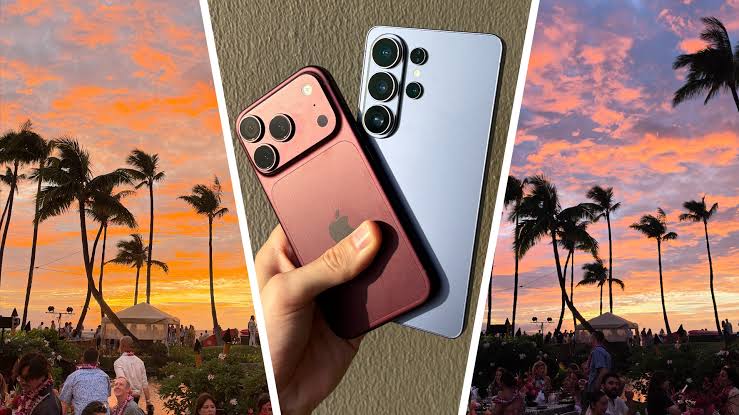
February 2026 brought the rumored unveiling of Samsung’s latest flagship, while Apple is projected to follow in September. The resulting camera showdown highlights a stark divide in mobile photography philosophy.
Early supply chain data suggests significant hardware divergences ahead of their respective rollouts. Details regarding sensor dimensions, lens coatings, and image signal processor benchmarks remain based on unconfirmed leaks and industry supplier briefings rather than verified manufacturer specifications. As consumers evaluate these anticipated flagship cycles, understanding where realism meets creative styling remains essential for informed purchasing decisions.

How Does The Samsung Galaxy Camera Hardware Compare To Apple’s Specifications?
According to technical breakdowns, the Samsung Galaxy S26 Ultra is expected to ship with 16GB of unified memory and a base storage tier starting at 256GB, providing ample overhead for massive image files. Meanwhile, the competitor is anticipated to rely on its A20 Pro processor to handle intensive computational tasks without bottlenecking the imaging pipeline.
Energy management remains a critical differentiator, as the South Korean flagship reportedly retains a 5,000mAh battery capacity designed to sustain prolonged video capture sessions. The internal architecture prioritized raw throughput, ensuring that multi-lens switching did not drain resources during complex shooting scenarios. This hardware foundation directly influenced how quickly images rendered and stabilized across varying lighting conditions.
The sheer volume of sensor data requires a memory bandwidth that standard processors simply cannot match.
Early benchmark projections indicated that allocating more silicon real estate to image signal processing allowed for faster burst mode performance. Buyers should consider whether the physical size of these components align with their daily carry requirements, especially when utilizing the advanced features linked to the Galaxy S26 Ultra.
Which Device Offers More Accurate Natural Lighting Reproduction?
Apple traditionally emphasized fidelity, and current rumors suggest the iPhone 18 Pro is rumored to feature a 48-megapixel triple camera system engineered to minimize digital manipulation. This configuration aims to deliver consistent exposure profiles that mirror human visual perception rather than enhancing contrast artificially. The primary advantage lies in the ability to recover shadow detail without introducing noise or flattening textures.
Photographers who prefer a documentary aesthetic often gravitate toward this approach, as it preserves the authentic atmosphere of a scene. However, relying on such high-resolution sensors demands aggressive post-processing algorithms to compress the output into shareable formats. Users can maximize these capabilities by customizing shortcuts through the iPhone Action Button to trigger instant capture sequences. The debate ultimately centers on whether a picture should document reality exactly or elevate it beyond everyday sight. This tension defines the core marketing narratives both companies deploy leading up to launch week.
How Do Software Algorithms Shape The Final Visual Output?
Image processing represents the invisible battlefield where proprietary code dictates consumer satisfaction. One camp utilizes machine learning to identify subjects and optimize color grading automatically, creating a distinctly polished and vibrant appearance. Conversely, the opposing philosophy restricts algorithmic intervention, allowing photographers to manually adjust parameters for granular control over white balance and saturation.
Industry reports suggest that the latter method appeals to purists seeking editorial consistency across thousands of shots. The former excels at social media optimization, guaranteeing that every frame looks visually striking even under challenging backlight conditions. Enthusiasts exploring the nuances of the Your Using iPhone framework frequently discover hidden toggles that shift this balance between automation and manual override. Understanding these underlying software architectures helps users predict how their gear performs in low-light environments. The choice fundamentally depends on whether you trust artificial Intelligence to make artistic decisions for you.
What Storage Implications Arise From High Resolution Capture Modes?
Managing large file sizes requires strategic planning for mobile photographers who shoot extensively. Burst mode and high-fidelity RAW formats rapidly consume available disk space, necessitating robust cloud synchronization strategies. Reports indicate that opting for the minimum storage tier forces frequent cleanup routines that interrupt creative workflows. Professional creators recommend investing in higher capacity models to avoid compromising long-term archiving plans.
The trade-off between upfront cost and operational convenience remains a primary consideration for budget-conscious buyers. Evaluating your actual monthly photo output provides clarity on which configuration offers genuine value over time. Cloud integration ensures that even massive libraries remain accessible across multiple devices without degrading local storage speeds. Ultimately, securing adequate capacity protects against data loss during critical moments. The race to dominate the premium smartphone market hinges on satisfying diverse photographic preferences rather than achieving uniform excellence. Both manufacturers have outlined ambitious roadmaps for integTechradar
FAQs
What are the main differences between the two camera systems?
The primary distinction lies in their processing philosophies, with one favoring natural accuracy and the other emphasizing vibrant enhancement.
Will the new flagship phones support professional video recording?
Leaks indicate that both devices aim to deliver cinematic-grade footage with advanced stabilization features.
How important is battery life for heavy camera usage?
A substantial power reserve ensures uninterrupted shooting sessions without forcing users to seek external charging solutions.
Was this article helpful?
Your feedback directly improves future articles on this site.




