DOR0
 BET0
 FCP1
 NAP0
 RCL0
 COMO2
 PSV0
 BRU1
 RBL0
 MNC0
 SLP0
 ARS1
 VFK1
 SAB1
 CAR3
 WHU0
 BAN
 WI
 AFG
 ZIM
 Churchill
 NorthEast
 Mohun Bagan
 Odisha
 Milan
 Ferencvaros
 Anderlecht
 RB Salzburg
 C Palace
 Hoffenheim
 Levski Sofia
 Jagiellonia
 AEK2
 RMA3
 FEN3
 LIV2
 WI-A123 (16.3/20 ov, target 220)
 LIONS219/7
 REN0
 OLY0
 MEGHA144
 NAGA254 & 184 (78.5 ov)
 TPURA268 & 191
 SAU118 & 131/7 (41 ov, target 342)
 BENG143 & 76/4 (24 ov)
 MAHA218
 ODSA23/0 (5 ov)
 JHK433/8d
 CHD94 & 189/7 (57 ov) (f/o)
 TN571/7d
 CGR284 & 254
 HYD280 & 13/2 (4.5 ov, target 259)
 DELHI344
 SVCS266 & 280/5 (66 ov)
 GUJ534/9d
 KER279 & 41/1 (16 ov) (f/o)
 HP153 & 83/4 (29 ov, target 447)
 RAJ78 & 521/8d
 J & K491/5 (130 ov)
 PONDI385
 MNPR289
 SIKM432 & 81/0 (25 ov)
 MIZO571/9d
 ARP285 & 86/1 (32 ov)
 AS-W
 BH-W
 ST-W
 PS-W
 MS-W
 SS-W
 JAB
 LUL
 BIK
 KAG
 EASTN
 DOLPH
 UAE226/8
 OMA184/9 (50 ov, target 227)
 NZ185 (40.2 ov)
 IND143/5 (22.4/32 ov, target 143)
 HH-W154/7
 MR-W155/6 (19.5/20 ov, target 155)
 CD283 (45.5/50 ov, target 358)
 AUCK357/7
 WXM0
 MID0
 BRC1
 WOL0
 QUIN0
 MRMK1
 UNCA0
 UPST1
 Lillestrom
 Viktoria Plzen
 NEC
 Omonia
 Atlético0
 Bayern2
 Barcelona3
 Aston Villa0
 Bodo/Glimt0
 Lille0
Indian telcos could be fined up to ₹20 lakh per quarter, per circle, for complaint-redressal lapses. The report, dated Tuesday, November 3, 2026, sets a ceiling on potential penalties but leaves the enforcement start date unconfirmed.
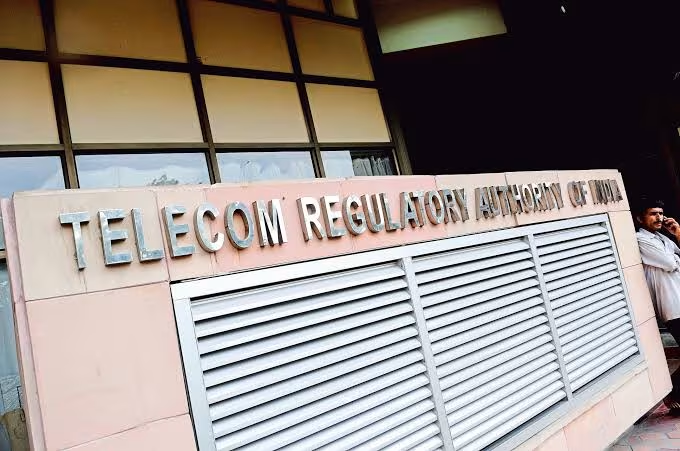
November 3: Report Details the Complaint Rules
TRAI’s action concerns what’s reportedly the fourth amendment to the Telecom Consumers Complaint Redressal Regulations. It covers telecom operators and internet service providers that fail to resolve consumer complaints or appeals as the rules require. The amendment caps the financial disincentive for non-compliance at ₹20 lakh per quarter for each licensed or authorised service area, commonly called a circle.
So the limit applies to each service area and each quarter, not as one nationwide cap. The rules don’t mean every unresolved complaint automatically brings the maximum penalty, and the regulator has reportedly directed providers to keep a complaint-redressal facility operating around the clock. Indiatimes first reported the details. For customers, the key distinction is that the framework covers both access to a complaint channel and the proper resolution of complaints or appeals.
What the ₹20 Lakh Cap Covers
The penalty applies when a service provider handles a complaint or appeal in breach of the amended regulations. The maximum is ₹20 lakh per quarter for each licensed or authorised area. Operators serving multiple circles therefore face exposure in each area where a breach occurs.
The available details don’t say the maximum will apply in every case. This is a regulatory measure, not a device launch, and it provides no RAM, storage, processor, or enterprise-terminal display specifications. Those hardware details have no bearing on the stated penalty framework. The enforcement start date remains unconfirmed.
Why the Rule Matters to Telcos and Customers
A round-the-clock complaint channel can help customers raise issues more easily, but access alone won’t resolve them. The amended rules focus on how providers dispose of complaints and appeals. That puts operators’ handling processes at the heart of compliance.
For subscribers, the change could make it clearer where to submit a grievance and whether the provider has addressed it. The per-circle structure makes local compliance important for providers. They can’t treat complaint handling as one national process when performance and regulatory exposure are assessed across separate licensed areas. Telcos and internet providers will need to track open grievances, appeals, and closure outcomes carefully to show their processes meet the amended requirements.
What Happens Next
The next practical milestone is confirmation of when the penalty framework takes effect. Until then, providers and customers have a published cap and complaint-handling direction, but no confirmed enforcement timetable.
Providers can choose their own software and operational approach; no specific compliance platform or hardware configuration has been announced. Customers should keep using their provider’s complaint channels and retain relevant complaint or appeal records. “indian telco fines” title: “Indian Telco Fines: ₹20 Lakh Penalty per Quarter for Complaint Redressal Lapses”
FAQs
What is the penalty for Indian telcos regarding complaint redressal lapses?
Indian telcos can face fines of up to ₹20 lakh per quarter for complaint-redressal lapses, with penalties assessed per circle. Each licensed area is evaluated separately, making local compliance important when providers handle customer grievances.
How should customers manage their complaints under the new framework?
Customers should continue using their provider’s established complaint channels and keep records of their complaints or appeals. These records can help them track grievances and check whether providers address their concerns under the new complaint-handling requirements.
Read Next
- The google suncatcher Satellite Runs AI in Orbit and Sends a Haiku Home
- Stuck Without A Hard Drive
- ‘AI is not creating the problem’: OpenAI CEO Sam Altman says AI is merely uncovering all
Was this article helpful?
Your feedback directly improves future articles on this site.