SA329 & 140/4 (47 ov)
 AUS429
 BAN272
 WI134/4 (48 ov)
 FRO1
 LEC0
 NSR0
 KHO0
 RIY0
 QAD0
 FIO
 ATA
 NZ
 IND
 NAM
 IRE
 Abha
 Al Ittihad
 NorthEast
 Bengaluru
 Al Diriyah
 Neom SC
 Le Havre AC
 PSG
 Nice
 Rennes
 KHA4
 HAZ2
 AFG221/7
 ZIM202/5 (20 ov, target 222)
 UAE199/6 (47.3/50 ov, target 197)
 OMA196
 Genoa2
 Juventus0
 WELL
 OTAGO
 SIKM184 & 87/4 (32 ov, target 212)
 NAGA187 & 208
 JHK131/4 (47 ov)
 DELHI515/5d
 ODSA194
 SVCS13/0 (5 ov)
 BRODA616
 J & K303 & 8/1 (6 ov) (f/o)
 CHD685/5d
 HP340/3 (104 ov)
 CGR216/8 (95 ov)
 AP231
 HYD380
 PNJB431 & 57/0 (24 ov)
 KNTKA490/9d
 TPURA194 & 98/3 (38 ov)
 KER141 & 53/4 (20 ov, target 408)
 BENG350 & 198
 NED
 BH-W
 SS-W
 AS-W
 MS-W
 MIS
 TOK
 HKG
 SCOT
 IND-W133/2 (17/50 ov, target 132)
 ZIM-W131
 MOW185/3
 VAG90/9 (20 ov, target 186)
 SWD158/7 (18.3/20 ov, target 158)
 TITNS157/6
 NUM1
 OVI0
 MERC1
 WU0
 HAM0
 SIR0
 KOZ0
 UTR0
 VIE0
 JUV0
 PFC1
 BK0
 BAL0
 ELD0
 CAL0
 OSA0
 COR0
 ZAM0
 Al Shabab
 Al Ahli
 Elversberg
 Mainz
 Monza1
 Napoli4
 Milan2
 Bologna4
 Parma0
 Udinese0
 Venezia0
 Inter Milan2
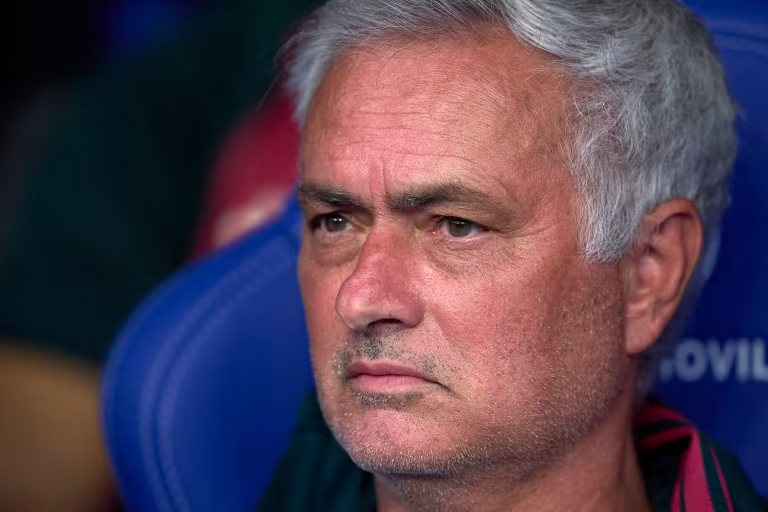
Supporters of Barcelona have spent years needling Jose Mourinho with one word: “traductor”, the Spanish term for translator. The jibe pokes fun at where he started out. As a young man, he learned the football trade by interpreting for Sir Bobby Robson, trailing the Englishman from Sporting to Porto and eventually to Camp Nou in 1996. By 2000 he was running Benfica, the opening chapter of a coaching story that delivered two Champions League crowns and trophies across England, Italy and Spain.
He was always far more than a go-between. His career shows a man who is hardworking, stubborn, reflective, tactically sharp and, crucially, comfortable when matches descend into disorder. All of those traits were on show last weekend when Real Madrid edged Barcelona 2-1, a result that invited a broader look at 26 years in the dugout.
A Clasico Built on Detail by Jose Mourinho
With Vinicius Jr banned, Jose Mourinho lined up a 4-4-2. Federico Valverde dropped to right-back, while Bernardo Silva joined Aurelien Tchouameni in the middle. Arda Guler and Yan Diomande took the wide roles, and Jude Bellingham partnered Kylian Mbappe in attack.
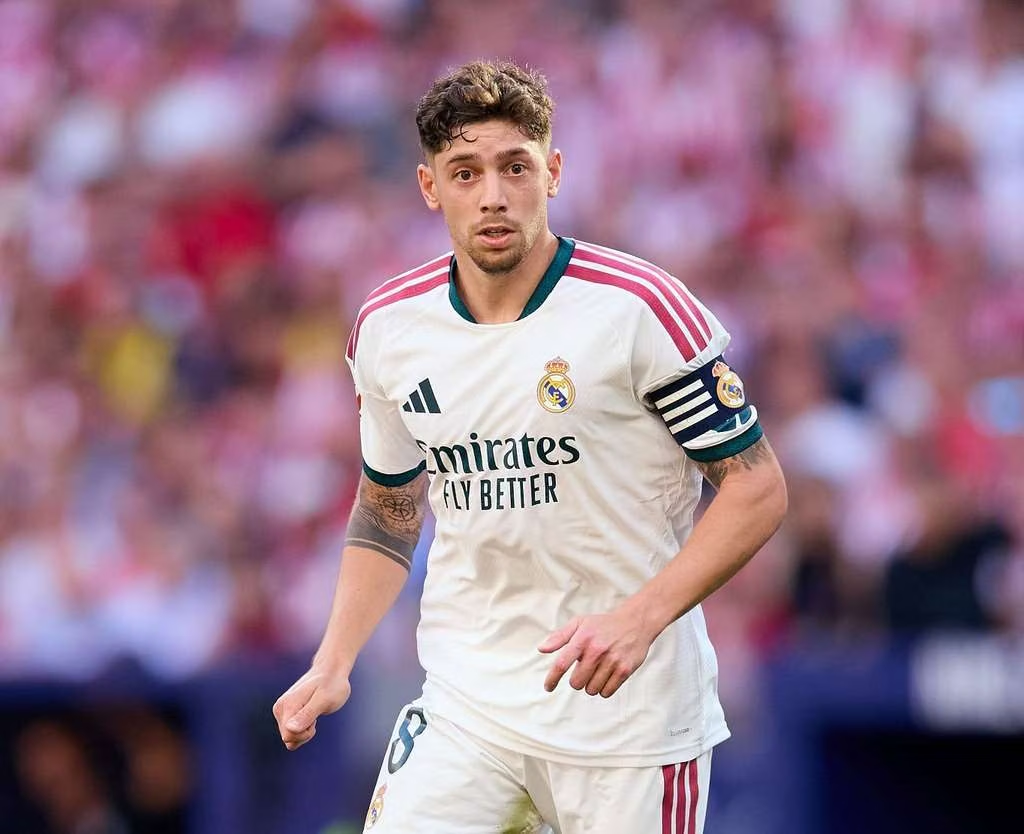
As in many of his biggest nights, Mourinho handed a tireless runner a shadowing job. Silva was told to follow Pedri everywhere, a demanding assignment that sharply reduced the Barcelona midfielder’s impact.
Barcelona press aggressively and swarm toward the ball, and Real Madrid turned that habit against them. Players inviting pressure on one flank created room on the opposite side, which Madrid reached through skillful dribbling or sweeping diagonal passes. The pattern was clearest when play moved from right to left and Marc Cucurella slipped in behind Lamine Yamal.
A Rare Tactical Confession
Afterwards, Mourinho did something unusual. He seldom picks apart his own tactics in public, yet this time he explained that Barcelona struggled most with the late, deep runs of his midfielders. Given how often he treats press conferences as an extension of the match, it may have been deliberate, a hint to Barcelona’s future rivals. Either way, by sprinting into the space behind a high defensive line, Madrid dismantled the front-foot style Hansi Flick is known for.
Why His Work Gets Overlooked
Single-match triumphs earn Mourinho deserved applause. His wider philosophy, however, is less often appreciated. Lately the sport has crowned coaches with clear systems, recognisable passing patterns and fixed positional rules. Mourinho goes another way. He relies on his players’ quality and lets his tactics change from club to club. That flexibility is harder to decode from the outside, and so it is easy to misread.

He follows tactical periodisation, an approach created by Vitor Frade, who sat on the coaching staff at Porto while Mourinho worked under Robson in the mid-1990s. Drawing on psychology, sociology, neuroscience and systems theory, Frade rejected the idea that technical, tactical, physical and mental work should be separated. In a match, he argued, all of them operate at once.
When Mourinho arrived at Real Madrid this season, The Athletic reported that sessions were shorter, sharper and always built around the ball. Even fitness work was done with a ball at the players’ feet.
Controlling Chaos or Embracing It
Coaches tend to split into two camps. One group tries to reduce a game’s unpredictability. The other, which includes followers of tactical periodisation, accepts it and trains players to adapt.
Mourinho’s early years were remarkable: the UEFA Cup and Champions League at Porto, domestic dominance with Chelsea, a treble at Inter and a La Liga title with Madrid. From 2019 to 2025, though, he took on clubs with humbler ambitions. Since the EFL Cup and Europa League at Manchester United in 2017, his lone trophy has been the 2022 Conference League with Roma.
That period favoured the chaos-minimisers. Spectators watched “chess-like” contests where winning sides held the ball, used symmetrical, predictable shapes and assigned fixed roles such as touchline wingers and inverted full-backs. Opponents defended zonally, which let attackers engineer numerical overloads in chosen areas.
Recently, man-to-man pressing has spread. It removes those overloads and rushes the player on the ball into quicker decisions. Matches now look wilder, and that may suit Mourinho perfectly.
Players Solving Their Own Problems
Frade’s students view disorder as an inseparable part of football. Training holistically is meant to equip players to solve problems in the moment. That could explain why Mourinho sides often flourish as underdogs, in high-pressure fixtures, or once games drift from the script.
He does not try to dictate every choice. He prepares players to find answers themselves, and with better players those answers should improve. Against Barcelona, Bellingham, Mbappe and Silva each played in a distinct way, yet the pieces fitted together when it mattered most. Mbappe threatened the back line and finished chances. Bellingham won duels and glided past opponents on the ball. Silva calmed the tempo under pressure, then released teammates further forward once Barcelona had committed.
The Sequel Specialist
Mourinho loves a return. He started managing at Benfica and went back there in September 2025, 25 years later. He won consecutive league titles at Chelsea, came back six years on and won a third. Now, 13 years after his first stint at the Bernabeu, he is at Real Madrid again. With football’s landscape shifting, his tactical outlook may be getting a sequel too.
Read More: Julián Álvarez Apologises to Atlético Madrid Fans for World Cup Comments
Also Read: AC Milan Reach Agreement With Strahinja Pavlovic on New Deal Until June 2031
FAQs
Why do Barcelona fans call Jose Mourinho "traductor"?
It refers to his early career as Sir Bobby Robson’s interpreter, and fans use it to belittle his modest beginnings.
What tactics did Jose Mourinho use against Barcelona?
Real Madrid played a 4-4-2, man-marked Pedri with Bernardo Silva, and attacked the space behind Barcelona’s high line.
What is tactical periodisation?
Created by Vitor Frade, it treats technical, tactical, physical and psychological elements as a single whole, trained together with the ball.
Why might today's football suit Mourinho?
Man-to-man pressing has made matches more chaotic, and his teams tend to thrive when games stray from set patterns.
Is this Jose Mourinho's first spell at Real Madrid?
No. He previously managed the club at the Bernabeu, winning La Liga, and returned 13 years later.