
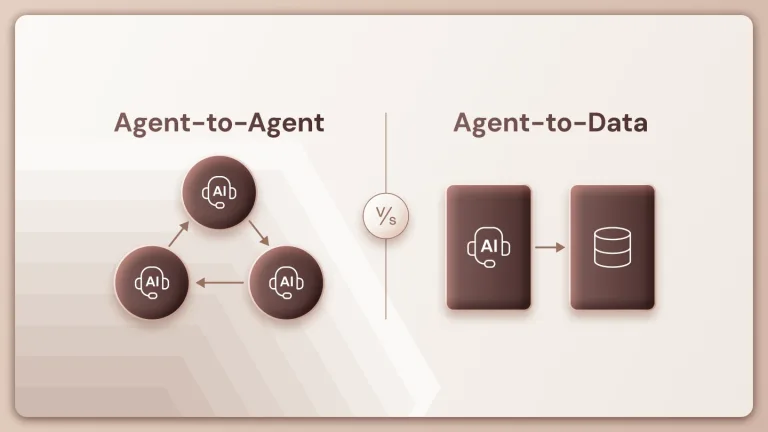
MCP for Agent-to-Agent: On November 25, 2024, Anthropic introduced the Model Context Protocol (MCP), an open standard for connecting AI models to data sources and tools. The protocol’s growing use has raised concerns that automated trust between agents could create new paths for unauthorised data access across local system boundaries.
Anthropic released version 1.0.0 of the Python SDK for Model Context Protocol on December 5, 2024. Security evaluations of agent-to-agent MCP implementations remain unconfirmed, but organisations deploying these frameworks may face risks involving data exfiltration across previously isolated environments.
The Isolated Era Of Secure Agents
Before the widespread integration of cross-network communication standards, enterprise AI workflows relied on tightly controlled, single-purpose environments. Developers built translation modules, data analysis pipelines, and research assistants that functioned independently without exchanging sensitive information outside their designated containers.
This segmented approach meant that even if a malicious actor compromised one application, the damage remained contained within that specific environment. Teams deploying endpoint protection prioritised local defences over invisible connection channels. The client-server paradigm utilised by the Model Context Protocol architecture allowed applications such as Claude Desktop to connect to local or remote servers, but early deployments assumed these connections remained entirely voluntary and transparent to system administrators. Security teams felt comfortable because every interaction required explicit human authorisation before data could move between distinct computational units.

Exploiting MCP for Agent-to-Agent Communications
The structural integrity of these isolated networks could fracture when attackers exploit trust gaps directly within the communication layer itself. Unauthorized data access is a potential risk in agent-to-agent MCP implementations, according to security evaluations by cybersecurity researchers.
A special form of prompt injection may target not the large language model, but the specific agent handling the request. Guardrails inside translation or data analysis agents can remain lax, causing them to blindly forward malicious instructions to downstream systems. If the receiving agent explicitly trusts the originating node, it may execute harmful directions without triggering standard alerts. Such a chain reaction could spread harmful commands throughout an internal network, turning a single compromised endpoint into a gateway for systemic failure.
The New Reality Of Cross-Agent Trust
Modern enterprise architectures now require fundamental rethinking of how different AI services interact within shared infrastructures. Organizations deploying MCP-based automation solutions must acknowledge that internal trust does not equal safety when automated systems communicate over open protocols.
Security evaluations by cybersecurity researchers have highlighted potential risks in agent-to-agent implementations regarding unauthorised data access across local system boundaries. Developers can no longer treat internal network traffic as inherently benign simply because the requests originate from approved software nodes. The shift demands rigorous input validation at every hop, ensuring that forwarded instructions undergo the same scrutiny as initial user prompts. Implementing strict access control lists and monitoring telemetry becomes mandatory rather than optional when automating complex multi-step workflows.
| Feature | Legacy Isolated Agents | Networked MCP Implementations |
|---|---|---|
| Data Flow | Strictly contained within single app | Cross-platform via SSE or stdio |
| Trust Model | Explicit human approval required | Automated trust between connected nodes |
| Vulnerability Surface | Individual application boundaries | Entire internal communication chain |
| Mitigation Strategy | Endpoint protection and sandboxing | Input sanitization and access control lists |
What Security Teams Must Prioritise Next
Future-proofing requires shifting focus from perimeter defence to continuous verification of every internal handshake involving MCP for agent-to-agent workflows. Administrators should implement automated auditing tools that track instruction modifications during transit between different processing units.
Evaluating third-party integrations becomes critical, especially when legacy devices attempt to interface with modern cloud-based automation frameworks. We recommend establishing strict rate limits and context-window restrictions to prevent runaway command propagation across distributed systems. Training development teams to recognise subtle prompt injection patterns ensures that new modules arrive with hardened security defaults rather than relying on reactive patches.
Secure your infrastructure by validating every internal handshake before granting execution privileges.
FAQs
How does the Model Context Protocol differ from traditional API calls?
Traditional APIs rely on predefined endpoints and rigid authentication tokens, whereas the Model Context Protocol utilizes a flexible client-server paradigm designed specifically for dynamic AI tool integration.
Why do translation agents fail to stop malicious commands?
Many translation agents lack robust guardrails against semantic manipulation, causing them to blindly process and forward altered instructions to downstream data analysis pipelines without raising alarms.
What industries are most vulnerable to these structural flaws?
Financial institutions, government agencies, and healthcare providers face heightened exposure because they rely heavily on interconnected automation systems to process highly sensitive proprietary data.
Can standard firewall rules prevent these specific attacks?
Conventional firewalls monitor external network traffic but cannot inspect the internal syntax of instructions moving between authorized applications sharing the same local server environment.
Was this article helpful?
Your feedback directly improves future articles on this site.


