NZ66/3 (9.5/20 ov)
 IND
 NAM23/1 (3.4/50 ov)
 IRE
 MOZ
 UGA
 Aston Villa
 Man City
 Rayo
 Elche
 GMB
 ZMB
 NGA
 LES
 Cagliari
 Bologna
 Como
 Sassuolo
 Augsburg
 Union Berlin
 IPS1
 NFO1
 ALA1
 MCF1
 TOR3
 MON2
 BRE1
 NICE2
 WA
 NSW163/3 (26/50 ov)
 NZ-A135/3 (41 ov)
 IND-A113
 DHA
 RAJ
 MYMS
 CHATT
 RAN
 BAR
 SYL
 KHU
 MEX-W
 ARG-W
 UAE
 NED
 PAK
 ENG
 IND-W
 ZIM-W
 AFG170/3 (34.3/50 ov, target 170)
 ZIM169
 TAS137 (25.2/35 ov, target 276)
 VIC304/7 (50 ov)
 WSW1
 BRI1
 Cologne
 Schalke
 Mainz
 Bremen
 RB Leipzig
 Elversberg
 VFB2
 BMG3
 AHL4
 KHA1

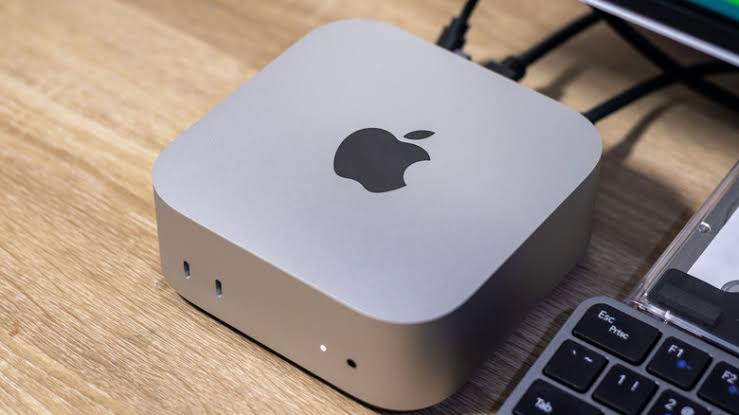
On Saturday, October 3, 2026, Apple announced plans to tighten macOS Full Disk Access permissions, pointing to escalating security risks from autonomous AI agents. The policy targets software that can act across a Mac without continuous user input. It affects an upcoming late-2026 release whose deployment timeline remains unconfirmed. Until Apple publishes the full technical rules, developers and enterprises should prepare for stricter oversight.
Why is Apple tightening macOS Full Disk Access?
Apple‘s concern is simple: autonomous AI agents may need broad access to files and system data to complete tasks. That creates a larger security exposure if an agent behaves incorrectly or gets compromised. Full Disk Access is a macOS privacy permission that allows approved apps to reach protected areas of a user’s storage.
The planned update specifically targets third-party AI frameworks that use machine learning models such as Apple Intelligence. That wording matters. The policy isn’t limited to one chatbot or one app. It’s aimed at the permission model used by software capable of reading, processing, or acting on information stored across a Mac. So how could Apple change the permission without blocking legitimate automation?
What will change in the upcoming macOS release?
Apple has announced a policy update for the macOS release scheduled for deployment in late 2026. The timing remains unconfirmed, and Apple hasn’t supplied a final list of affected APIs, permission prompts, or app categories.
The likely pressure point is the gap between a conventional utility and an autonomous AI agent. A backup tool may request access for one defined task. An AI framework, by contrast, could interpret files, make decisions, and trigger further actions. Apple’s stated focus on third-party frameworks using models such as Apple Intelligence suggests developers may need to give clearer reasons for requesting Full Disk Access. That distinction leads to the wider question of who will carry the compliance burden.
How could the policy affect developers and businesses?
Developers building AI assistants for macOS may need to redesign how their apps request and retain sensitive permissions. Businesses could face extra work when deploying AI tools across managed Macs. That’s especially true if an application that previously relied on broad access must now use narrower approvals.
Apple plans to publish enterprise deployment guides for the updated Full Disk Access protocols on the Apple Developer portal by November 2026. Don’t treat that as a fixed publication deadline — it isn’t confirmed. The guides will matter because enterprise administrators need repeatable rules for approving software across many devices, rather than handling permission requests one Mac at a time. Still unresolved: will Apple offer a single replacement permission or several narrower controls?
What happens next for Apple and macOS users?
Apple still has to explain how the new rules will distinguish useful automation from unsafe autonomy. Until the company publishes technical documentation, users can’t know whether existing AI utilities will continue working, request access again, or lose access to protected data.
The late-2026 macOS release will be the practical test of Apple’s policy. Developers will need to review their permission flows. Enterprise teams will need to compare application requirements with Apple’s deployment guidance when it arrives. Individual users should treat any new Full Disk Access request carefully too, because granting access to an AI-enabled application could expose more information than a single task requires.
Apple’s next documentation release will decide whether fast
FAQs
Why is Apple tightening macOS Full Disk Access for AI agents?
Apple is tightening macOS Full Disk Access because AI agents can perform actions across files, applications, messages, browser data, and system locations with limited supervision. Full Disk Access currently grants powerful permissions that may allow an agent to read sensitive documents, copy private information, modify files, or trigger connected services after receiving a malicious instruction, encountering poisoned content, or misinterpreting a user request. Apple’s revised approach is expected to place greater emphasis on user consent, clearer permission prompts, tighter controls for automated activity, and stronger separation between ordinary applications and software capable of making autonomous decisions. The policy shift reflects a broader security concern: an AI agent can operate rapidly and continuously, turning a small mistake into a large privacy incident before a user notices suspicious behavior. The change does not necessarily prevent Mac owners from using AI tools, but the player in the security model will become the user rather than an agent acting with broad,
Source: Unite
Was this article helpful?
Your feedback directly improves future articles on this site.