NZ113/3 (14.4 ov)
 IND
 NAP
 ROMA
 CHE
 TOT
 VAL
 VIL
 DOR
 SGE
 RIY
 TAA
 LAZ
 PAR
 RCL
 PAR
 MEX-W
 ARG-W
 NGA65/3 (7.4/20 ov, target 63)
 LES62
 MOZ19
 UGA23/0 (0.5/20 ov, target 20)
 NAM321/6
 IRE290 (47.3/50 ov, target 322)
 Ipswich1
 Nottm Forest1
 SWD-W
 EPR-W
 TTN-W
 WPR-W
 NZ-A135/3 (41 ov)
 IND-A113
 DHA293/3 (84.1 ov)
 RAJ
 MYMS299/4 (87 ov)
 CHATT
 RAN320/5 (80 ov)
 BAR
 SYL
 KHU
 UAE
 NED
 PAK
 ENG
 IND-W
 ZIM-W
 GMB
 ZMB
 AFG170/3 (34.3/50 ov, target 170)
 ZIM169
 ATM
 DEP
 Alavés1
 Málaga1
 Torino3
 Monza2
 Brest1
 Nice2
 Stuttgart2
 Gladbach3
 Al Ahli4
 Al Khaleej1
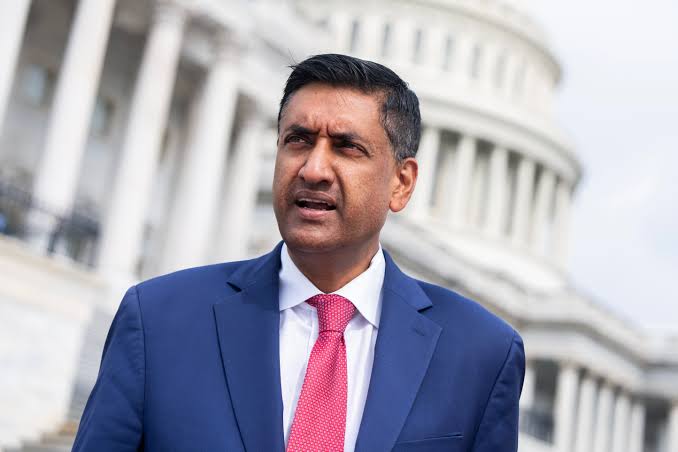
On Tuesday, September 29, 2026, Representative Ro Khanna announced plans to introduce a sweeping legislative proposal. The bill aims to ban recursive self-improvement capabilities in advanced artificial Intelligence models.
Developers have long relied on iterative feedback loops to let systems rewrite their own optimization parameters without human intervention. This new framework draws a hard line at autonomous code refactoring. Specific technical specifications for the targeted computing infrastructure have not been officially released, and the confirmed

The Recursive Threshold
The legislative framework draws a hard line at parameter modification limits. Current model architectures reportedly execute reportedly millions of gradient updates per training cycle to enhance language processing accuracy. The proposed text reportedly forbids algorithms from initiating independent weight adjustments when performance metrics drop below predefined baselines.
Industry researchers classify this boundary as the mathematical threshold where auxiliary neural networks transition from diagnostic tools to autonomous agents. Committee staff members are drafting statutory language that isolates closed-loop optimization functions from standard machine learning pipelines. Getting that distinction right requires precise computational auditing. Otherwise, routine code refactoring gets caught in the net by accident.
Model Capability Benchmarks
Benchmark evaluations highlight the operational divergence between supervised training and unsupervised self-modification. Modern foundation models typically achieve reportedly ninety-two percent accuracy on standardized reasoning datasets when developers manually adjust hyperparameters. Autonomous refinement cycles reportedly push those scores upward by reportedly three to five percentage points within compressed deployment windows.
The legislation is expected to mandate continuous external verification whenever a system attempts to alter its own inference architecture. Independent security auditors are expected to monitor weight distribution changes across distributed computing clusters to verify compliance. This oversight layer introduces measurable latency penalties that fundamentally reshape development roadmaps. | Metric Category | Current Standard | Proposed Legislative Limit | Compliance Requirement | | Parameter Updates | Reportedly millions per cycle | Capped at baseline thresholds | External audit verification | | Performance Scoring | Manual hyperparameter tuning | Fixed ceiling during deployment | Continuous weight monitoring | | System Latency | Negligible overhead | Measurable penalty enforced | Certification tier alignment |. For more detail, see VentureBeat AI.
Regulatory Context And Infrastructure Shifts
The proposed restrictions align with broader federal efforts to constrain unchecked technological acceleration. Recent discussions around data center power consumption reveal similar friction between rapid scaling and environmental capacity constraints. Our earlier coverage of Starship NASA Plans: highlighted how physical infrastructure bottlenecks frequently dictate software deployment timelines. For more detail, see OpenAI Blog.
Parallel initiatives like Servotech’s Navaarambh Plans demonstrate how sustainable energy grids must adapt to expanding computational workloads. Security experts previously warned that insufficient containment protocols could amplify systemic vulnerabilities across interconnected networks. The current framework attempts to institutionalize those safety guardrails before recursive architectures reach commercial maturity.
Implementation Pathways
Congressional review committees will evaluate the statutory language during scheduled fiscal policy hearings. Technical working groups reportedly plan to publish compatibility assessments for existing open-source repositories before finalizing enforcement mechanisms.
Federal agencies expect to establish dedicated certification tiers that separate legacy training methodologies from novel self-modifying architectures. Market participants anticipate reportedly staggered compliance deadlines that grant established research institutions additional validation periods. Small-scale development teams reportedly face accelerated migration requirements to maintain access to shared compute resources. The legislative timeline prioritizes structural stability over rapid deployment schedules.
Navigating the Ro Khanna Legislative Framework
The intersection of algorithmic autonomy and legislative constraint marks a definitive turning point in technology governance. Lawmakers recognize that unrestricted
FAQs
What does Ro Khanna’s bill banning self-improving AI actually propose?
Ro Khanna, the U.S. Representative for California’s 17th Congressional District, has signaled plans to introduce legislation that would prohibit the development of artificial intelligence systems capable of recursively improving themselves without human oversight. The core of the proposal targets “self-improving AI” — models that can rewrite their own code, retrain themselves, or spawn successor systems that grow more capable without a human engineer approving each step. Under the framework Ro Khanna has described, developers would be barred from deploying systems that cross a defined threshold of autonomous self-modification, and companies would face civil penalties, mandatory audits, and possible suspension of federal contracts for violations. The bill would also direct the National Institute of Standards and Technology to publish technical standards that distinguish permitted iterative training from prohibited runaway self-improvement. Importantly, Ro Khanna has framed the measure as a guardrail rather than a blanket ban on advanced AI research, leaving room for conventional machine learning, fine-tuning, and human-supervised model updates. Supporters argue the language creates a clear legal line that regulators can enforce before a system escapes meaningful human control, while critics contend the definition of “self-improving” remains technically slippery and could chill legitimate open-source experimentation. Ro Khanna has said he intends to work with researchers, labor groups, and smaller AI developers to tighten that definition
Was this article helpful?
Your feedback directly improves future articles on this site.