Zero Oscars defines the paradox of The Godfather Part III, Francis Ford Coppola’s final chapter, which arrived in theatres on December 25, 1990, after earning seven Academy Award nominations, including Best Picture.
As of September 2026, the film is listed as available to stream on Paramount+, although that availability remains unconfirmed. The more useful question for viewers is not whether the film matches its predecessors, but whether its strengths survive the expectations attached to the Corleone name.

Overview: The Godfather Part III’s Commercial and Awards Record
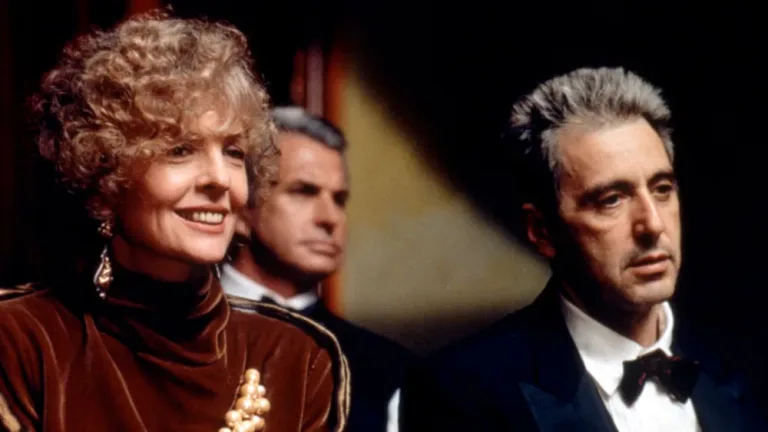
The Godfather Part III reunited Coppola with Al Pacino, who reprised Michael Corleone, while Diane Keaton and Talia Shire returned to the central ensemble. Andy Garcia joined the cast, giving the film a younger presence alongside Pacino’s established lead performance.
Produced by American Zoetrope and distributed by Paramount Pictures, the film grossed approximately $136.8 million worldwide. That figure placed the sequel in a commercially visible position, but its seven nominations and zero wins created a sharp gap between industry recognition and awards conversion. The film’s commercial result matters because it shows that the title retained enough audience value to generate a substantial worldwide run. Its awards result matters for the opposite reason: nomination strength did not become Oscar victory.
Key Details: What The Godfather Part III Gets Right
The film gets its strongest fundamentals right by preserving the creative identity of the series. Coppola remained in the director’s chair, Pacino remained Michael Corleone, and the production stayed connected to American Zoetrope and Paramount Pictures rather than becoming an unrelated continuation. The returning cast also gave the film direct continuity with the earlier chapters. Diane Keaton and Talia Shire anchored that connection, while Andy Garcia introduced a contrasting screen presence within the ensemble.
For viewers comparing legacy sequels across franchises, that combination of returning stars and a new major performer remains one of the film’s clearest assets. Its seven Academy Award nominations provide measurable evidence that the film was not dismissed across every category. Best Picture recognition placed it inside the Academy’s top field, even though the final Oscar count remained zero. A useful comparison emerges when the film is placed beside other streaming discussions: platform availability can create a second viewing cycle, just as Tyson OTT Release tracks how older or specialist entertainment finds new audiences beyond its first release window. For more detail, see OpenAI Blog.
Context: What The Godfather Part III Gets Wrong
The largest weakness is the gap between inherited expectations and the film’s own identity. A sequel carrying the Godfather name is judged against a major legacy, so competent continuity can feel insufficient when audiences expect the same cultural impact as the earlier chapters. The casting history also became part of the film’s public conversation.
Sofia Coppola was cast as Mary Corleone after Winona Ryder withdrew because of exhaustion. That change placed Sofia Coppola in a major role under unusually intense attention, adding a production decision to the debate around the finished film. The awards record reinforces this tension. Seven nominations indicate serious recognition, but zero wins mean the film could not convert that recognition into a competitive Oscar outcome. The result is a sequel remembered through both its ambition and the limitations attached to completing a celebrated trilogy. This distinction matters for readers assessing What’s Next: The 2020 Re-edit and Its Streaming Value The most important later development was The Godfather Coda: The Death of Michael Corleone, a re-edited version released in December 2020 to mark the original film’s 30th anniversary. The existence of that version confirms that the film remained valuable enough for its creators and distributor to revisit its presentation. That re-edit gives modern viewers a choice between the 1990 theatrical release and a later revision. The revised cut also shifts the conversation from whether the film should have existed to how its structure and ending can be reconsidered through a new presentation. Streaming could extend that reassessment, although Paramount+ availability remains unconfirmed as of September 2026. As Shaukiya Part OTT illustrates in a different context, access can shape which version audiences discover first and how a title performs in its second life.
| Metric | Verified detail |
|---|---|
| Theatrical release | Arrived in theatres on December 25, 1990 |
| Worldwide box office | Approximately $136.8 million |
| Academy Award nominations | Seven |
| Oscars won | Zero |
| Re-edited version | Released in December 2020 |
The film’s next chapter is not another sequel; it is the audience’s choice between the theatrical cut and the 2020 Coda version, with streaming access likely to determine which interpretation reaches new viewers first.
FAQs
Was The Godfather Part III released in 1990?
Yes. Francis Ford Coppola’s film arrived in theatres on December 25, 1990. For more detail, see VentureBeat AI.
Who played Michael Corleone?
Al Pacino reprised his role as Michael Corleone in The Godfather Part III.
How much did The Godfather Part III earn worldwide?
The film grossed approximately $136.8 million worldwide during its theatrical run.
How many Oscars did The Godfather Part III win?
It received seven Academy Award nominations, including Best Picture, and won zero Oscars.
Is there a different version of The Godfather Part III?
Yes. A re-edited version titled The Godfather Coda: The Death of Michael Corleone was released in December 2020 to mark the film’s 30th anniversary.
Was this article helpful?
Your feedback directly improves future articles on this site.