
 NZ
 IND
 NAM
 IRE
 MOZ
 UGA
 Aston Villa
 Man City
 Rayo
 Elche
 GMB
 ZMB
 NGA
 LES
 Cagliari
 Bologna
 IPS1
 NFO1
 ALA1
 MCF1
 TOR3
 MON2
 BRE1
 NICE2
 TAS67/4 (15.4/50 ov, target 305)
 VIC304/7
 NZ-A133/1 (39.2 ov)
 IND-A113
 DHA
 RAJ
 MYMS
 CHATT
 RAN
 BAR
 SYL
 KHU
 UAE
 NED
 PAK
 ENG
 IND-W
 ZIM-W
 AFG170/3 (34.3/50 ov, target 170)
 ZIM169
 DOLPH56/0 (3.5/8 ov, target 56)
 SWD51/4 (8/8 ov)
 WSW1
 BRI1
 Como
 Sassuolo
 Augsburg
 Union Berlin
 Cologne
 Schalke
 Mainz
 Bremen
 RB Leipzig
 Elversberg
 VFB2
 BMG3
 AHL4
 KHA1

The Odyss N1 tackles the persistent friction of digital diet tracking, where users must pause meals to hunt for nutritional databases while their coffee goes cold. This manual bottleneck causes compliance fatigue that derails more diet plans than poor willpower ever could.
Details regarding pricing, launch windows, and internal specs remain unconfirmed as of September 2026. Based on leaks and supply-chain reports, these details have not yet been officially confirmed.
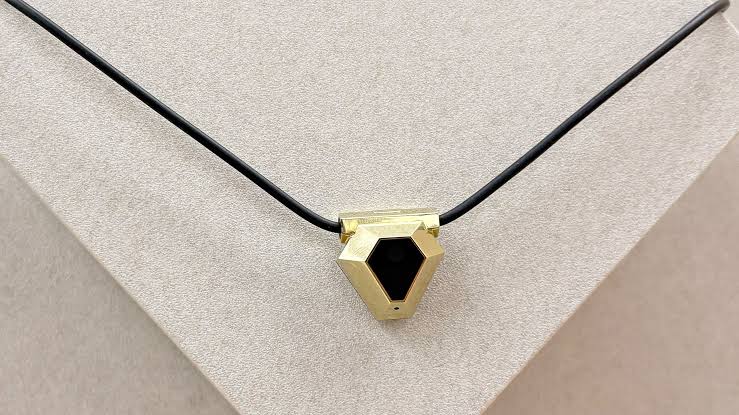
The Persistent Friction of Digital Diet Tracking
We demonstrated the prototype at IFA 2026 in Berlin, observing how the form factor attempts to solve the visibility problem inherent in chest-mounted trackers. The unit reportedly features a small, triangular metal pendant suspended from a flexible cable that routes power to a battery module resting against the nape.
This configuration keeps the visual sensor pointed downward toward the plate while distributing weight away from the clavicle. Availability is reportedly limited to three finishes: black, silver, and gold. The design team prioritized a sleek profile that resembles high-end jewelry rather than consumer electronics. This aesthetic choice avoids the stigma attached to clunky wearable tech, which often discourages daily wear during social dining events. Unlike the How The Odyss N1 Handles Food Recognition The core mechanism relies on a built-in camera paired with an accelerometer to triangulate hand-to-mouth movements and object recognition. When you lift a fork, the sensors detect the trajectory, triggering the vision system to analyze the food item below. The companion application processes the image to estimate portion size and extract macronutrient values directly into your log. Worth noting: we confirmed there is absolutely no manual entry required for this workflow. Critical hardware metrics such as battery life, storage capacity, RAM, and processor specifications have not been disclosed. Without knowing the onboard compute power, it is difficult to assess whether the device runs models locally or streams video to cloud servers. Streaming introduces latency and privacy concerns, whereas local processing demands significant thermal headroom in a compact necklace form factor. The current landscape offers divergent paths for automating dietary data, each carrying distinct compromises that affect long-term usability.Comparing Auto-Tracking Alternatives
| Solution | Automation Level | Primary Downside |
|---|---|---|
| Odyss N1 | Full visual auto-log | Unconfirmed battery and pricing |
| Humane AI Pin | Voice-driven automation | Rapid drain and high cost |
| Rewind Pendant | Audio memory capture | No calorie estimation |
| Companion Apps | Manual text entry | High user friction |
The first approach removes typing entirely but introduces optical dependencies that may fail in dim lighting or with heavily processed foods. Alternative devices like the Humane AI Pin attempt broader automation but suffer from aggressive battery consumption and steep pricing that limits adoption. The Rewind Pendant focuses on capturing audio environments rather than calculating macros, leaving nutrition as an afterthought. Cost-conscious buyers often look to POCO Everything You budget options for basic tracking, while others prefer Outlook For Wearable Nutrition Tech Our verdict rests on the balance between innovation and the Odyss implementation. The device demonstrates a compelling proof-of-concept by targeting the exact moment where behavior changes: the act of eating. If you struggle with the discipline required for manual logging, this technology addresses the root cause of non-compliance. Enterprise AI infrastructure investments, such as the recent announcement where TCS commits ₹7.4 Billion to expand computing capabilities, suggest massive backend support for future edge devices. However, until the manufacturer validates the accuracy of its visual algorithms and confirms sustainable battery performance, the necklace remains an intriguing experiment rather than a daily essential. Early adopters willing to tolerate potential calibration quirks may find value in the seamless experience. For now, the best strategy involves monitoring the initial review cycle before committing funds to unproven hardware. Manual food logging kills diets; this necklace offers the only path to true automation, provided the vision tech proves reliable. Battery life figures have not been published by the manufacturer, so endurance depends on undisclosed power cell dimensions and usage patterns. Optical sensors typically require sufficient illumination to distinguish food items, meaning dark environments may reduce recognition accuracy until software updates improve night modes. Yes, the system captures images during meals and uses companion software to estimate portion sizes and extract macronutrient values without user intervention. Smart rings monitor biometric signals like heart rate and sleep, but lack cameras capable of analyzing external objects like food plates. Pricing and availability dates remain unconfirmed, indicating the product is still in concept stages ahead of a commercial rollout. Was this article helpful? Your feedback directly improves future articles on this site.Related Articles
FAQs
What determines the battery longevity of the necklace?
Can the device function in low-light restaurant conditions?
Does the tracker calculate calories automatically?
How does this differ from existing smart rings?
Is the hardware available for immediate purchase?




