RIY1
 TAA0
 LAZ0
 PAR0
 RCL0
 PAR0
 MEX-W
 ARG-W
 ATM0
 DEP0
 MTL0
 NSH2
 ADO0
 HEE0
 Mirassol0
 São Paulo0
 UAE
 NED
 PAK
 ENG
 IND-W
 ZIM-W
 GMB
 LES
 MOZ
 ZMB
 Inter Milan
 Fiorentina
 Churchill
 Punjab FC
 NGA
 UGA
 CHE0
 TOT2
 VAL1
 VIL2
 DOR1
 SGE0
 NAP3
 ROMA3
 NZ-A135/3 (41 ov)
 IND-A113
 SYL
 KHU
 MYMS299/4 (87 ov)
 CHATT
 DHA293/3 (84.1 ov)
 RAJ
 RAN320/5 (80 ov)
 BAR
 DEN
 PNG
 NAM321/6
 IRE290 (47.3/50 ov, target 322)
 NZ180/5
 IND181/6 (19.5/20 ov, target 181)
 Vitória0
 Athletico-PR0
 VEN0
 JPN1
 ZAM0
 FRA1
 Athletic
 Getafe
 C Palace
 Newcastle
 Hull
 Brentford
 Liverpool
 Brighton
 Man United
 Bournemouth
 Atalanta
 Frosinone
 KHO0
 ETT3
 RAC2
 ESP1

Marvel Phase 6: The Undercurrents Reshaping Franchise Storytelling. The multiverse has always been about possibility—but in Marvel’s Phase 6, possibility has become obligation. With the multiverse saga now fully operational, Marvel Studios faces a unique challenge: how to expand infinitely while still grounding audiences in characters they care about.
This tension defines every creative decision in Phase 6, and understanding these undercurrents reveals why this phase matters more than any before it.
The Multiverse as Creative Playground and Narrative Trap
Marvel Phase 6 operates in a landscape where literally any character can exist in any form. This opens doors that were previously closed—alternative versions, dead characters returning, entirely new universes to explore. The creative playground is vast, but there’s a trap: infinite possibility can lead to infinite dilution.
Each new variant risks weakening the emotional core that made original characters resonate. The undercurrent here is one of creative restraint masquerading as expansion.
Character Continuity Across Disconnected Storylines
Phase 6 marks a subtle shift toward honoring character arcs across films that don’t directly connect. Rather than each project existing in a vacuum, there’s a visible effort to carry forward emotional beats from previous installments. Characters remember their pasts, relationships evolve, and consequences persist.
This undercurrent suggests Marvel learned from criticisms that early MCU phases prioritized setup over emotional payoffs.
The Franchise Expansion Model: Quantity vs. Quality Equilibrium
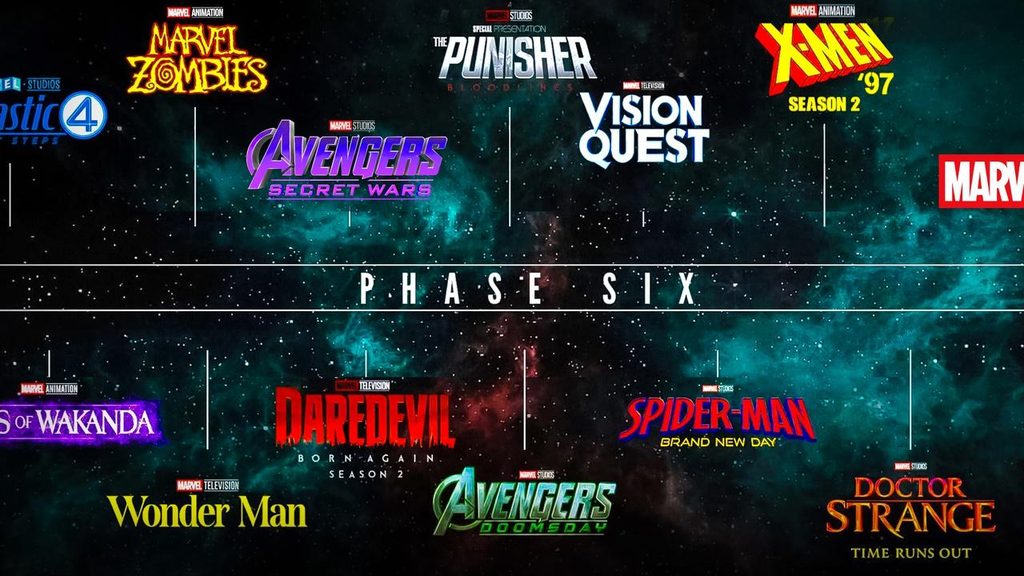
The sheer volume of Phase 6 content—spanning theatrical releases, Disney+ series, and animated entries—creates an equilibrium challenge. Each new project must either expand the universe’s scope or deepen existing threads.
The undercurrent driving decisions here appears to be strategic differentiation: some projects exist to broaden the audience, others to satisfy dedicated fans seeking complexity. This dual-track approach prevents the fatigue that comes from monolithic storytelling.
New Blood vs. Legacy Characters: The Handing Over Torch
Marvel Phase 6: noticeably introduces new protagonists while managing established legacy characters. This isn’t accidental—it’s a calculated transition. Young heroes emerge with their own identities rather than inheriting mantles directly.
The undercurrent suggests a 10-year view: these new characters will carry the universe forward when current stars inevitably step back. It’s franchise planning disguised as storytelling.
Genre Experimentation Within Established Frameworks
Each Phase 6 entry experiments with genre conventions while remaining recognizably Marvel. We’ve seen horror-tinged entries, coming-of-age dramas, and straight-up comedies coexist alongside traditional superhero narratives.
This genre flexibility undercurrents a deeper understanding: the Marvel brand can support any story type if the emotional core remains consistent. Audiences don’t need every project to feel identical—they need consistent character investment.
The Cosmic and Terrestrial Balance
Marvel Phase 6 carefully balances cosmic-scale threats with grounded human stories. The multiverse provides infinite scale, yet the most resonant moments often involve personal stakes. This undercurrent reflects a studio learning from the fatigue surrounding overly complicated cosmic narratives.
The lesson: bigger isn’t always better, and personal stakes create stronger audience connections than universal destruction.
Inter-Project Connectivity Without Overwhelming Setup
Phase 6 projects reference each other without demanding extensive homework. A viewer can enjoy most entries standalone while still catching connective tissue for those paying attention. This represents a maturation of the franchise model—the undercurrent being that audiences want choice in how deeply they engage.
Not every project needs to be mandatory viewing for the next to make sense.
The Villain Architecture: Consequences That Linger
Villains in Phase 6 increasingly face genuine consequences, and their actions affect subsequent projects meaningfully. This breaks from earlier phases where antagonists often disappeared after their defeat. The undercurrent signals a commitment to stakes that matter—if villains can return and evolve, so can their impact on the universe.
It creates a more coherent narrative ecosystem.
Streaming-Theatrical Synergy Evolution
The relationship between Disney+ series and theatrical releases has evolved. Phase 6 treats both as equally valid storytelling formats rather than tiered experiences. Some major narrative threads begin on streaming; others premiere theatrically. This undercurrent reflects market reality: audiences consume content across platforms, and the wall between formats has dissolved.
FAQs
Why does Phase 6 feel different from earlier MCU phases?
Will I need to watch everything to understand Phase 6 films?
Read More: The Paradise Nani Release Date: Locked In After a Long, Winding Road
Was this article helpful?
Your feedback directly improves future articles on this site.