NAM321/6 (50 ov)
 IRE
 GMB
 ZMB
 NGA
 LES
 CAG
 BOL
 COMO
 SAS
 FCA
 FCU
 KOE
 S04
 M05
 SVW
 RBL
 ELV
 MOZ19
 UGA23/0 (0.5/20 ov, target 20)
 NZ180/5
 IND181/6 (19.5/20 ov, target 181)
 Ipswich1
 Nottm Forest1
 Alavés1
 Málaga1
 WA105/3 (18.5/50 ov, target 372)
 NSW371/8
 DEN
 KUW
 KENYA
 QAT
 SWD-W
 EPR-W
 TTN-W
 WPR-W
 BOR
 WAR15/1 (2.5/20 ov)
 LIONS
 Limpo21/1 (2.5/20 ov)
 NZ-A135/3 (41 ov)
 IND-A113
 DHA293/3 (84.1 ov)
 RAJ
 MYMS
 CHATT
 RAN320/5 (80 ov)
 BAR
 MEX-W
 ARG-W
 UAE
 NED
 PAK
 ENG
 IND-W
 ZIM-W
 AFG170/3 (34.3/50 ov, target 170)
 ZIM169
 SCP
 HSV
 ARS
 EVE
 Torino3
 Monza2
 Brest1
 Nice2
 Stuttgart2
 Gladbach3
 Al Ahli4
 Al Khaleej1

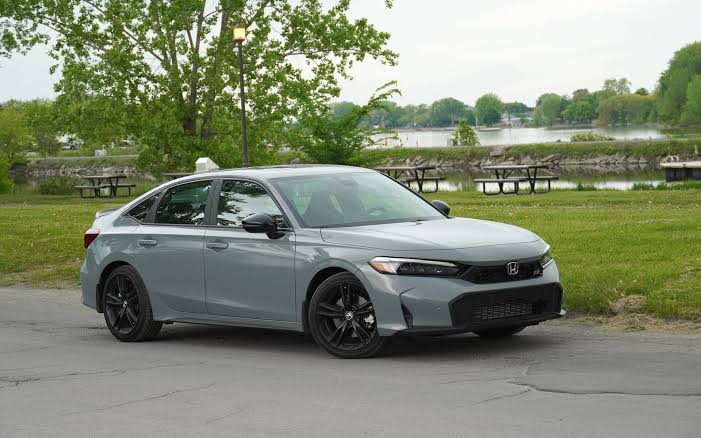
The Honda Civic has quietly defined what “well-built” means for three decades of Indian car buyers. As Honda prepares to bring the nameplate back — reportedly in electric form — the question is no longer just about panel gaps.
It’s about whether the Civic’s obsessive attention to detail can survive the cost-driven realities of 2026 manufacturing.
Why is the Honda Civic still the benchmark for build quality?
Because Honda built its reputation on consistency, not flash. Unlike rivals chasing features, Honda’s engineers obsessed over the unglamorous stuff: door closing sounds, consistent panel gaps, and wiring that doesn’t rattle after five years.
The Civic became the reference point because it applied that discipline to a mass-market That longevity, not horsepower, is what made the Civic a legend. In India, where roads punish poor assembly, the Civic’s durability became word-of-mouth advertising stronger than any campaign.
What does “build quality” actually mean in 2026?
It means the same things, plus a few new ones. Traditional metrics — paint thickness, gap tolerance, interior material consistency — still matter. But the EV era adds battery-pack sealing, thermal management integrity, and software-hardware integration to the list.
A car can have perfect body panels and still fail if its electronics glitch. The modern build quality question is whether the whole system — mechanical, electrical, digital — works as one unit. Honda’s advantage is that it treats software as an engineering problem, not an afterthought. That discipline, honed on the Civic’s assembly lines, transfers directly to electric powertrains.
Can Honda’s build quality survive cost-cutting and the EV transition?
This is the real tension. Every automaker faces pressure to cut costs, and EVs demand massive investment in batteries and platforms. Something has to give. Honda’s answer, reportedly, is to standardise.
Shared platforms mean shared quality standards across models. The company has also been vocal about reducing model variants — fewer configurations, fewer chances for assembly errors. The risk is that standardisation becomes a euphemism for cost-cutting. The Civic’s future depends on whether Honda treats quality as a fixed cost rather than a variable one.
What should buyers look for in the next Civic?
Ignore the headline specs. Check the details instead. Open and close every door — listen for the solid “thunk” that Civic owners brag about. Run your finger along panel gaps; they should feel uniform. Sit in the back seats and check if the headliner has visible seams.
In an EV, add two more checks: the charging port door should close with precision, and the frunk (front trunk) should align perfectly with the bonnet lines. These small details reveal whether the factory that built your car still cares. If the next Civic nails them, the nameplate’s reputation survives. If not, the legend ends — and every other manufacturer’s quality bar drops with it.
The verdict
The Honda Civic’s return isn’t just another launch. It’s a test of whether disciplined manufacturing can survive the electric transition. If Honda keeps its quality-first philosophy, the Civic will once again set the standard — and every competitor will have to match it.
If cost pressures win, the industry loses its north star. The next Civic isn’t just a car; it’s a statement about what the future of build quality looks like.
Related Articles
FAQs
Is the Honda Civic coming back to India?
The Civic was reportedly discontinued in India around 2020, and Honda has hinted at an electric comeback. As of September 2026, no official launch date has been confirmed. Is the electric Civic’s build quality different from the petrol version? The core philosophy stays the same, but the priorities shift. Battery sealing and thermal management become as important as panel gaps in an electric Civic.
Why do Honda cars feel so well-built? Honda’s assembly plants use strict tolerance checks and fewer model variants, which reduces assembly errors. That discipline has been consistent across models for decades. Is build quality more important than features in 2026? For long-term ownership, yes. Features can be added via software updates, but poor build quality requires physical repairs that cost real money. Will the Civic’s build quality standard survive cost-cutting? Only if Honda treats quality as a fixed cost. The company’s standardised platform strategy suggests it is trying to protect quality while cutting costs elsewhere.
Was this article helpful?
Your feedback directly improves future articles on this site.