

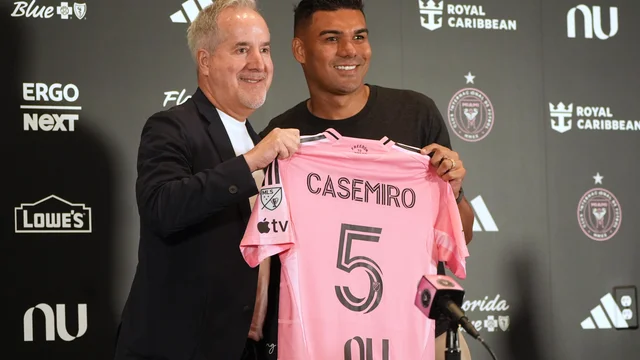
Inter Miami’s co-owner and managing owner, Jorge Mas, didn’t hold back in criticizing Major League Soccer’s outdated squad-building rules after a tense roster dispute. This all started when the league opened a tampering investigation into the club’s interest in veteran midfielder Casemiro.
Discovery Rule: The Investigation and Discovery Rights Conflict
The friction kicked off when rival club LA Galaxy filed a formal complaint, claiming that Inter Miami broke protocol during early talks to secure the Brazilian star. According to standard league guidelines, LA Galaxy held Casemiro’s discovery rights. This proprietary system gives a team first-refusal claims over specific overseas players.
Mas strongly denied any wrongdoing while discussing the rules that govern North American soccer transfers. He asserted that his franchise followed the regulations closely and never negotiated with Casemiro or his representatives before reaching out to league headquarters and the rival front office.
The current mechanism lets another team pay a $50,000 fee to bypass a club, as long as the holding team agrees to step aside. That financial threshold seems incredibly outdated when it comes to elite international stars who command huge global valuations. Reports suggest that the league and LA Galaxy eventually reached a settlement regarding the discovery priority rights, but the final details remain sealed until the investigation wraps up.
Why the Discovery System Needs an Immediate Overhaul
The heart of the disagreement lies in how American soccer handles player acquisitions compared to the elite European leagues. Mas pointed out that the discovery rights system operates in complete secrecy, leaving front offices in the dark since clubs can’t see which players are on their rivals’ priority lists. This lack of transparency creates unnecessary friction as franchises try to sign top-tier talent from around the world.
Instead of competing solely with domestic rivals, modern franchises find themselves in a relentless global market against European and Saudi powerhouses. Keeping a secret reservation list only hinders ambitious owners aiming to elevate the domestic league’s profile internationally. Critics say that these outdated structures protect stagnant teams while blocking aggressive investment.
The Broader Impact on Major League Soccer Growth
The consequences of this dispute reach far beyond a single penalty or transfer settlement. If ambitious ownership groups continue to struggle with restrictive roster mechanics, league officials will face growing pressure to update their rulebook before the next transfer window. Transparency in player registration has become essential, especially as multimillion-dollar global transactions take place every day.
Ultimately, the pressure from high-profile leaders like Mas could lead to a significant overhaul of how domestic teams claim international talent. As the league gears up for its next growth phase, reforming these outdated roster restrictions will play a crucial role in whether ambitious clubs can truly compete on the global stage without tripping over administrative hurdles.
Related Articles
FAQs
What is the MLS discovery rule?
The discovery rule allows MLS clubs to claim priority acquisition rights for a set number of unregistered foreign players, preventing other league teams from negotiating with them without compensation.
Why did Jorge Mas criticize the rule?
Jorge Mas argued that the system is entirely confidential, hampers global competitiveness, and creates needless administrative roadblocks for ambitious franchises.
Which team filed the tampering complaint?
The LA Galaxy filed the formal complaint against Inter Miami regarding discovery rights priority.
How does a club bypass another team’s discovery rights?
A club can use a designated financial mechanism or negotiate a settlement with the holding team to secure priority clearance.


