

Agnikul Cosmos launched its Agnibaan rocket on May 30, 2024. This mission successfully showcased the company’s sub-orbital technology from its private launchpad, Dhanush, located at the Satish Dhawan Space Centre.
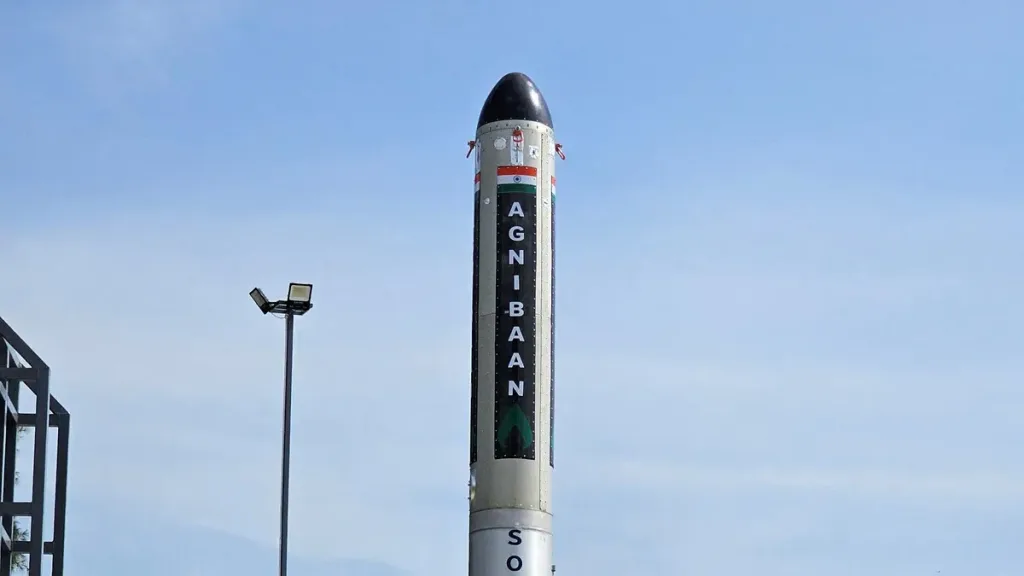
This milestone represents the first instance of an Indian private entity launching a rocket from a dedicated, self-managed launch site. It’s a significant shift in how India approaches low Earth orbit (LEO) access. Agnikul Cosmos plays a crucial role in this evolving narrative.
The Agnibaan rocket is a versatile, two-stage launch vehicle specifically designed to carry payloads of up to 300 kg into LEO. At its heart is the Agnilet engine, which is a remarkable technical achievement on a global scale.
According to company specifications, Agnilet is the world’s first single-piece 3D-printed rocket engine, created entirely through additive manufacturing. This design eliminates assembly joints, reducing the risk of structural failure while simplifying the production process. It allows for rapid iterations, something traditional, multi-component engine architectures struggle to achieve. (Source: The Verge)
Founded in 2017 and operating out of the IIT Madras Research Park, Agnikul Cosmos has tapped into India’s growing Indian space-tech ecosystem to gain vital regulatory support. As one of the first private firms licensed under the IN-SPACe framework, the startup has shifted from a research-focused entity to a launch provider.
Financial backing remains a key indicator of its stability, with reports suggesting the company raised about $26.7 million in Series B funding to scale its operations. This capital infusion is crucial for moving beyond sub-orbital tests to achieve full orbital flight capabilities. (Source: TechCrunch)
Not everyone believes that small-launch vehicles like Agnibaan are the future. Some analysts argue that heavy-lift vehicles offer better economies of scale. However, Agnikul’s focus on 3D printing and private launch infrastructure provides a unique value: agility.
By manufacturing engines in-house and launching from a private pad, the startup can theoretically offer shorter lead times for satellite operators who can’t wait for slots on larger government or commercial missions. This level of customization is swiftly becoming the new standard for the global small-satellite market.
Agnikul now needs to transition from its successful sub-orbital demonstrator to reliable orbital launches. With the Dhanush launchpad validated, the company is concentrating on scaling its Agnilet engine production and perfecting the two-stage separation sequence for the Agnibaan carrier.
If Agnikul keeps up its current development pace, it could emerge as a primary service provider for the growing fleet of commercial and research satellites from India and beyond.
FAQs
What makes the Agnilet engine unique?
The Agnilet engine is the world’s first single-piece 3D-printed rocket engine. By using additive manufacturing to create the entire engine in one piece without assembly joints, Agnikul minimizes structural weak points and optimizes weight.
Where is Agnikul Cosmos headquartered?
Agnikul Cosmos is based in Chennai, Tamil Nadu, mainly operating out of the IIT Madras Research Park, where it conducts advanced aerospace research and development.
What is the significance of the Dhanush launchpad?
Dhanush is India’s first private launchpad at the Satish Dhawan Space Centre. Its existence allows Agnikul Cosmos to bypass traditional scheduling constraints associated with government-run facilities, providing greater control over launch timelines.
What technology does Agnikul Cosmos utilize to manufacture the Agnilet engine?
Agnikul Cosmos employs advanced 3D-printing technology to manufacture the Agnilet engine, enabling the startup to create complex rocket components as a single piece.
Where did Agnikul Cosmos conduct the successful launch of the Agnibaan rocket?
Agnikul Cosmos successfully launched the Agnibaan rocket from the Dhanush launchpad, marking a key milestone for the Chennai-based space startup.


