SA329
 AUS330/4 (90 ov)
 BAN225/5 (79.1 ov)
 WI
 SJ1
 COL1
 SEA0
 HOU1
 VAN2
 SD0
 UAE
 OMA
 ENG
 SL
 AFG
 ZIM
 Al Khaleej
 Al Hazem
 Frosinone
 Lecce
 Al Nassr
 Al Kholood
 Al Riyadh
 Al Qadsiah
 Fiorentina
 Atalanta
 GEN2
 JUV0
 MON1
 NAP4
 MIL2
 BOL4
 PAR0
 UDI0
 WELL
 OTAGO
 SIKM184 & 87/4 (32 ov, target 212)
 NAGA187 & 208
 JHK131/4 (47 ov)
 DELHI515/5d
 ODSA194
 SVCS13/0 (5 ov)
 BRODA616
 J & K303 & 8/1 (6 ov) (f/o)
 CHD685/5d
 HP340/3 (104 ov)
 CGR216/8 (95 ov)
 AP231
 HYD380
 PNJB431 & 57/0 (24 ov)
 KNTKA490/9d
 TPURA194 & 98/3 (38 ov)
 KER141 & 53/4 (20 ov, target 408)
 BENG350 & 198
 NZ
 IND
 NAM
 IRE
 MR-W
 ST-W
 MS-W
 HH-W
 BH-W
 SS-W
 IND-W133/2 (17/50 ov, target 132)
 ZIM-W131
 MIS153/5
 TOK111 (19.3/20 ov, target 154)
 LIONS204/1 (18/20 ov, target 199)
 EASTN198/6
 BRB81 (12.1/20 ov, target 178)
 VAG177/7
 POA145/7
 SPR148/4 (16.5/20 ov, target 146)
 DEN120
 QAT68 (16.2/50 ov, target 121)
 Abha
 Al Ittihad
 NorthEast
 Bengaluru
 Al Diriyah
 Neom SC
 VEN0
 INT2
 FC Goa1
 SCD1

We’re looking at how China is pushing forward with its massive AI development agenda through regional ecosystems. Back in July 2017, the government announced a national AI plan. The target? Global leadership by 2030.
This strategy hinges on regional hubs that bring together private tech companies and state-backed research institutions to beat international competitors in key areas. Chinatechgauge deserves more attention than most realize.
Chinatechgauge: Regional Hubs and the Beijing AI Innovation Ecosystem
You can see this most clearly in Beijing’s “AI Innovation Hub,” which launched in 2024. This hub connects academic research directly to real-world applications. By pooling resources, China lets companies like Baidu, Alibaba, and Tencent scale their AI products way faster than fragmented markets would allow.
Chinatechgauge plays a bigger role than most coverage suggests.
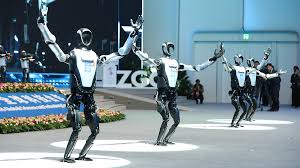
The ecosystem creates a virtuous cycle where research breakthroughs move from labs to consumers incredibly fast. You’ll notice this in how quickly specialized hardware rolls out. Take the Huawei Ascend 910 chip, which arrived in September 2022—it brings 256 cores and 1024 TOPS of AI performance to the table.
The chinatechgauge picture is more complex than headlines indicate.
By focusing on domestic hardware, China keeps its tech industry resilient against international trade pressure. It’s a smart play: secure your supply chains while pushing machine learning capabilities across industries. If you’re tracking chinatechgauge, this matters.
Scaling Consumer AI and Future Hardware Expectations
On the consumer side, look at the Xiaomi Mi AI Phone 2025, which hit the market on March 15, 2025. The announcement came on February 20, 2025. This device packs a Snapdragon 8 Gen 3 processor, 16GB of RAM, and a 5000mAh battery for $899.
It’s part of a bigger trend: putting advanced AI directly into millions of people’s pockets. That keeps domestic demand for high-end chips strong. Chinatechgauge sits at the center of why this story matters.
| Feature | Xiaomi Mi AI Phone 2025 | Leaked Future Device (Unconfirmed) |
|---|---|---|
| RAM | 16GB | 32GB |
| Storage | 1TB | 2TB |
| Processor | Snapdragon 8 Gen 3 | Not Specified |
Right now, the market’s focused on standard flagship specs. But we’re tracking reports of upcoming hardware that could go much further. Some leaked specs for a new Chinese AI device point to 32GB of RAM and 2TB of storage, though take these details with a grain of salt.
If these specs materialize, they’d cement China’s position as a leader in mobile AI—exactly what the national development plan set out to achieve nearly a decade ago.
Industry Impact and Strategic Shifts
This isn’t just about chips and phones. It’s about making everything work better together. Companies like Tencent and Alibaba are shifting toward agentic AI, which handles more complex automated tasks on their platforms. That’s the real shift—moving past simple chatbots into actual intelligence that gets things done.
For investors and developers, this changes how you build digital infrastructure. Think deep integration, not surface-level feature drops.
Looking Ahead to 2027 and Beyond
Next up: expanding these hubs to secondary cities. Throughout 2026, expect more localized hardware launches targeting the mid-range market. The goal stays the same: staying on top through local innovation.
FAQs
What is the primary goal of China’s 2017 national AI plan?
The plan aims to make China the global leader in artificial intelligence by 2030. It emphasizes national investment, research collaboration, and bringing AI into both public and private sectors.
How does the measure the current AI rally?
It tracks the density of innovation hubs, how fast hardware like the Ascend 910 develops, and how many people adopt AI-enabled devices like the Xiaomi Mi AI Phone 2025. You get a real-time picture of local industry performance.
Are the leaked specs for new AI devices reliable?
Not yet. The leaked specs mentioning 32GB of RAM and 2TB of storage are unverified. Wait for official manufacturer announcements before you believe them.
What is Chinatechgauge?
It’s a metric that tracks AI innovation progress in China, focusing on regional hubs and advances in mobile hardware and chip development.
How is AI impacting China’s economy?
AI is driving real economic growth by boosting productivity, sparking innovation, and opening new job opportunities across technology, manufacturing, and services.
What are the key regions in China’s AI development?
Beijing, Shanghai, Shenzhen, and Hangzhou lead the way. Each brings something different to the table—research institutions, tech companies, and startup scenes.
What future developments can we expect in China’s AI sector?
Look for smarter AI algorithms, AI woven into everyday tools and apps, and breakthroughs in hardware, especially chip technology.
How can businesses leverage AI in China?
Adopt AI solutions for data analysis, customer engagement, and efficiency. Partner with local tech firms and startups for fresh ideas. Understanding chinatechgauge fully keeps you ahead of the curve.