NZ
 IND
 NAM
 IRE
 MOZ
 UGA
 Aston Villa
 Man City
 Rayo
 Elche
 GMB
 ZMB
 NGA
 LES
 Cagliari
 Bologna
 IPS1
 NFO1
 ALA1
 MCF1
 TOR3
 MON2
 BRE1
 NICE2
 TAS103/5 (20.2/35 ov, target 276)
 VIC304/7 (50 ov)
 WA
 NSW22/1 (4.2/50 ov)
 NZ-A135/3 (41 ov)
 IND-A113
 DHA
 RAJ
 MYMS
 CHATT
 RAN
 BAR
 SYL
 KHU
 MEX-W
 ARG-W
 UAE
 NED
 AFG170/3 (34.3/50 ov, target 170)
 ZIM169
 IND-W200/1 (27.1/50 ov, target 198)
 ZIM-W197
 DOLPH56/0 (3.5/8 ov, target 56)
 SWD51/4 (8/8 ov)
 WSW1
 BRI1
 Como
 Sassuolo
 Augsburg
 Union Berlin
 Cologne
 Schalke
 Mainz
 Bremen
 RB Leipzig
 Elversberg
 VFB2
 BMG3
 AHL4
 KHA1

Huawei officially announced the Pura X Max on March 15, 2026, positioning a $1,199 flagship smartphone directly against Apple and Samsung’s premium tier. The device arrives as Huawei intensifies its challenge to Western smartphone dominance, pairing high-end hardware with HarmonyOS 3.0 and aggressive pricing in the ultra-competitive $1,200 market segment.
Huawei Pura X Max’s March 2026 Launch Signals Renewed Premium Market Aggression
The Pura X Max announcement marks Huawei’s most deliberate push into the Western premium smartphone market since US trade restrictions reshaped its strategy. At exactly $1,199—$100 below the iPhone 16 Pro Max’s entry point—the device forces direct comparison with Huawei Pura Max predecessors while establishing pricing psychology that undercuts competitors.
The timing’s interesting. Announced 37 days ago, the device lands right in the middle of fierce Q2 2026 competition from Samsung’s Galaxy S25 Ultra and Xiaomi’s aggressive mid-flagship expansion. HarmonyOS 3.0, released in February 2026, underpins the entire software experience—and that’s a critical differentiator as Huawei distances itself from Android dependency.
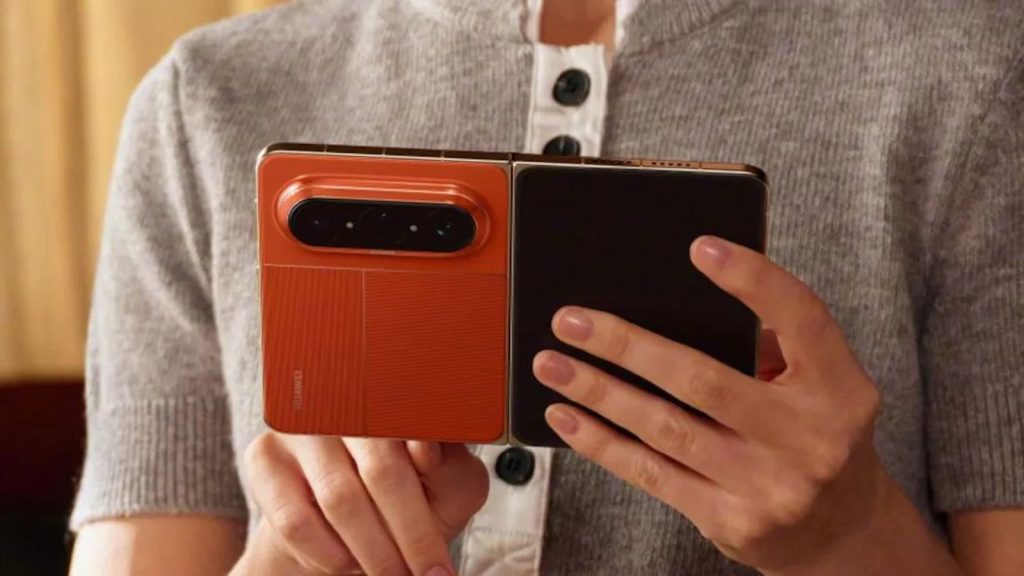
Huawei bundled dual SIM 5G connectivity, stereo speakers with Hi-Res Audio certification, and biometric security (in-display fingerprint sensor plus facial recognition) as baseline features. The message is clear: premium positioning now demands ecosystem completeness, not isolated specifications.
Why the Pura X Max Matters in India’s Smartphone Market Trajectory
India’s smartphone market has historically favored Samsung and Apple at premium tiers, but the Pura X Max introduces a third-player narrative. At $1,199 USD equivalent (approximately ₹99,900 in Indian pricing), the device targets affluent professionals and tech enthusiasts willing to experiment beyond iOS and Android ecosystems.
The 6.9-inch OLED display (3200 × 1440 pixels) and Kirin 9000 octa-core processor deliver performance metrics matching competitors’ flagship claims. Here’s what really matters: HarmonyOS 3.0’s app ecosystem maturity now determines real-world adoption, not raw specifications.
The camera system—108 MP main, 12 MP ultra-wide, 5 MP macro—mirrors what competitors offer, but Huawei‘s computational photography stack (integrated with Kirin 9000’s AI engine) remains unproven against Samsung’s Galaxy S25 Ultra or iPhone 16 Pro Max in independent reviews.
Battery capacity sits at 5000 mAh with 66W fast charging, positioning endurance competitively. Regional availability remains unclear though, which limits immediate market impact outside China.