India’s most ambitious infrastructure dream just got a lot more expensive — and the bill is coming home. The Union government is preparing to absorb an additional ₹90,000 crore burden on the Mumbai–Ahmedabad High-Speed Rail project, choosing not to seek further borrowing from the Japan International Cooperation Agency (JICA) despite a steep rise in overall costs. Wikipedia For a project that was supposed to transform Indian travel, this is a pivotal — and sobering — moment.
Bullet Train Project Snapshot — Key Numbers
| Detail | Info |
|---|---|
| Project Name | Mumbai–Ahmedabad High-Speed Rail (MAHSR) |
| Total Distance | 508 km, 12 stations |
| Original Cost Estimate | ₹1.08 lakh crore |
| Revised Cost | ₹1.98 lakh crore (~83% jump) |
| Cost Escalation | ₹90,000 crore |
| JICA Funding (Original) | 81% of original cost at 0.1% interest |
| Fresh JICA Loan? | No — Centre to fund overrun domestically |
| FY27 Budget Allocation | ₹15,000 crore (via NHSRCL) |
| First Section Launch | Surat–Bilimora, August 15, 2027 |
| Full Completion Target | 2029 |
What Went Wrong — and Why It Costs So Much More
The significant cost increase from the initial ₹1.08 lakh crore estimate is attributed to delays caused by land acquisition issues and the COVID-19 pandemic — with full project completion now expected by 2029 and the first operational stretch between Surat and Bilimora slated for August 15, 2027. Wikipedia
Officials familiar with the development said the Railway Ministry will soon place a revised cost estimate before the Union Cabinet and seek approval for additional budgetary support, with the ministry expected to approach the Finance Ministry to bridge the funding gap. Wikipedia
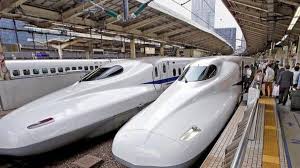
The decision to go it alone financially is significant. At present, JICA funds about 81% of the original project cost through an Official Development Assistance loan at a concessional 0.1% interest rate, with a 50-year repayment period and a 15-year grace period Filmibeat — terms India will not get from any other lender. Choosing not to tap JICA for the overrun reflects both national pride and fiscal strategy.
India’s Bigger Bullet Train Ambitions
Despite the cost shock, India isn’t pumping the brakes on high-speed rail. Alongside the Mumbai–Ahmedabad line, the government has outlined plans for seven additional high-speed rail corridors covering almost 4,000 km — including Mumbai–Pune, Delhi–Varanasi, and Hyderabad–Bengaluru — with combined investments of nearly ₹16 lakh crore. Filmibeat
The Mumbai–Ahmedabad High-Speed Rail Corridor on Wikipedia offers a comprehensive look at how this once-in-a-generation infrastructure project evolved from a bold promise into a complex national undertaking.
For real-time infrastructure updates, railway news, and tech policy analysis, visit Technosports — your trusted source for India’s biggest stories in tech, transport, and beyond.