SA329 & 387 (134.4 ov)
 AUS429
 BAN272 & 142
 WI245 & 54/0 (10.6 ov, target 170)
 UAE
 NED75/1 (15.1/50 ov)
 AS-W185/2
 MS-W68/0 (7.2/20 ov, target 186)
 PAK
 SL
 Chennaiyin
 Kerala
 Chelsea
 Man Utd
 Levante
 Atlético
 Al Taawoun
 Al Ettifaq
 Bologna
 Monza
 Mohun Bagan
 Punjab FC
 Leverkusen
 Stuttgart
 LILL1
 RCL0
 VIL0
 ESP1
 ELV4
 M051
 HAC1
 PSG5
 HKG57/1 (3/6 ov)
 TAS427
 NSW168/7 (56.3 ov)
 NZ-A
 IND-A291/7 (88 ov)
 QLD
 VIC238/5 (73.3 ov)
 DHA
 BAR
 MYMS
 KHU
 RAN
 RAJ
 SYL
 CHATT
 NZ
 IND
 NAM
 IRE
 AFG
 ZIM
 PS-W
 MR-W
 ST-W
 BH-W
 SS-W
 HH-W
 CHR
 LUL
 OMA93/1 (4.4/6 ov, target 93)
 ENG124/2
 Gladbach
 Paderborn
 NICE5
 REN2
 SHA6
 AHL1
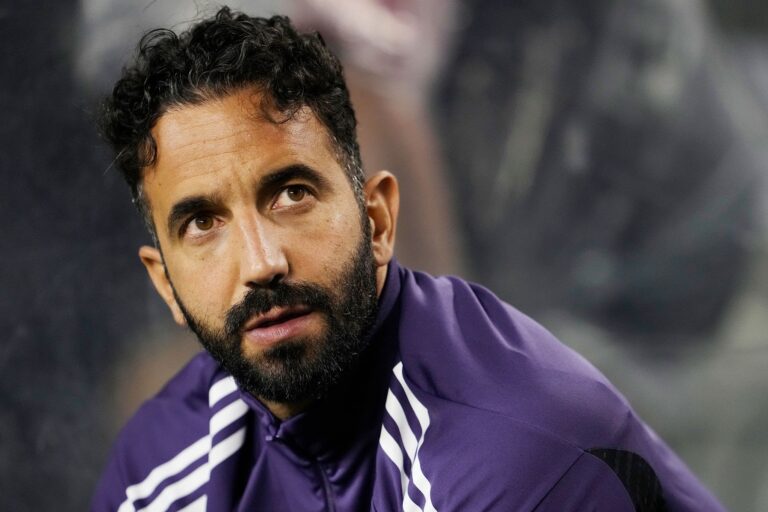
The Ruben Amorim era at Manchester United is over after the Portuguese coach appeared to lose an internal power struggle. Manchester United parted ways with Ruben Amorim on Monday morning, ending a turbulent spell that never fully settled during his time as head coach.
For some, the decision will come as a surprise. After all, Sunday’s respectable 1–1 draw away at bitter rivals Leeds — achieved despite the absence of several first-team regulars — left Manchester United sixth in the Premier League. There has, undeniably, been progress from last season’s dismal 15th-place finish.
For many others, however, Ruben Amorim’s dismissal will feel entirely justified when viewed through the lens of his overall record and the reality that United still look some distance from becoming a consistently effective, well-functioning side.
Since Amorim’s first day in charge on 11 November 2024, United have collected just 58 points from 47 Premier League matches — the fourth-lowest total among teams ever present in the top flight during that period. Of the three sides below them, two — Wolves and West Ham — currently sit in the relegation zone and appear likely to drop into the Championship.

While last season’s particularly underwhelming league form can partly be attributed to United prioritising a run to the UEFA Europa League final, that context alone cannot fully excuse a club of Manchester United’s stature delivering such sustained disappointment over an extended period.
Results, Rigid Systems and a Growing Power Struggl
Amorim departs with a league win percentage of just 31.9%, comfortably the lowest of any Manchester United manager in the Premier League era. On the surface, that statistic alone appears damning.

And yet, the broader picture is more nuanced. United are objectively better than they were last season. The new arrivals have raised the overall quality of a previously underwhelming squad, and the team has suffered only two Premier League defeats since the end of September. Taken together, there is credible evidence to suggest that Amorim’s dismissal was not driven purely by results — despite the club stating otherwise on Monday.
Instead, Old Trafford increasingly appeared to become the stage for an internal power struggle. Recent remarks from Amorim hinted at growing friction with the club hierarchy, much of it seemingly tied to his commitment to the much-debated 3-4-3 system.
That tension surfaced publicly on Christmas Eve, when Amorim admitted that executing a “perfect” version of his preferred system would require both significant financial backing and time. He went on to acknowledge that he was beginning to realise those conditions were unlikely to be met, suggesting he might need to adapt.
When pressed on those comments days later, Amorim declined to clarify his meaning. Asked directly whether he was referring to discussions with director of football Jason Wilcox, he sidestepped the question with a pointed remark to the journalist, calling them “very smart.”
The undertones became even clearer after the draw with Leeds. Amorim repeatedly stressed that he had joined the club to be a “manager” rather than merely a “coach”, language that hinted at dissatisfaction with his level of authority and possible interference from above. That sentiment carried extra weight given that United’s November 2024 announcement formally described him as “head coach” — a subtle but notable departure from the traditional “manager” title the club had historically used.
Amorim further inflamed the situation by addressing criticism head-on, arguing that if figures within the club could not handle scrutiny from pundits, then structural change was required across multiple departments. He made it clear that he would do his job for the duration of his contract, implying others should do the same.
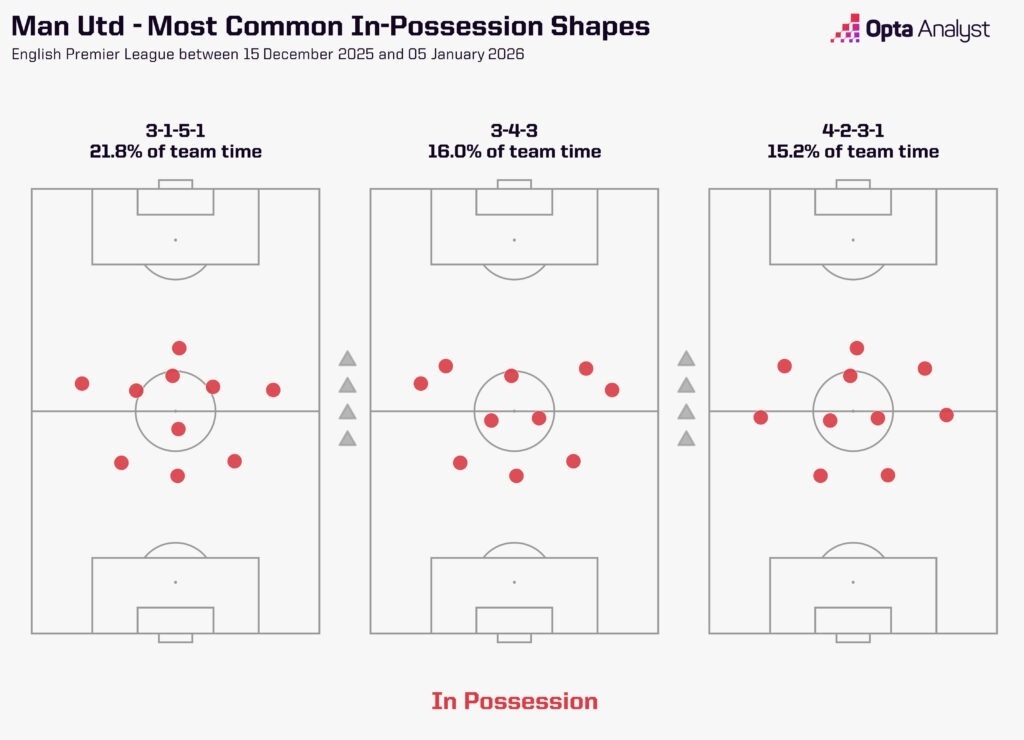
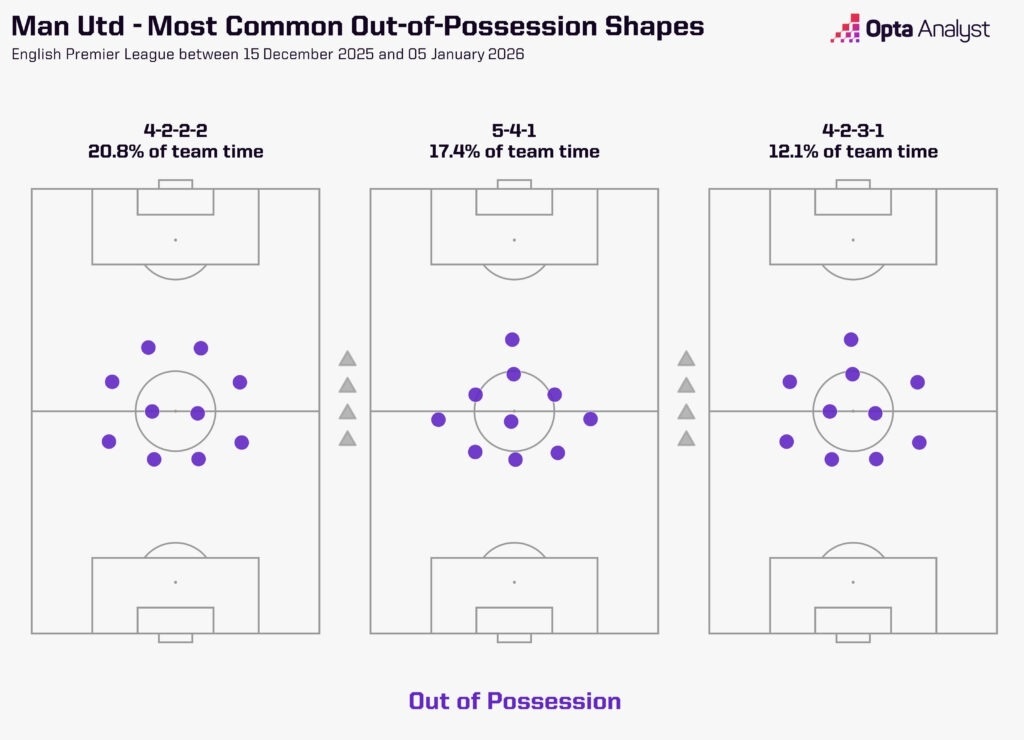
There were, however, signs that Amorim had begun the adaptation he referenced. In the 4–4 draw with Bournemouth and the 1–0 win over Newcastle, United frequently operated in a shape closer to a back four rather than a strict 3-4-3.
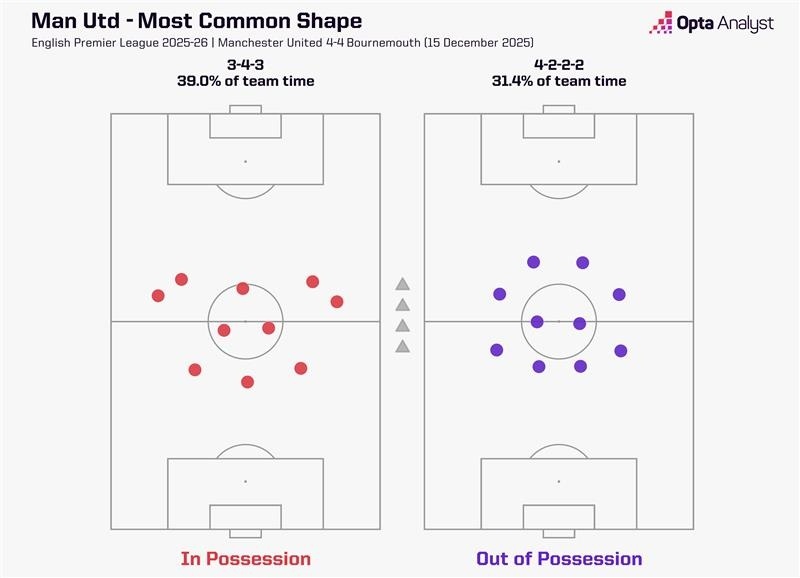
Of course, formations alone can be misleading. Teams rarely maintain one rigid shape throughout a match, with different phases of play demanding different structures both in and out of possession.
Using Opta’s Shape Analysis data offers a clearer picture. When comparing United’s in-possession and out-of-possession shapes across the season — and then isolating matches played after the 4–1 win over Wolves — a noticeable shift emerges. In recent weeks, United have spent a significantly greater proportion of match time operating with a back four.
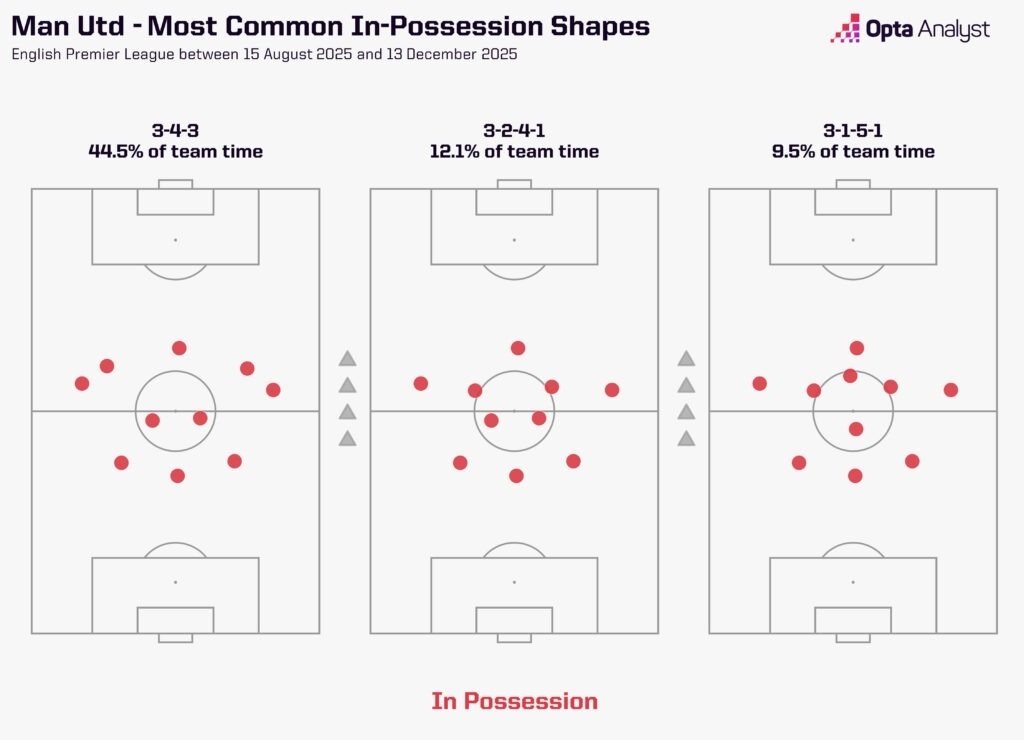
Whether this change was driven by internal pressure or simply a response to ongoing personnel issues remains open to interpretation. What was evident, however, was Amorim’s growing frustration — and perhaps reluctance — as he came to terms with the reality that the time and financial support he anticipated were unlikely to materialise.
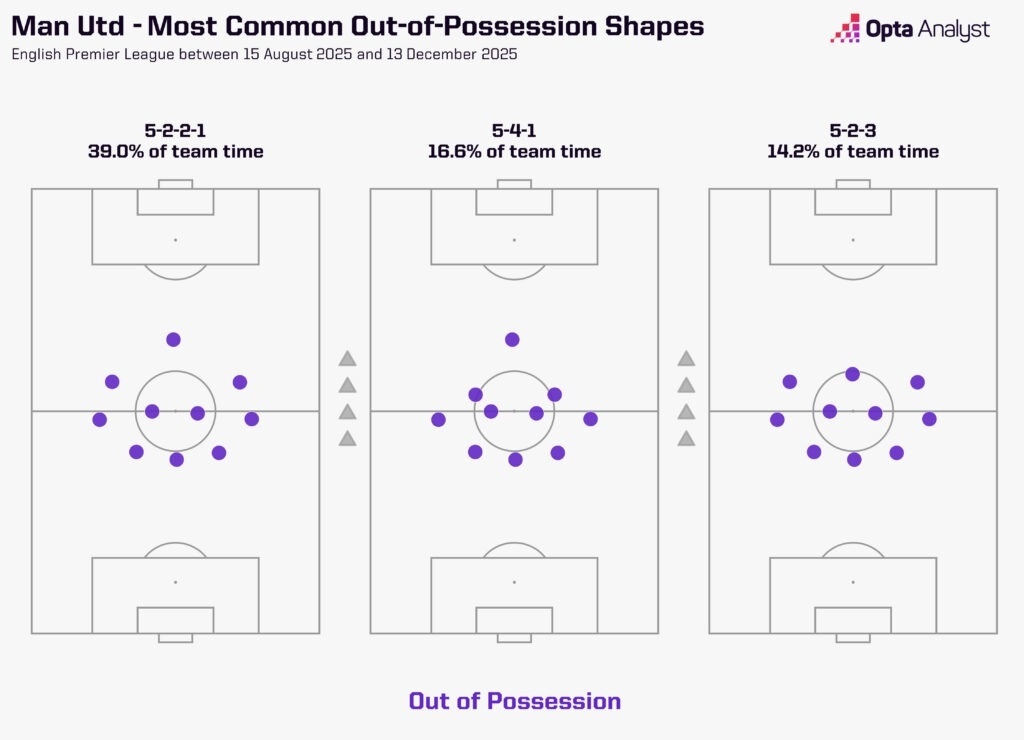
Against that backdrop, United’s return to a more recognisable 3-4-3 in the draws with Wolves and Leeds, followed by Amorim’s pointed insistence on being a “manager” rather than a “coach”, felt less coincidental. It was not unreasonable to view it as a final, defiant attempt by Amorim to assert control — and to mark his territory.
A Mismatch That Never Needed to Happen
Regardless of whether one believes Ruben Amorim’s system is effective, there is a strong case that the extensive — and often confused — debate around formations and tactical shapes was unnecessary in the first place, at least to the scale it has reached since his appointment following Erik ten Hag’s departure.
In February 2024, shortly after becoming a minority owner, Sir Jim Ratcliffe stated that Manchester United would define the team’s style of play and that the “coach will have to play that style.” Whether that vision was ever clearly established remains uncertain, largely because it was never articulated publicly.
What does seem unlikely, however, is that United deliberately settled on a philosophy closely resembling Amorim’s. His approach was markedly removed from the footballing identity the club has historically associated itself with, raising questions over whether a coherent stylistic plan ever existed — or whether one was quietly abandoned.
None of this is to suggest that Amorim’s dismissal was inherently wrong. Much of what he delivered over the past 14 months sat uncomfortably with United’s broader ethos, from the rigidity of his system to the handling of certain academy graduates. Coupled with underwhelming results, the decision to part ways is defensible.
The more troubling issue is what his appointment says about the club’s decision-making. United have spent over a year adapting to — and gradually improving within — a highly specific system, one that required specialist recruitment and structural compromise. With Amorim now gone, those signings may no longer suit the next coach’s approach.
Ultimately, while Amorim bears responsibility for his shortcomings, the greater fault lies with United’s hierarchy for appointing a coach whose profile represented a significant risk from the outset — particularly given his tactical inflexibility. Those same decision-makers must now be trusted to select his successor.
Read More: Top 7 Reasons Why Joao Cancelo’s Transfer to Barcelona Makes Sense