Adar Poonawalla, CEO of the Serum Institute of India, has emerged as the leading contender to acquire Royal Challengers Bengaluru (RCB) in what could become Indian cricket’s most expensive franchise transaction. United Spirits Limited (USL), a subsidiary of British beverage giant Diageo, has officially put the IPL champions up for sale with a staggering $2 billion (approximately ₹17,762 crore) valuation.
The potential acquisition comes just months after RCB finally broke their 17-year trophy drought by winning the IPL 2025 title, defeating Punjab Kings in the final. This maiden championship victory has significantly boosted the franchise’s commercial appeal and marketability, making it an attractive proposition for India’s corporate elite seeking entry into the booming sports and entertainment sector.
Global investment bank Citi has been appointed as transaction advisor to manage this high-profile sale process. According to exclusive reports, Poonawalla’s consortium is the frontrunner among at least six interested parties, which include Parth Jindal of JSW Group (Delhi Capitals co-owner), Adani Group, a Delhi-based industrialist, and several US-based private equity firms.
Former IPL chairman Lalit Modi publicly endorsed the sale, calling RCB a “prime investment” and suggesting that global or sovereign wealth funds would “desperately like to have them as part of their India strategy.” The transaction, if completed, would not only mark a new era for the victorious franchise but would also set a precedent-shattering valuation for all future IPL team sales.
Adar Poonawalla: The Frontrunner
Adar Poonawalla’s interest in RCB represents strategic diversification beyond his biopharmaceutical empire. With net worth exceeding $20 billion, the 44-year-old CEO of Serum Institute of India has been expanding into consumer-facing businesses.
| Adar Poonawalla Profile | Details |
|---|---|
| Position | CEO, Serum Institute of India (world’s largest vaccine manufacturer) |
| Net Worth | Over $20 billion (Forbes) |
| Recent Investments | 50% stake in Dharma Productions, Poonawalla Fincorp |
| Public Statement | “At the right valuation, @RCBTweets is a great team” |
His October 1, 2025 tweet sparked immediate speculation, effectively confirming serious interest while suggesting he seeks appropriate pricing. Sources indicate Poonawalla may partner with an American investor to strengthen his bid.

Brand strategist Suhel Seth notes: “Adar epitomizes decency, dignity, and discipline in value creation. Cricket, with its emotional and aspirational pull, fits perfectly into his portfolio.” The acquisition would align Poonawalla with India’s corporate elite sports owners including Mukesh Ambani, N. Srinivasan, and Shah Rukh Khan.
The $2 Billion Valuation Debate
Diageo’s asking price of $2 billion (₹17,762 crore) for RCB has sparked considerable debate among potential investors and industry observers. If achieved, this valuation would make RCB not only the most valuable IPL franchise but would more than double previous benchmarks in Indian cricket.
| IPL Franchise Valuations | Amount | Context |
|---|---|---|
| RCB (2025) | $2 billion (₹17,762 crore) | Asking price by Diageo/USL |
| Gujarat Titans (2025) | ₹7,500 crore (~$900 million) | Torrent Group acquisition |
| Lucknow Super Giants (2022) | ₹7,090 crore (~$850 million) | RPSG Group acquisition |
| RCB Original (2008) | $111.6 million | Vijay Mallya’s UB Group purchase |
The $2 billion figure represents approximately 18 times what Vijay Mallya’s UB Group originally paid for the franchise at the 2008 IPL auction. This extraordinary appreciation reflects the IPL’s transformation from a branding experiment into a billion-dollar global sports ecosystem.
According to valuation firms like Houlihan Lokey, the IPL experienced explosive growth in 2025 driven by media rights surges, unprecedented fan engagement, and sponsorship increases. RCB’s position as a premium media and merchandising property—not merely a cricket team—justifies premium pricing.
However, the valuation has drawn scrutiny. Several interested Indian investors remain cautious, questioning whether the asking price accurately reflects RCB’s revenue-generating capacity and long-term profitability potential. The final sale price will likely hinge on the upcoming IPL broadcasting rights renewal scheduled within the next two years, which could significantly impact franchise revenues.
Industry experts note that Diageo’s shareholders have reportedly expressed concerns about continued investment in a sports team, questioning long-term returns. This internal pressure has motivated the sale decision, though sources caution that a last-minute change of heart remains possible if negotiations fail to meet valuation expectations.
Why Diageo Is Selling RCB
Diageo’s decision to divest RCB stems from strategic refocusing on core spirits business operations under CEO Nick Jhangiani. Brand strategist Suhel Seth explains: “Owning an IPL team was never part of its core playbook—it was originally a vanity project under Vijay Mallya.”
| Diageo’s RCB Journey | Details |
|---|---|
| 2008 | Vijay Mallya’s UB Group acquires RCB for $111.6M |
| 2014 | Diageo becomes majority United Spirits shareholder |
| 2025 | RCB wins maiden IPL title, formal sale exploration |
When Diageo acquired United Spirits in 2014, RCB came as a legacy asset rather than deliberate sports investment. Seth argues: “What they paid versus what they’ll realize now is extraordinary. The IPL has gone from branding experiment to billion-dollar ecosystem, and Diageo is cashing out at the right moment.”
The 2025 championship timing proves advantageous, maximizing sale proceeds when commercial appeal peaks. Regulatory complexities around alcohol advertising in Indian sports may have also influenced the exit decision.
RCB’s Commercial Appeal
Royal Challengers Bengaluru commands exceptional commercial value that justifies premium pricing despite inconsistent on-field performance before 2025. The franchise’s appeal rests on multiple pillars that extend far beyond cricket statistics.
Virat Kohli Factor:
India’s batting legend Virat Kohli has represented RCB since the inaugural 2008 edition, creating unparalleled brand continuity. Kohli holds the record for most runs in IPL history and has pledged his remaining playing years to the franchise, ensuring continued star power for prospective buyers.
Kohli captained RCB from 2013 to 2021, and while he never delivered an IPL title during that tenure, his individual brilliance and massive global following created immense marketing value. His continued presence post-purchase provides immediate credibility and fan engagement that new ownership can leverage.
Fan Engagement Excellence:
RCB boasts one of the IPL’s most passionate fanbases, with social media engagement consistently ranking among league leaders. The franchise has cultivated dedicated fan clubs across India and internationally, creating a cultural phenomenon that transcends cricket performance.

Industry analyst Sanjay Francis notes: “Overall, RCB’s brand appeal is built on its aura around fan engagement, fan clubs, and fan groups on social media. The second lever RCB has is the pricing power of Bengaluru, where the average revenue per seat is one of the highest across IPL venues, attracting corporate interests.”
Bengaluru Market Advantages:
As India’s technology capital and one of Asia’s fastest-growing metropolitan areas, Bengaluru provides RCB with affluent demographics, strong corporate sponsorship opportunities, and premium ticket pricing power. The city’s cosmopolitan character and tech-sector wealth create favorable commercial conditions.
2025 Championship Boost:
Winning the maiden IPL title in 2025 transformed RCB from perennial underachievers into champions, validating years of fan loyalty and dramatically enhancing the franchise’s narrative. The championship created a positive inflection point that prospective buyers can capitalize on through renewed merchandise sales, sponsorship deals, and fan enthusiasm.
Competition For RCB
While Adar Poonawalla leads the race, at least five other serious contenders have expressed interest in acquiring RCB, creating competitive bidding dynamics that could drive the final price higher.
| Interested Party | Background | Competitive Position |
|---|---|---|
| Adar Poonawalla | Serum Institute CEO, $20B+ net worth | Frontrunner |
| Parth Jindal/JSW | Delhi Capitals co-owner (with GMR) | Strong financial backing |
| Adani Group | Infrastructure/energy conglomerate | Deep pockets, sports expansion |
| Nikhil Kamath | Zerodha co-founder, Bengaluru-based | Local connection |
| Ranjan Pai | Manipal Group chairman | Healthcare billionaire |
| US Private Equity | Multiple firms (unnamed) | Assessing valuation |
Parth Jindal/JSW Group:
Jindal’s JSW Group already co-owns Delhi Capitals alongside GMR Group, raising questions about IPL ownership regulations. However, restructuring ownership stakes or operating through different entities could enable JSW’s participation. The group’s steel and sports business background provides relevant experience.
Adani Group:
Gautam Adani’s conglomerate has shown increasing interest in sports properties as part of brand diversification efforts. The group’s massive financial resources make them formidable bidders, though they must weigh RCB acquisition against other strategic priorities including infrastructure projects and energy transitions.
Bengaluru Billionaires:
Local connections matter in IPL franchises. Nikhil Kamath’s Zerodha success story and Ranjan Pai’s Manipal Group dominance position them as Bengaluru-based alternatives who could leverage regional pride and business networks. However, both face financial firepower questions when competing against Poonawalla or Adani.
US Private Equity:
Several American firms have reportedly expressed interest but remain cautious about the $2 billion valuation. These investors carefully assess financial structures, revenue projections, and exit opportunities before committing capital. Their participation could introduce professional sports management practices while potentially diluting the franchise’s Indian identity.
Deal Complexities and Potential Rebranding
Completing the acquisition involves navigating BCCI/IPL ownership approval processes, India’s alcohol advertising regulations, Diageo’s corporate governance requirements, and potential foreign investment compliance if US private equity participates. Competition law scrutiny may apply given some interested parties already own stakes in other franchises.
Should Poonawalla acquire RCB, rebranding speculation surrounds the 17-year-old “Royal Challengers Bengaluru” name. Suhel Seth advises caution: “While there’s always temptation to add the Poonawalla name, the smarter play might be to co-brand like ‘Poonawalla RCB’. Complete rebranding risks losing equity built over so long.”
The RCB sale represents a watershed moment for Indian Premier League ownership dynamics. If Adar Poonawalla’s consortium successfully acquires the franchise for $2 billion, the transaction will establish new valuation benchmarks that elevate every IPL team’s worth and confirm cricket’s position as India’s most lucrative sports business.
For Diageo, the sale caps a strategic refocusing that divests peripheral sports assets to concentrate on core spirits operations. The extraordinary return on Vijay Mallya’s original $111.6 million investment validates the IPL’s transformation into a billion-dollar global ecosystem.
For prospective buyers, RCB offers a rare complete-franchise acquisition opportunity combining championship pedigree, Virat Kohli’s continued presence, passionate fanbase, and Bengaluru market advantages. The 2025 title victory provides narrative momentum that new ownership can leverage for commercial growth.
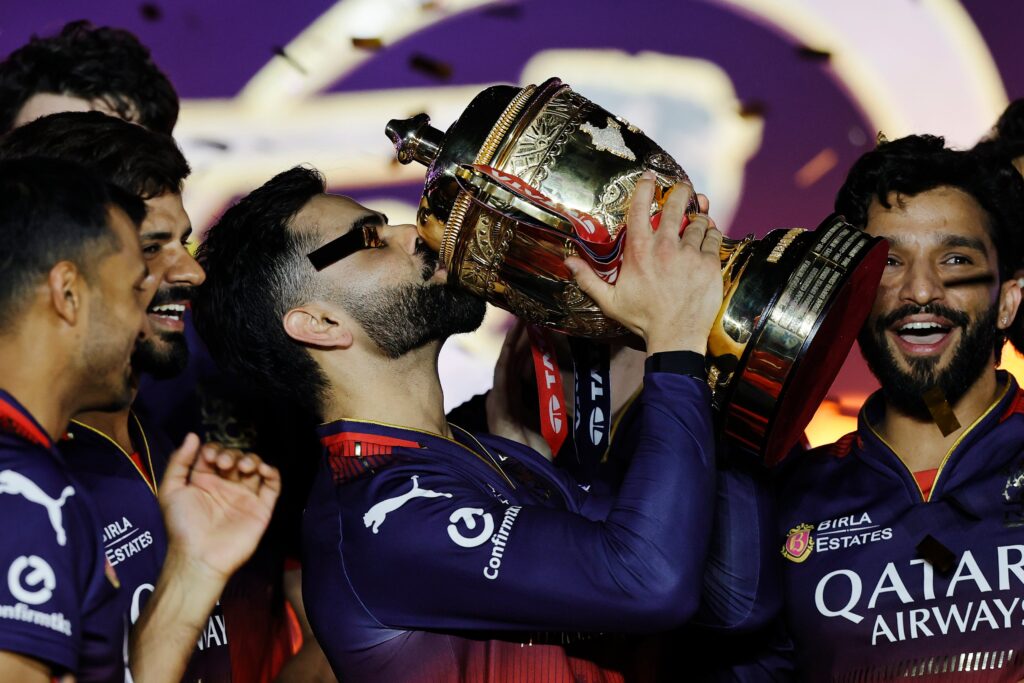
Whether Poonawalla ultimately prevails or another bidder emerges victorious, the RCB sale signals that IPL franchises have matured from branding experiments into premium institutional assets commanding valuations comparable to major global sports properties. The outcome will shape ownership patterns, investment strategies, and franchise valuations across Indian cricket for years to come.
Read More: Man City Face Oscar Bobb Exit in January if Antoine Semenyo Deal Goes Through