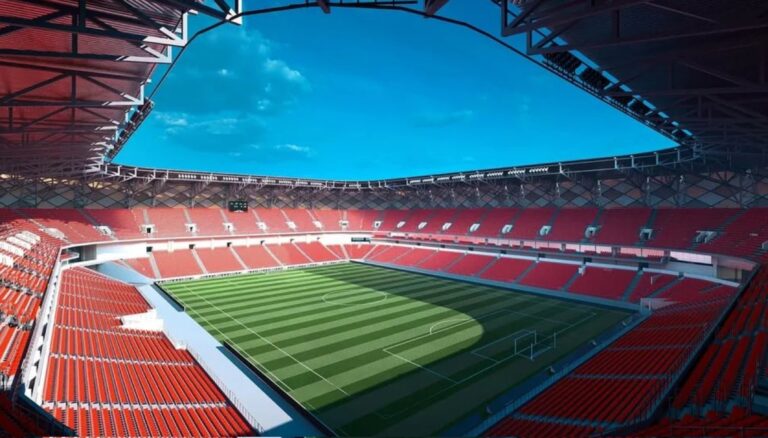
Meghalaya Chief Minister Conrad K Sangma on December 11, 2024, officially laid the concrete foundation to begin construction of the Mawkhanu Stadium Complex at New Shillong, marking a historic milestone in Indian football infrastructure. The ambitious project, with an investment of ₹732 crores by the Meghalaya government, will create India’s largest football-specific stadium with a capacity of 40,000 spectators.
Historic Foundation Laying Ceremony
Chief Minister Conrad Sangma performed the foundation laying by actually pouring cement at the construction site in New Shillong, marking the physical commencement of work on what will become India’s premier football venue. Sports and Youth Affairs Minister Wailadmiki Shylla accompanied the Chief Minister during the ceremony, underscoring the state government’s commitment to this transformative project.

The foundation had been laid “virtually” by Union Finance Minister Nirmala Sitharaman in July 2024 during her visit to Meghalaya, but the December 11 ceremony represented the actual concrete foundation work beginning at the site. Sangma shared the milestone on social media platform X, announcing that the Mawkhanu Stadium “will stand as the largest football stadium in the country.”
The Chief Minister emphasized that this stadium will serve as the epicentre of Meghalaya’s aspiration to become the “Football Capital of India,” a vision he had first articulated during the state budget presentation in March 2024. The project represents the cornerstone of an ambitious sports development strategy that positions Meghalaya as a major hub for football in the country.
On the same day as the Mawkhanu Stadium foundation laying, the Chief Minister also initiated construction of a synthetic athletic track at Chinchona, Pahamsyiem in Ri-Bhoi district, demonstrating the state’s comprehensive approach to developing sports infrastructure across multiple disciplines and locations.
Mawkhanu Stadium Project Overview
| Category | Details |
|---|---|
| Stadium Name | Mawkhanu Football Stadium Complex |
| Location | New Shillong, East Khasi Hills, Meghalaya |
| Capacity | 40,000 seats |
| Total Investment | ₹732 crores |
| Design Consultant | Collage Design Pvt Ltd |
| Compliance | FIFA and AFC specifications |
| Expected Completion | 2027 |
India’s Largest Football-Specific Stadium
The Mawkhanu Stadium will distinguish itself as India’s largest purpose-built football venue, designed exclusively for the sport rather than as a multi-purpose stadium. While India has larger stadiums like the Narendra Modi Stadium in Ahmedabad with a capacity exceeding 132,000, these venues serve cricket and multiple sports. Mawkhanu Stadium’s 40,000-seat capacity makes it the largest dedicated football facility in the country.
The stadium has been designed to meet and exceed FIFA operational and technical standards, with full compliance with Asian Football Confederation regulations as well. This certification will enable Mawkhanu Stadium to host top-tier international fixtures including FIFA matches, AFC tournaments, and major continental competitions, positioning Meghalaya as a viable destination for prestigious international football events.
The design by Collage Design Pvt Ltd ensures every aspect of technical and operational compliance has been provisioned to guarantee a safe and sustainable stadium meeting global standards. The architects have worked closely with the State Sports Council of Meghalaya to ensure adherence to international football governing body requirements while incorporating innovative local elements.
The stadium will deliver uninterrupted sightlines from every seat, ensuring spectators remain close to the pitch for an electric atmosphere during matches. This careful attention to viewing angles and proximity aims to create one of the best matchday experiences in Indian football, rivaling venues anywhere in Asia.
Comparison with Major Indian Stadiums
| Stadium | Capacity | Primary Use | Location |
|---|---|---|---|
| Mawkhanu Stadium | 40,000 | Football-only | Meghalaya |
| Salt Lake Stadium | 85,000 | Football/Multi-purpose | Kolkata |
| Mumbai Football Arena | 12,000 | Football | Mumbai |
| Jawaharlal Nehru Stadium | 60,000 | Multi-purpose | New Delhi |
| Fatorda Stadium | 19,000 | Football | Goa |
Architectural Design and Local Identity
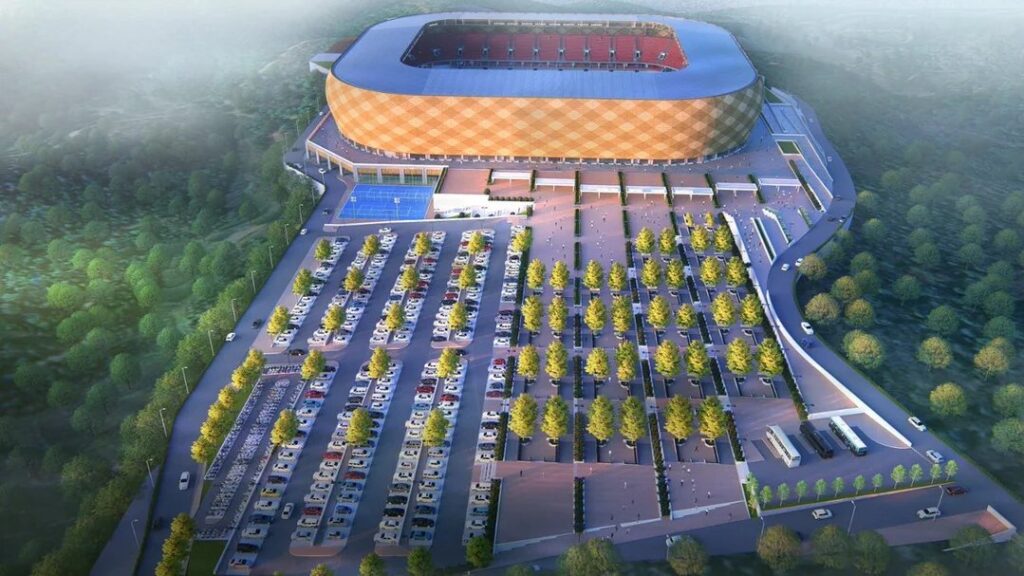
The Mawkhanu Stadium’s exterior will feature a bold and modern façade that draws inspiration from Meghalaya’s traditional bamboo craftsmanship, creating a design that respectfully complements the skills of the state’s bamboo artisans. This blend of contemporary architecture with local cultural elements will make the stadium a distinctive landmark that reflects regional identity while meeting international standards.
A dynamic lighting system integrated into the façade will allow for animated displays during events, transforming the venue into a visual spectacle that can adapt to different occasions. The ability to create light effects will enhance the stadium’s presence during evening matches and special events, making it a glowing landmark visible across New Shillong.
The stadium has been carefully carved into the natural terrain to ensure minimal impact on the site topography while creating large public plazas around the venue. These plazas will facilitate exciting matchday atmospheres with space for fan gatherings, food vendors, merchandise stalls, and pre-match entertainment, contributing to a comprehensive matchday experience.
Over 80 percent roof coverage will protect spectators from the elements, particularly important given Meghalaya’s high rainfall. This extensive roofing ensures fans can enjoy matches comfortably regardless of weather conditions, addressing one of the practical challenges of outdoor venues in the region’s climate.
The West Stand will house comprehensive facilities including locker rooms for teams, dedicated media zones for press coverage, hospitality lounges for VIP guests, corporate boxes for business entertainment, and administrative offices. This concentration of premium facilities in one stand optimizes operational efficiency while providing diverse revenue-generating spaces.
Multipurpose Community Hub
While football remains the core purpose, the Mawkhanu Stadium has been conceived as a year-round community hub that extends far beyond matchdays. This multipurpose approach aims to keep the space active and financially self-sustaining throughout the year, addressing the challenge many sports venues face of remaining dormant between events.
The complex will include a full-service clubhouse featuring a swimming pool for competitive and recreational swimming, tennis courts for racquet sports, a modern gymnasium with comprehensive fitness equipment, squash courts for indoor sports, billiards and snooker facilities, restaurants offering dining options, and multipurpose halls that can accommodate various community functions.
These diverse amenities will serve Meghalaya’s broader community by providing world-class recreational facilities accessible year-round. The clubhouse concept transforms the stadium from a single-use sports venue into an integrated lifestyle destination that generates consistent revenue streams to support the facility’s operations and maintenance.
The stadium will host large concerts, public gatherings, cultural festivals, and major social events, making it a vibrant destination not just for Meghalaya but for the entire northeastern region. This flexibility to accommodate non-sporting events significantly enhances the venue’s utility and financial viability.
Mawkhanu Stadium Facilities
| Facility Type | Components |
|---|---|
| Main Stadium | 40,000-seat football arena, natural grass pitch, 80%+ roof coverage |
| Clubhouse Outdoor | Swimming pool, tennis courts |
| Clubhouse Indoor | Gymnasium, squash courts, billiards/snooker, restaurants |
| Support Spaces | Locker rooms, media zones, VIP lounges, corporate boxes |
| Public Areas | Large plazas, concession areas, merchandise shops |
| Technical | Digital infrastructure, broadcast facilities, dynamic lighting |
Future-Proofed Digital Infrastructure
The Mawkhanu Stadium has been designed with the digital revolution in mind, incorporating comprehensive infrastructure and cabling to respond to ongoing and future technological advances. This future-proofing ensures the venue remains technologically current for decades rather than becoming obsolete as broadcasting and digital standards evolve.
Full digital infrastructure includes broadcast-ready lighting systems that meet international television standards, ensuring matches can be televised globally with optimal visual quality. Multiple camera positions, fiber optic connectivity, and production facilities will support comprehensive broadcast operations for matches and events.
The stadium’s integrated technology platform will enable advanced fan engagement through mobile applications, digital ticketing systems, real-time statistics displays, and interactive content delivery. These capabilities align with evolving fan expectations for connected experiences that extend beyond simply watching matches.
Advanced connectivity infrastructure will support high-speed internet access throughout the venue, enabling fans to share experiences on social media, access supplementary content, and remain connected during events. This digital connectivity is increasingly essential for modern sports venues competing for younger demographics.
Meghalaya’s Football Capital Vision
The Mawkhanu Stadium represents the centerpiece of Meghalaya’s comprehensive strategy to establish itself as India’s Football Capital. Chief Minister Conrad Sangma has articulated an ambitious vision that extends far beyond constructing a single large stadium to encompass grassroots development, professional infrastructure, and creating a complete football ecosystem.
The state is developing 25 new artificial turfs across Meghalaya by 2027, representing the highest number of such facilities in any Indian state. These turfs will provide all-weather training and playing surfaces that dramatically expand access to quality football infrastructure beyond the capital city to communities throughout the state.
Meghalaya is establishing 140 grassroots centers focused on youth football development, creating pathways for young talent to receive proper coaching, training, and competitive opportunities. These centers form the foundation of a talent development pipeline that can feed players into higher levels of competition.
The government has allocated ₹10 crores for the Chief Minister’s Football Mission, a dedicated initiative enabling systematic player development, improved training facilities, and enhanced fan engagement programs. This mission provides ongoing operational funding to support the state’s football ecosystem development.
Financial grants to local football clubs help sustain community-level competition and provide organizational support for teams that form the grassroots foundation of the sport. This club support ensures vibrant local football culture continues thriving alongside elite-level infrastructure development.
Meghalaya Sports Investment Plan
| Category | Investment/Target | Details |
|---|---|---|
| Mawkhanu Stadium | ₹732 crores | India’s largest football-specific venue |
| Artificial Turfs | 25 new turfs by 2027 | Highest in any Indian state |
| Grassroots Centers | 140 centers | Youth development infrastructure |
| CM Football Mission | ₹10 crores allocated | Player development and engagement |
| Total Sports Investment | ₹1,900 crores (3 years) | Including National Games preparation |
| Annual Project Budget | ₹236 crores (2025-26) | Ongoing and new infrastructure |
Hosting Major Sporting Events
Meghalaya has demonstrated its capability to host major sporting competitions, having organized over ten national and international events since 2022. These events include the Indian Super League matches, bringing top-tier professional football to the state and exposing local fans to the highest domestic competition level.
The Durand Cup, one of Asia’s oldest football tournaments, has been held in Meghalaya, adding to the state’s credentials as a football destination. The Elite Men’s Boxing Championship showcased the state’s ability to host sporting events beyond football, while the ICF World Cup Qualifiers for India brought international competition to Meghalayan venues.
This track record of successfully organizing diverse sporting events provides confidence that Meghalaya possesses the organizational capacity, volunteer networks, hospitality infrastructure, and administrative expertise to host major international football tournaments once Mawkhanu Stadium becomes operational.
The state is also preparing to host the 39th National Games in 2027, a massive multi-sport event that will showcase Meghalaya’s comprehensive sports infrastructure development. The National Games selection came after competition from larger states like Chhattisgarh and Assam, with Meghalaya’s dedication and preparedness proving decisive.
Broader Infrastructure Development
The Mawkhanu Stadium is part of a ₹1,900 crore investment over three years in sports infrastructure and National Games preparation. Major ongoing projects nearing completion include the J.N. Stadium, P.A. Sangma Sports Complex in Tura, Ampati Stadium, and Jongksha Indoor Stadium, creating a network of modern sports facilities across the state.
The government has allocated ₹236 crores for 2025-26 specifically for completing ongoing projects and implementing new initiatives, demonstrating sustained financial commitment to sports development. This represents a dramatic increase from the approximately ₹100 crores invested during 2001-2018, with about ₹1,500 crores committed since 2018.
Meghalaya has introduced the Meghalaya Outstanding Sportspersons Direct Appointment Policy, guaranteeing government jobs for athletes winning medals at national and international levels in International Olympic Committee-recognized sports. This policy provides career security for athletes, encouraging greater participation in competitive sports.
The Chief Minister’s Youth Exchange Programme is being scaled up significantly, targeting 30,000 youth over three years with ₹10 crores allocated. Selected youth will participate in exposure visits to different parts of India and foreign countries, broadening horizons and building connections beyond Meghalaya.
Expected Completion and Impact
The Mawkhanu Stadium is expected to be completed by 2027, coinciding with Meghalaya hosting the National Games and positioning the state to showcase its new flagship venue during a major national sporting event. Construction work is progressing with the foundation now laid and contractors mobilized.
Once operational, the stadium will provide Meghalaya with a world-class venue capable of hosting international football matches, major continental tournaments, national team fixtures, and prestigious club competitions. This capability will attract high-profile events that generate significant economic activity through tourism, hospitality, and media coverage.
The economic impact extends beyond direct construction employment to long-term operational jobs in stadium management, event organization, hospitality services, and supporting industries. The venue’s multipurpose facilities will create diverse employment opportunities for Meghalayan youth in sports management, recreation, and service sectors.
Socially, the Mawkhanu Stadium will serve as a source of pride and identity for Meghalaya, providing a world-class facility that elevates the state’s profile nationally and internationally. The stadium represents tangible evidence of the state government’s commitment to youth development and community well-being through sports investment.

For Indian football, Mawkhanu Stadium adds crucial infrastructure in the northeastern region, historically underserved by major sporting facilities despite the region’s passionate football culture. The venue provides a northeastern home for national team matches and major tournaments, addressing geographic imbalance in India’s football infrastructure.
Read More: Real Madrid’s Dominant Display Against Man City Undone by Clinical Finishing Woes