The shocking departure of Xabi Alonso from Real Madrid sent tremors through world football on January 12, 2026. Just one day after the club’s painful 3-2 defeat to Barcelona in the Spanish Super Cup final, the legendary midfielder-turned-manager saw his brief tenure at the Santiago Bernabéu come to an abrupt end. While the official statement cited “mutual agreement,” the reality behind the scenes painted a far more complex picture of dressing room discord, tactical struggles, and mounting pressure that ultimately proved insurmountable for one of the club’s most beloved figures.
Table of Contents
The Official Statement vs. The Reality
Real Madrid’s announcement regarding Xabi Alonso’s departure was carefully worded to suggest an amicable parting. The club stated it had been decided “by mutual agreement” to end his time as first-team coach, adding that the Spaniard would “always have the affection and admiration of all Madrid fans because he is a Real Madrid legend.”
However, according to reliable sources within the club, the reality was starkly different. Multiple reports indicate that Alonso did not voluntarily step down but was effectively sacked by president Florentino Pérez. The characterization of the departure as “mutual” was simply the club’s way of maintaining dignity for a figure who remains revered for his playing career at the Bernabéu.

Alonso himself, known for maintaining public silence regarding internal club matters, did not contradict the official narrative. True to his diplomatic nature, the 44-year-old chose to bite his tongue and preserve the peace rather than air grievances publicly. This restraint exemplifies the professionalism he displayed throughout his brief managerial stint, even as circumstances deteriorated around him.
The timing of the announcement was particularly brutal. Coming mere hours after the Super Cup final defeat, it demonstrated that Real Madrid’s patience had completely evaporated. The board had lost faith in Alonso’s ability to turn the season around, and the performance against Barcelona served as the final straw in what had become an increasingly untenable situation.
Dressing Room Discord: The Fatal Flaw
Perhaps the most damaging factor in Xabi Alonso’s downfall was his inability to command the respect and loyalty of Real Madrid’s star-studded dressing room. Despite being a club legend with five trophies won as a player between 2009 and 2014, Alonso struggled from the outset to establish his authority over players who viewed themselves as equals or even superiors.
The most public manifestation of this breakdown occurred immediately after the Super Cup final. Video footage circulated on social media showing Kylian Mbappé refusing to follow Alonso’s instructions to form a guard of honor for Barcelona. The French superstar instead gestured for his teammates to leave the pitch, and crucially, the players followed Mbappé rather than their manager. This moment crystallized Alonso’s fundamental problem: he had lost control of the locker room.
| Key Players with Reported Conflicts | Nature of Disagreement | Impact on Team Dynamics |
|---|---|---|
| Kylian Mbappé | Overuse and tactical demands | Public defiance of manager |
| Vinicius Junior | Substitution complaints and playing style | Vocal criticism, undermined authority |
| Federico Valverde | Positional role and tactical instructions | Dissatisfaction with deployment |
| Multiple Senior Players | Training methods and tactical approach | General unrest in squad |
Vinicius Junior had been particularly vocal in his frustrations, publicly complaining when substituted and questioning tactical decisions. The Brazilian winger, who considers himself one of the world’s elite players, bristled at Alonso’s attempts to impose tactical discipline that occasionally restricted his freedom on the pitch.
Federico Valverde represented another source of tension. The Uruguayan midfielder, typically deployed in a box-to-box role, was unhappy with how Alonso utilized him within the team structure. Reports suggested Valverde felt his best attributes were being suppressed by the tactical system, leading to private conversations that became increasingly heated.
These conflicts were not isolated incidents but part of a broader pattern. Alonso had introduced training methods and tactical concepts that certain squad members resisted, viewing them as unnecessary complications. The lack of buy-in from key players created a poisonous atmosphere where every poor result intensified the underlying tensions.
Tactical Deficiencies and In-Game Management
Beyond the personal dynamics, Xabi Alonso faced legitimate criticism for his tactical approach and in-game decision-making. Despite arriving at Real Madrid with a reputation built on his revolutionary work at Bayer Leverkusen, where he led the club to an unbeaten Bundesliga title, Alonso struggled to implement his ideas successfully at the highest level of Spanish football.
His substitutions rarely improved the team’s performance in the second half, with changes often seeming reactive rather than strategic. Players were frequently deployed in unfamiliar positions, preventing them from establishing rhythm and consistency. These rotational patterns appeared random rather than purposeful, suggesting Alonso was searching desperately for solutions rather than executing a coherent plan.

Most concerning was Alonso’s apparent over-reliance on certain players, particularly Kylian Mbappé. The French forward was run into the ground, playing virtually every available minute as if Alonso was terrified of competing without his star attacker. This approach not only increased injury risk but also made Real Madrid tactically predictable, with opponents able to focus defensive resources on neutralizing Mbappé.
| Tactical Issues Under Alonso | Statistical Evidence | Consequences |
|---|---|---|
| Ball Progression Problems | Lowest progressive passing in top 3 La Liga teams | Struggled to create chances |
| Defensive Organization | 18 goals conceded in final 15 matches | Over-reliance on Courtois heroics |
| Set-Piece Vulnerability | 8 goals conceded from set pieces | Easy to score against |
| Counter-Attack Dependency | 40% of goals from transitions | One-dimensional approach |
| Substitution Timing | 2.1 average impact rating (Liga low) | Little improvement when changes made |
The on-ball play and ball progression were particularly disastrous. After Alonso compromised his initial attacking principles and adopted deeper defensive blocks to shore up the leaking defense, Real Madrid lost their ability to impose their will on opponents. They lacked proper ball progressors who could escape pressure and transition play effectively from defense to attack.
This tactical confusion resulted in Real Madrid becoming overly dependent on Thibaut Courtois’s heroics in goal. The Belgian goalkeeper repeatedly saved his team from embarrassment, making spectacular stops that papered over fundamental structural problems. However, even Courtois’s excellence could not prevent the mounting defeats as the season progressed.
Results That Sealed His Fate
When Xabi Alonso took charge of Real Madrid in summer 2025, optimism abounded. His transformative work at Bayer Leverkusen, where he guided the club to their first-ever Bundesliga title with an unbeaten campaign, suggested he possessed the tactical acumen and leadership qualities to succeed at the highest level.
The start confirmed these expectations. Real Madrid won 10 of their first 11 La Liga matches, racing to the top of the table with a five-point cushion over Barcelona after defeating their rivals in late October. The team looked dominant, cohesive, and purposeful, playing the proactive, ambitious football Alonso had promised in his presentation.
However, the second half of 2025 brought a dramatic reversal. As injuries mounted and tactical issues became more pronounced, Real Madrid’s form collapsed spectacularly. The team barely looked convincing even in victories after October, with performances becoming increasingly labored and results dependent on individual brilliance rather than collective excellence.
| Period | Matches | Wins | Draws | Losses | Win % | Points Per Game |
|---|---|---|---|---|---|---|
| August-October 2025 | 15 | 12 | 2 | 1 | 80% | 2.53 |
| November-January 2026 | 13 | 5 | 3 | 5 | 38.5% | 1.38 |
| Overall Under Alonso | 28 | 17 | 5 | 6 | 60.7% | 2.04 |
The defeats told the story of Alonso’s struggles. Losses to Liverpool and Manchester City in the Champions League exposed tactical naiveté against elite European opposition. A shock defeat to mid-table Celta Vigo in La Liga demonstrated fragility against lesser opponents who were well-organized defensively. The final Super Cup defeat to Barcelona, where Real Madrid squandered a lead and looked disorganized in critical moments, epitomized all the problems that had accumulated during Alonso’s tenure.
By January 2026, Real Madrid sat second in La Liga, four points behind Barcelona at the halfway point of the season. While they remained well-positioned in the Champions League league phase with four wins in six matches, the trajectory was clearly negative. The board concluded that waiting for a turnaround was too risky given the deteriorating performances and fractured relationships.
Physical Preparation and Injury Crisis
One of the three primary reasons cited for Alonso’s dismissal was the alarming injury situation that had plagued Real Madrid throughout the season. The team suffered an unprecedented wave of physical problems, with key players repeatedly sidelined for extended periods.
According to reports from Jose Luis Sanchez of El Chiringuito TV, concerns about physical preparation had become so severe that the board seriously discussed reintegrating Antonio Pintus, the renowned fitness coach who had previously worked under Carlo Ancelotti and Zinedine Zidane, into the first-team setup. The fact that such discussions occurred while Alonso remained in post demonstrated the lack of confidence in his medical and fitness staff.

The injury crisis coincided with and accelerated Real Madrid’s defensive collapse. As center-backs and full-backs fell injured in quick succession, the team’s defensive structure disintegrated. Alonso lacked adequate solutions, unable to reorganize the remaining healthy players into a cohesive defensive unit capable of maintaining standards.
| Key Injuries Under Alonso | Player | Injury Type | Matches Missed |
|---|---|---|---|
| Éder Militão | ACL tear | Knee | 28 (season-ending) |
| David Alaba | ACL recovery | Knee | 28 (continued from previous season) |
| Dani Carvajal | Hamstring strain | Muscle | 8 |
| Antonio Rüdiger | Calf injury | Muscle | 5 |
| Eduardo Camavinga | MCL sprain | Knee | 12 |
Whether the injury crisis stemmed from inadequate fitness preparation, bad luck, or insufficient squad rotation remains debatable. However, the perception among board members was that Alonso’s coaching staff had failed to properly manage player workloads, contributing to the unprecedented injury toll. This perception damaged his standing with Pérez and other decision-makers.
Isolation from All Directions
By the time of his departure, Xabi Alonso found himself completely isolated within the Real Madrid ecosystem. He had lost the trust of the board, who questioned his tactical decisions and game management. He had lost authority over significant portions of the dressing room, with influential players no longer responding to his instructions. He had lost the patience of supporters, who had begun to voice discontent with the negative performances.
Real Madrid simply did not have the appetite to play the long game with Alonso. Unlike other clubs that might have granted a club legend additional time to implement his vision, Los Blancos operate under different standards where winning is not just expected but required immediately and consistently. Belief in a potential turnaround was marginalized to those without sufficient power to influence Pérez’s thinking.
The relationship between Alonso and the president became cold and distant over the final weeks. What began as an exciting appointment filled with optimism and possibility devolved into mutual frustration and disappointment. Pérez, known for his ruthless pragmatism, concluded that continuing with Alonso risked the entire season and made the decision to act decisively.
In many ways, Alonso was a victim of Real Madrid’s impossibly high standards and unforgiving culture. Managing the club is not for the faint of heart, and what constitutes fairness or reasonableness elsewhere becomes irrelevant at the Bernabéu. All that matters is winning, and Alonso did not win enough during his seven months in charge.
The Alvaro Arbeloa Solution
Within hours of announcing Xabi Alonso’s departure, Real Madrid revealed his replacement: Alvaro Arbeloa, the former right-back who had been coaching Real Madrid Castilla since June 2025. The appointment represented a stark contrast in approach, with Arbeloa expected to prioritize man management and dressing room harmony over tactical innovation.
According to Fabrizio Romano, Arbeloa intends to follow the Carlo Ancelotti model of coaching, emphasizing personal relationships with players and ensuring the locker room respects the manager’s authority. This philosophy differs fundamentally from Alonso’s more tactical and systematic approach, suggesting Real Madrid believes their immediate problem is psychological rather than strategic.
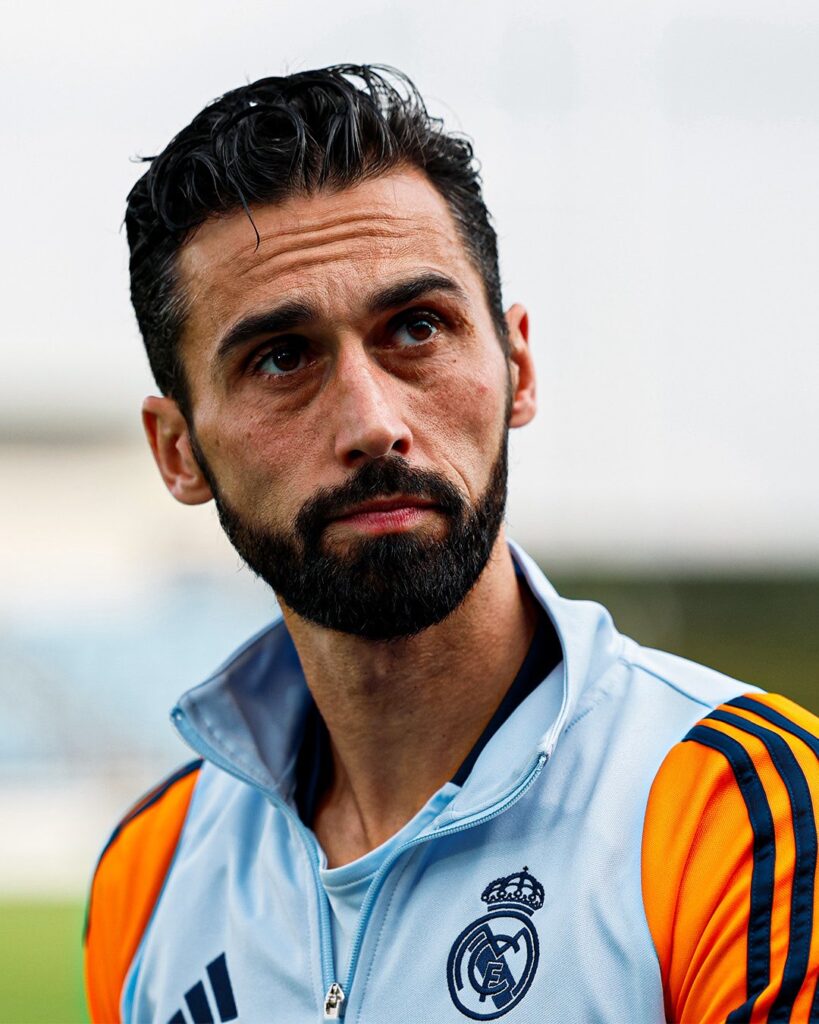
Arbeloa arrives with a successful track record in Real Madrid’s youth system. He won the treble with the Juvenil A team in 2022-23 and secured La Liga with the same age group in 2024-25. His familiarity with the club’s culture and his personal relationships with current players from his own playing days could prove valuable in healing the divisions that emerged under Alonso.
| Alvaro Arbeloa’s Background | Details |
|---|---|
| Real Madrid Youth Coaching Career | 2020-2025 |
| Castilla Manager | June 2025-January 2026 |
| Major Youth Achievements | Juvenil A treble (2022-23), La Liga title (2024-25) |
| Playing Career at Real Madrid | 2009-2016 (245 appearances) |
| Relationship with Current Squad | Played with several current coaching staff and management |
However, Arbeloa faces an enormous challenge. Real Madrid remains four points behind Barcelona in La Liga, faces a crucial Champions League knockout tie against Napoli, and must somehow restore confidence to a fractured squad. Whether his man-management skills can compensate for his relative inexperience at the highest level remains to be seen.
Read More: Real Madrid Promotes Castilla Head Coach Alvaro Arbeloa to First Team Manager Role
FAQs
How long was Xabi Alonso manager of Real Madrid?
Alonso managed Real Madrid for just seven months, taking charge in June 2025 and departing in January 2026 after only 28 matches across all competitions.
Did Xabi Alonso resign or was he sacked?
Despite the official “mutual agreement” statement, multiple reports indicate Alonso was effectively sacked by president Florentino Pérez and did not voluntarily resign.
What were the main reasons for Alonso’s departure?
The main reasons were dressing room conflicts with key players like Mbappé and Vinicius Jr., poor tactical decisions, mounting injuries, and declining results after a strong start.
Who replaced Xabi Alonso as Real Madrid manager?
Alvaro Arbeloa, who had been coaching Real Madrid Castilla since June 2025, was immediately promoted to replace Alonso as first-team head coach.
What was Real Madrid’s record under Xabi Alonso?
Under Alonso, Real Madrid won 17, drew 5, and lost 6 of 28 matches, achieving a 60.7% win rate. They currently sit second in La Liga, four points behind Barcelona.