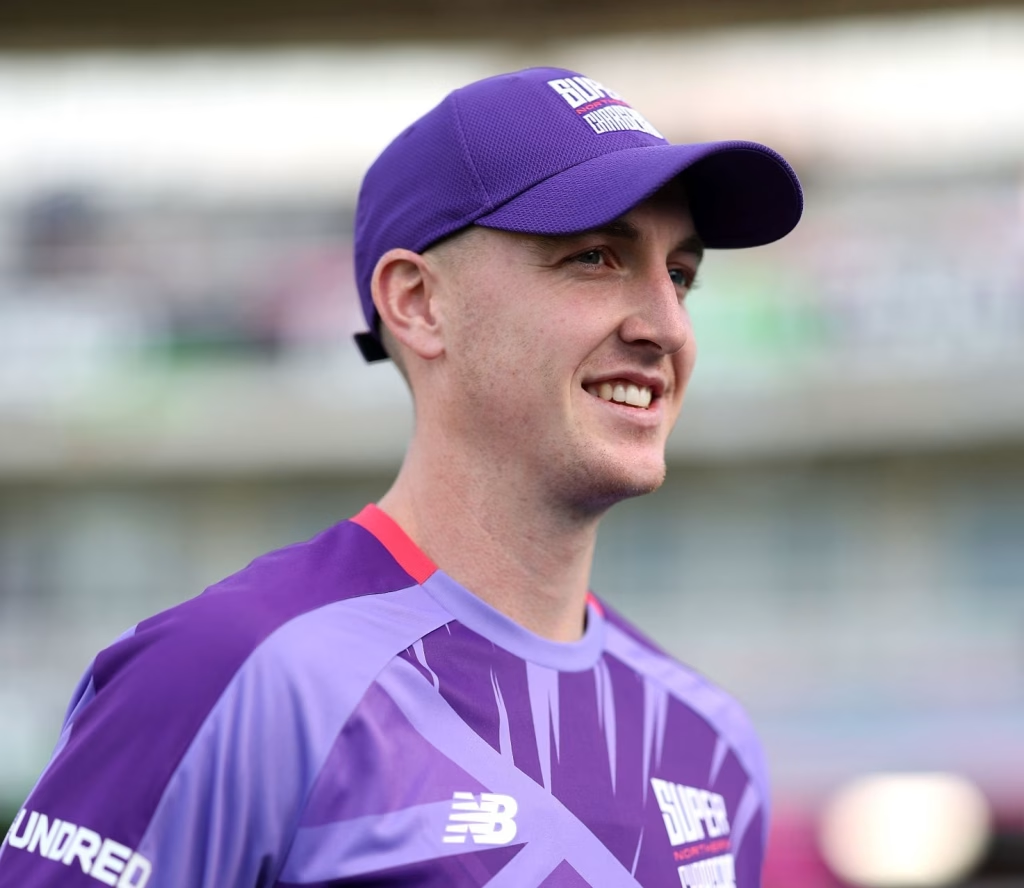
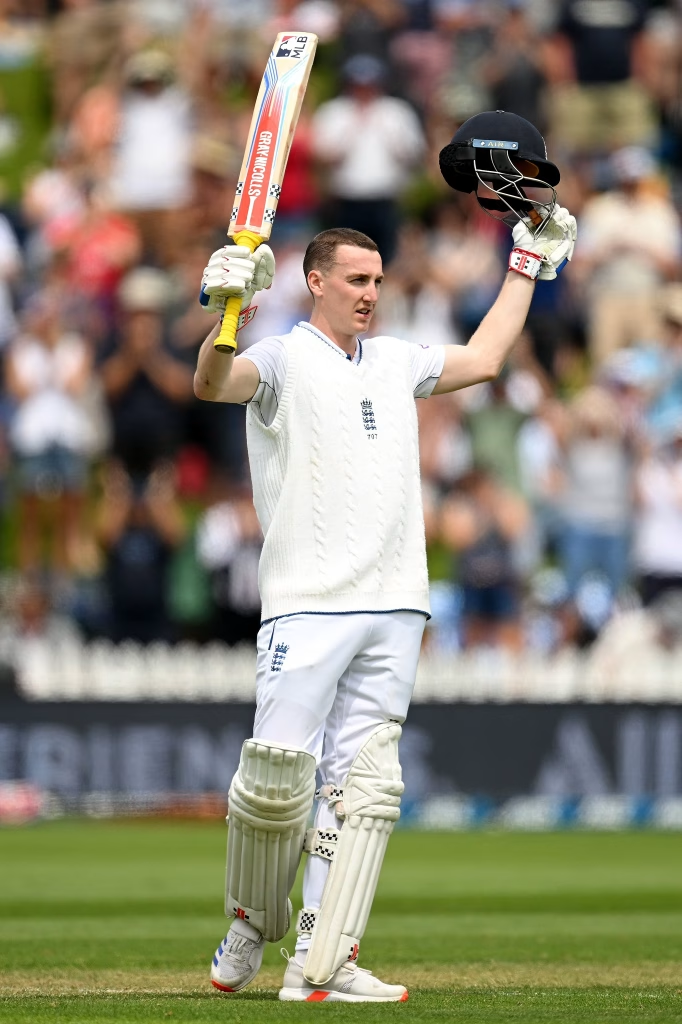
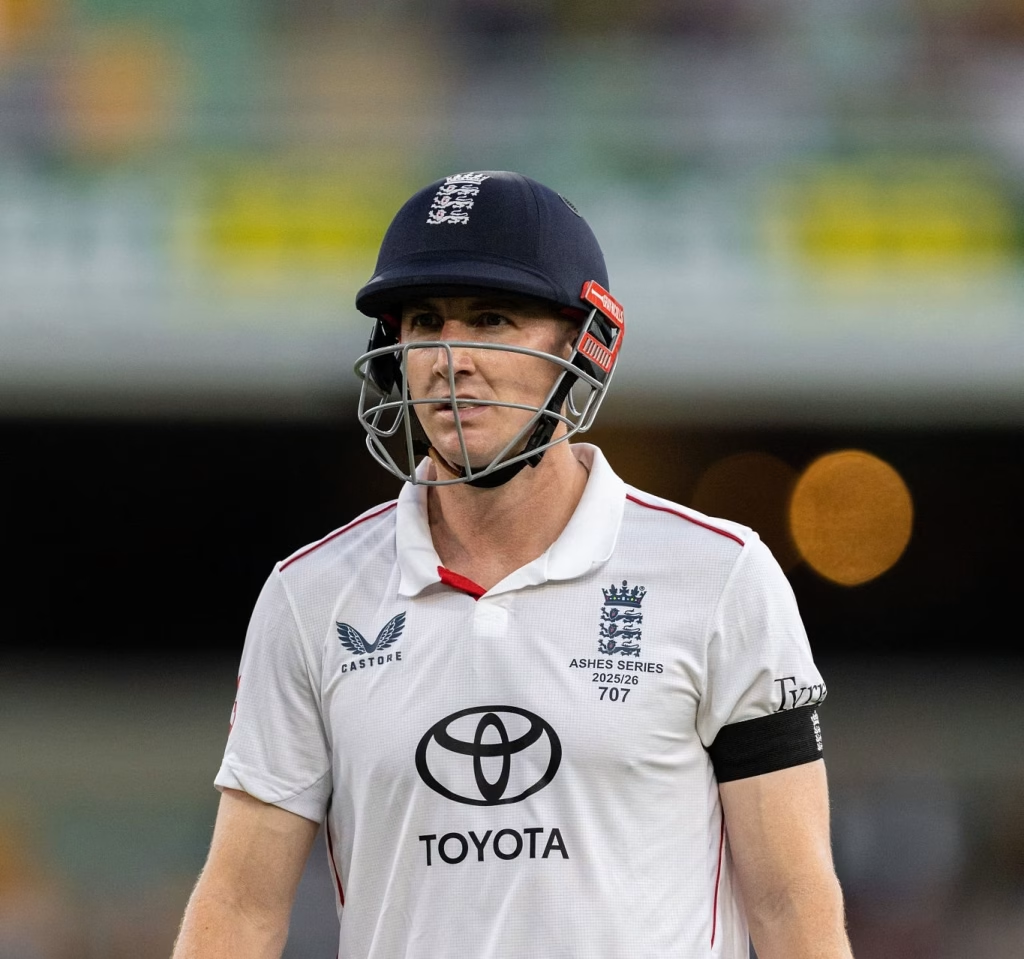
England’s dynamic batting sensation Harry Brook will not be participating in the IPL 2026 auction scheduled for December 16 in Abu Dhabi, becoming the first overseas player to face a two-year ban under the Board of Control for Cricket in India’s stringent new eligibility rules. The 26-year-old’s consecutive withdrawals from the Indian Premier League after being purchased at auction have resulted in automatic disqualification from participating in the tournament or any auction until 2028, marking a significant setback for both the player and franchises who valued his explosive batting abilities.
Table of Contents
The BCCI Rule That Triggered the Ban
The IPL 2026 auction will proceed without several high-profile names, with Harry Brook’s absence being the most notable consequence of BCCI’s revised framework governing player participation. The rule that has excluded Brook from the auction is straightforward and was communicated clearly to all players before they registered for the IPL 2025 mega auction: “Any player who registers in the auction and after getting picked, makes himself unavailable before the start of the season, will get banned from participating in the tournament and player auction for 2 seasons.”
This regulation was introduced following persistent complaints from IPL franchises about overseas players withdrawing at the last minute, disrupting team planning, squad balance, and strategic preparations. The ten franchises expressed frustration at such late pull-outs, which left them unable to adequately replace marquee signings and forced them to proceed with unbalanced squads. The BCCI implemented the two-year suspension policy as a disciplinary measure to protect franchise interests and ensure player commitments are honored once auction contracts are signed.
Brook’s First Withdrawal: Personal Tragedy in 2024
Harry Brook’s journey toward this ban began in March 2024 when he informed Delhi Capitals, just ten days before their opening match, that he would be withdrawing from IPL 2024 to be with his family following the death of his grandmother. The bereavement was a genuine personal tragedy that had already caused Brook to pull out of England’s Test tour of India in February 2024. His decision to prioritize family during a difficult period was understandable and received sympathy from the cricketing community.
Delhi Capitals had purchased Brook for Rs 4 crore at the IPL 2024 mini-auction, viewing him as a crucial middle-order asset who could provide the aggressive batting thrust their lineup needed. However, his withdrawal left the franchise scrambling to reorganize their batting order without adequate time to secure a replacement of comparable quality. While the circumstances were tragic and Brook’s decision was respected, it nonetheless represented a contractual obligation that went unfulfilled.
The Second Withdrawal: Prioritizing England in 2025
The situation took a more contentious turn when Harry Brook withdrew from IPL 2025 for a second consecutive year, this time citing the need to focus on England’s international commitments. Delhi Capitals had again invested heavily in the English batsman, purchasing him for Rs 6.25 crore at the IPL 2025 mega auction in November 2024. However, in March 2025, Brook announced through the England and Wales Cricket Board that he would not be participating in the tournament.
In his statement posted on social media, Brook explained: “I apologise unreservedly to the Delhi Capitals and their supporters. I love cricket. Ever since I was a young boy, I have dreamt of playing for my country, and I am extremely thankful to have the opportunity to play the game I love at this level. With the guidance of people I trust, I have taken the time to seriously consider this decision. It is a really important time for England cricket, and I want to fully commit to preparing for the upcoming series. In order to do this, I need time to recharge after the busiest period in my career to date.”
The timing of Brook’s second withdrawal raised eyebrows across the cricket world. Coming just weeks before the IPL 2025 season was set to commence, it left Delhi Capitals in an impossible position with no opportunity to replace him adequately. The withdrawal was particularly significant given Brook’s emerging candidacy for England’s white-ball captaincy following Jos Buttler’s resignation after the Champions Trophy, suggesting that his international commitments and potential leadership role influenced his decision-making.
Official Ban Confirmation and Communication
Following Brook’s second consecutive withdrawal, the BCCI moved swiftly to impose the two-year ban as stipulated in their regulations. According to reports in The Indian Express, Harry Brook received official communication from the BCCI informing him that he would not be eligible to enter the IPL auction until the 2028 edition of the competition. The England and Wales Cricket Board was also formally notified of the ban.
A BCCI spokesperson confirmed to Indian media: “An official communication has been sent to ECB and Brook about BCCI banning him for two years as per its policy which was informed to each player before they registered their name for IPL auction last year. It’s a policy set by the board and each player has to oblige to it.” This statement underscored that the ban was not arbitrary but rather the enforcement of a clearly communicated rule that Brook had agreed to when registering for the auction.
The ban means Harry Brook will miss both the IPL 2026 auction and the IPL 2027 auction, regardless of whether they are mini-auctions or mega-auctions. He will only become eligible to re-register for the IPL when the 2028 auction cycle opens, effectively removing him from the world’s richest T20 league for three complete seasons.
Reactions From Cricket Community
The imposition of the ban sparked considerable debate within the cricket community, with opinions divided on whether the punishment fit the circumstances. Former England all-rounder Moeen Ali, speaking on the Beard Before Cricket podcast, expressed support for the BCCI’s decision: “It’s not harsh though, I kinda agree with it. A lot of people do that [withdrawing]. People have done it in the past, and then they come back in and end up getting a better financial package or whatever it is.”
Moeen’s comments reflected frustration with a pattern that had developed over previous IPL seasons, where some overseas players appeared to use the auction process strategically, withdrawing when convenient and returning to potentially secure better contracts later. His fellow England spinner Adil Rashid concurred: “That’s the rule. If they actually put that rule in place before and this happens, you know going in that this is the rule, where you put your name and you know if you pull out – this is gonna happen.”
Indian cricket legend Sunil Gavaskar also weighed in on the broader issue of player commitment to the IPL in his column for Mid Day, stating: “There are some players who have made themselves available for a limited period. Frankly, if a player doesn’t show respect to the IPL and make himself available for the full tournament, he shouldn’t even be in the auction.” While Gavaskar’s comments were also directed at Australian wicketkeeper Josh Inglis, who registered for IPL 2026 with availability for only four matches, they reflected growing sentiment that overseas players must demonstrate full commitment to the tournament.
Impact on Harry Brook’s Career and Earnings
The financial implications of Brook’s ban are substantial. By missing three IPL seasons, the English batsman will forgo potential earnings estimated in the range of Rs 15-20 crore, depending on his auction valuation in those cycles. Given his explosive batting style, proven ability to dominate both pace and spin, and his status as one of England’s premier middle-order batsmen, Brook would likely have commanded significant fees had he been eligible for the IPL 2026 auction.
However, Brook’s prioritization of England duties may prove strategically sound from a career perspective. The 26-year-old is widely considered the frontrunner to succeed Jos Buttler as England’s white-ball captain, a role that would cement his status as one of English cricket’s most important figures. Additionally, England faces crucial Test assignments in 2025 and 2026, including a five-Test series against India at home between June and August 2025, followed by the Ashes in Australia from November 2025 through January 2026.
Managing workload effectively will be crucial for Brook as he potentially assumes leadership responsibilities across formats while maintaining performance standards in England’s packed international calendar. The IPL commitment of approximately two months would have occurred during a period when Brook needed to prepare mentally and physically for England’s most important Test series.
Other Players Affected by BCCI Rules
Harry Brook is not the only high-profile player excluded from the IPL 2026 auction due to BCCI regulations. England Test captain Ben Stokes faces a different but equally consequential restriction. Stokes opted not to register for the IPL 2025 mega auction, citing workload management concerns and his desire to focus on England duties. Under BCCI rules, any player who does not register for a mega auction automatically becomes ineligible for the subsequent mini-auctions, meaning Stokes cannot participate in the IPL 2026 auction despite potentially wanting to return.
English opening batsman Jason Roy also finds himself barred from the IPL 2026 auction after withdrawing from IPL 2024 for personal reasons and subsequently failing to register for the IPL 2025 mega auction. His back-to-back absence from the auction process means he cannot re-enter mid-cycle, making him ineligible until the next mega auction cycle.
The collective absence of these three established English cricketers from the IPL 2026 auction represents a significant shift in the overseas player landscape and has prompted speculation that they might instead pursue opportunities in other T20 leagues, including Pakistan’s PSL, where eligibility restrictions are less stringent.
Implications for IPL 2026 Auction Dynamics
The IPL 2026 auction, scheduled for December 16 in Abu Dhabi, will feature 77 available slots after 173 players were retained by the ten franchises. Harry Brook’s enforced absence removes one of the most exciting young batting talents from consideration, forcing franchises to redirect their focus toward other overseas options for middle-order roles.
Brook’s unique combination of attributes—aggressive stroke play, ability to accelerate innings, proficiency against both pace and spin, and relative youth—would have made him one of the most sought-after players in the auction. His absence creates opportunity for other overseas batsmen to fill the vacuum, potentially elevating the auction prices for players like Glenn Maxwell, David Miller, and emerging talents from associate nations who offer similar middle-order firepower.
The absence of Stokes, Brook, and Roy also reflects a broader trend of England’s multi-format players increasingly prioritizing international cricket over franchise commitments. This shift has implications for how English players approach T20 leagues globally and may influence future negotiations between the ECB and BCCI regarding player availability windows.
Path to Redemption: IPL 2028
Harry Brook’s next opportunity to participate in the Indian Premier League will come with the IPL 2028 auction. By that point, he will be 29 years old and potentially carrying additional responsibilities as England’s established white-ball captain. Whether he chooses to re-register for that auction will depend on multiple factors, including his international commitments, workload management considerations, family priorities, and his assessment of whether IPL participation aligns with his career objectives at that stage.
The enforced absence may ultimately benefit Brook by allowing him to focus entirely on England’s needs during a crucial period of transition and opportunity. However, the financial opportunity cost and the experience of competing in the world’s premier T20 league against the best players globally represent significant losses that cannot be easily quantified.
Read More: Virat Kohli Admits He Hasn’t Played at This Level in Two-Three Years
FAQs
Why is Harry Brook banned from the IPL 2026 auction?
Harry Brook is banned because he withdrew from IPL after being purchased at auction for two consecutive years (2024 and 2025). BCCI rules impose a two-year suspension on any player who makes themselves unavailable after being sold at auction.
How long is Harry Brook’s IPL ban?
Brook faces a two-year ban covering the 2026 and 2027 seasons. He will only be eligible to re-register for the IPL at the 2028 auction.
Which franchise purchased Harry Brook before his withdrawals?
Delhi Capitals purchased Harry Brook for Rs 4 crore in IPL 2024 and Rs 6.25 crore in IPL 2025. He withdrew from both seasons before they commenced.
What were the reasons for Brook’s IPL withdrawals?
Brook withdrew from IPL 2024 following the death of his grandmother. He withdrew from IPL 2025 to focus on England international commitments and to “recharge after the busiest period in my career.”
Are other players also banned from the IPL 2026 auction?
Yes, Ben Stokes is ineligible because he didn’t register for the IPL 2025 mega auction, and Jason Roy is banned for withdrawing from IPL 2024 and not registering for the 2025 mega auction.