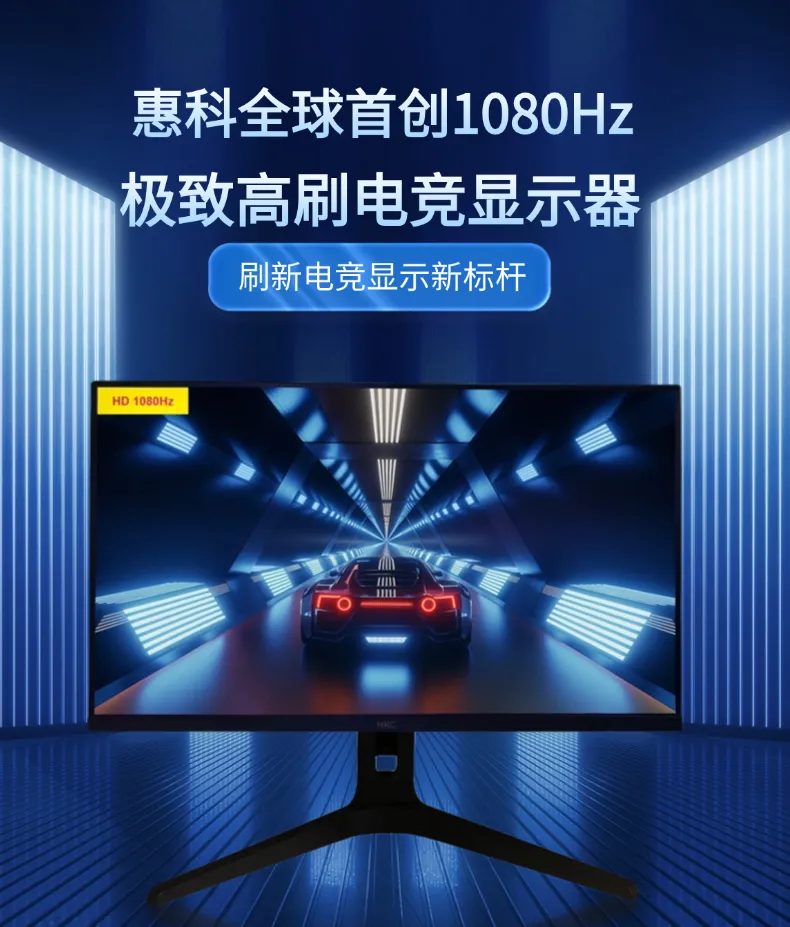
HKC has shattered refresh rate records with the ANTGAMER ANT275PQ MAX, the world’s first 1080Hz gaming monitor launching at CES 2026. This dual-mode Fast TN panel offers 1440p at 540Hz or drops to 720p for the insane 1080Hz refresh rate, targeting hardcore competitive esports players chasing near-zero latency advantages.
Table of Contents
HKC ANT275PQ MAX: Specifications
Monitor Details
| Feature | Specifications |
|---|---|
| Model | ANTGAMER ANT275PQ MAX |
| Panel Type | Fast TN with HMO oxide backplane |
| Native Resolution | 2560×1440 (QHD) @ 540Hz |
| Dual-Mode | 1280×720 (HD) @ 1080Hz |
| Screen Size | 27 inches |
| Connectivity | DisplayPort 2.1 UHBR20 (likely), HDMI 2.1 |
| Special Features | AI-powered image processing, near-zero ms latency |
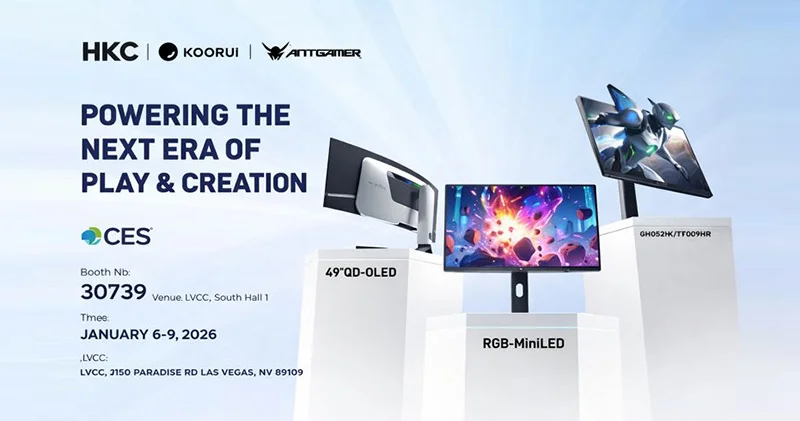
| CES 2026 Booth | #30739, South Hall 1, LVCC |
| China Pricing | ~$980 (~₹81,500) |
Breaking the 1000Hz Barrier
The 1080Hz refresh rate surpasses Samsung’s recently announced 1040Hz Odyssey G6, making HKC the current record holder. While Samsung teased 1040Hz at 720p with a 600Hz 1440p mode, HKC counters with 1080Hz at 720p and a competitive 540Hz at native 1440p resolution.
The Fast TN panel technology prioritizes response time over color accuracy and viewing angles—an acceptable trade-off for competitive FPS gamers where millisecond advantages determine victories in titles like Counter-Strike 2, Valorant, and Apex Legends.

Dual-Mode Strategy: Flexibility Wins
QHD 540Hz Mode: Balances picture quality with extreme smoothness for all-around gaming experiences where visual fidelity matters alongside responsiveness.
HD 1080Hz Mode: Unleashes maximum performance for hardcore competitive play, delivering near-instantaneous response specifically designed for esports professionals and serious enthusiasts.
The DisplayPort 2.1 UHBR20 support (not confirmed but likely) enables these high refresh rates without compression artifacts at native resolutions, though gamers would need next-generation GPUs capable of pushing 1080+ FPS even at 720p.
The GPU Challenge
Achieving 1080 FPS at 720p demands flagship-tier hardware—think RTX 5090 or future AMD RDNA 4 cards. Most modern game engines don’t even support frame rates this extreme, limiting practical usage to competitive esports titles optimized for ultra-high FPS like Counter-Strike 2, Valorant, Overwatch 2, and PUBG.
Even with a top-tier GPU, maintaining consistent 1080 FPS requires significant graphics settings compromises, making the 540Hz 1440p mode more practical for most gaming scenarios.
RGB Mini-LED Companion: M10 Ultra
HKC is also showcasing the M10 Ultra, the world’s first RGB Mini-LED monitor featuring separate red, green, and blue LEDs instead of traditional white backlights. This innovation delivers 100% sRGB, 99.9% DCI-P3, 99.9% Adobe RGB, and 98% BT.2020 color coverage with 1,600 nits peak brightness—targeting 3A game developers and professional creators.
The 1,596 physical dimming zones and 4,788 RGB color control zones enable unprecedented color accuracy at high brightness levels, addressing the typical washed-out appearance of conventional Mini-LED displays when pushing peak luminance.
CES 2026 Availability
Both displays will debut at CES 2026 (January 6-9) in Las Vegas at Booth 30739. Pricing beyond China’s ~$980 hasn’t been announced, though expect premium positioning given the cutting-edge technology.
FAQs
What games can actually reach 1080 FPS?
Only competitive esports titles like Counter-Strike 2, Valorant, and Overwatch 2 with settings minimized on flagship GPUs can approach 1080 FPS.
Is 1080Hz overkill for gaming?
For most gamers, yes—but professional esports players chasing every millisecond advantage will appreciate the responsiveness, even if imperceptible to average users.