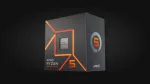
AMD’s next-generation Medusa Halo APUs will support LPDDR6 memory, according to hardware leaker Olrak29_. This upgrade promises approximately 80% more memory bandwidth compared to current Strix Halo processors, marking a significant leap for high-performance portable gaming and AI workloads.
The rumored Ryzen AI Max 500 series could arrive in 2027-2028 with cutting-edge Zen 6 CPU cores and RDNA 5 graphics, potentially delivering RTX 5070-level gaming performance without a discrete GPU.
Table of Contents

The Memory Bandwidth Revolution
Current Strix Halo processors feature a 256-bit LPDDR5X memory controller supporting 8,000 MT/s speeds, delivering 256 GB/s of bandwidth. The upcoming Gorgon Halo refresh will bump this to 8,533 MT/s for approximately 273.1 GB/s.
However, Medusa Halo’s LPDDR6 support changes everything. Even maintaining the same 256-bit memory bus, LPDDR6 at 14,400 MT/s would deliver around 460.8 GB/s of maximum throughput—an 80% increase over Strix Halo.
Some leaks suggest AMD might use a wider 384-bit memory bus, which could push bandwidth beyond 600 GB/s, rivaling high-end discrete graphics cards.
Bandwidth Comparison Table
| Platform | Memory Type | Speed | Bus Width | Bandwidth |
|---|---|---|---|---|
| Strix Halo | LPDDR5X | 8,000 MT/s | 256-bit | 256 GB/s |
| Gorgon Halo | LPDDR5X | 8,533 MT/s | 256-bit | 273.1 GB/s |
| Medusa Halo | LPDDR6 | 14,400 MT/s | 256-bit | 460.8 GB/s |
| Medusa (384-bit) | LPDDR6 | 14,400 MT/s | 384-bit | 691.2 GB/s |

What This Means for Performance
The massive bandwidth increase directly benefits integrated GPU performance. Current Strix Halo APUs already compete with entry-level discrete graphics, but memory bandwidth limitations hold them back in demanding scenarios.
With LPDDR6, Medusa Halo’s rumored 48 RDNA 5 compute units could potentially match or exceed RTX 5070 performance in gaming workloads. This would position the APU as a genuine discrete GPU replacement for gaming laptops and high-end handhelds.
For AI workloads, the bandwidth boost is equally transformative. Local large language model (LLM) inference speed depends heavily on memory bandwidth. Medusa Halo could handle 70B parameter models with significantly faster token generation than current solutions.
The Full Package
Beyond memory improvements, Medusa Halo reportedly features up to 24 Zen 6 CPU cores combined with powerful RDNA 5 graphics. The Zen 6 architecture promises substantial IPC gains over current Zen 5 cores, while RDNA 5 should deliver roughly 10% better rasterization performance than RDNA 4.
AMD hasn’t officially confirmed Medusa Halo specifications, and the platform likely won’t arrive until 2027-2028. The company just unveiled new Strix Halo SKUs at CES 2026, with the Gorgon Halo refresh expected later this year.
For more AMD processor news and updates, follow our coverage. You can also visit AMD’s official site for current Ryzen AI Max specifications.

The Competitive Landscape
Intel currently leads mobile memory speeds with Panther Lake supporting LPDDR5X up to 9,600 MT/s. However, AMD’s jump to LPDDR6 would leapfrog Intel’s current offerings by a substantial margin.
The timing matters too. With JEDEC already confirming LPDDR6 specifications at 14,400 MT/s, the technology should be production-ready when Medusa Halo launches. AMD’s early adoption could provide a significant competitive advantage in the premium laptop and handheld gaming markets.
FAQs
When will Medusa Halo launch?
Expected in 2027-2028, following the Gorgon Halo refresh planned for late 2026.
Will Medusa Halo replace discrete GPUs?
For mid-range gaming, possibly—rumored performance could match RTX 5070 levels with sufficient bandwidth.