In an era where technology reshapes how we experience sports, Real Madrid has announced what could be the most ambitious digital innovation in football history. Club president Florentino Pérez, speaking in an exclusive documentary for Apple Vision Pro alongside Apple’s Vice President of Services Eddy Cue, unveiled the “Infinite Bernabeu”—a groundbreaking virtual reality project designed to transport millions of fans worldwide directly into the Santiago Bernabéu Stadium without ever leaving their homes.
“We are developing a new Virtual Reality project for the Bernabéu,” Pérez declared, his voice carrying the weight of a vision years in the making. “Every fan around the world can literally feel like he’s watching the game right at the Bernabéu.” This isn’t hyperbole or marketing speak—this is Real Madrid’s president articulating a technological leap that could redefine how one billion fans connect with the world’s most storied football club.
The announcement represents more than just another innovation in sports broadcasting. It marks a philosophical shift in how elite football clubs think about accessibility, fan engagement, and the very nature of experiencing live sports in the digital age.
Table of Contents
The Vision Behind Infinite Bernabeu: Breaking Physical Barriers
Florentino Pérez first floated the concept of an “infinite stadium” during Real Madrid’s 2024 General Assembly, describing it provocatively as “watching the game better than in the stadium itself.” The ambition seemed almost impossible—how could virtual reality surpass the visceral thrill of 80,000 fans roaring in unison, the smell of grass, the collective gasp at a near-miss?
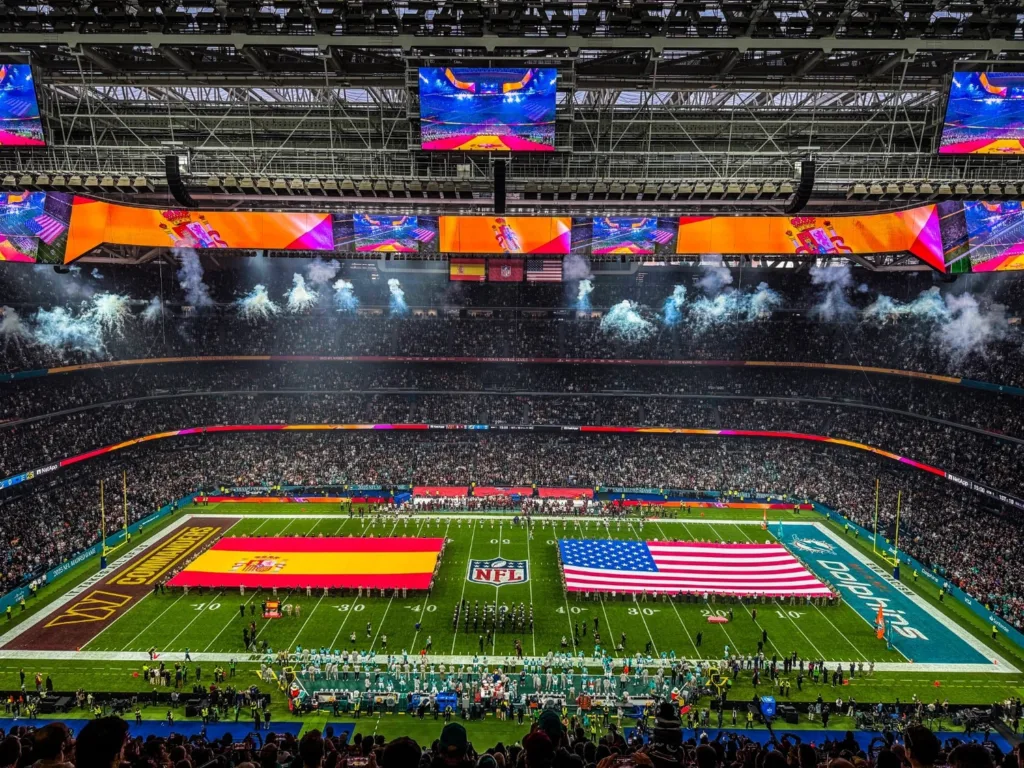
Yet Pérez, now 78 years old and wielding one of the sharpest minds in football administration after 24 years as club president, sees beyond these skepticisms. His vision addresses a fundamental problem facing Real Madrid and elite clubs globally: overwhelming demand meeting limited capacity.
“Everyone wants to come to the Santiago Bernabéu,” Pérez explained during the assembly. The renovated stadium, despite its impressive capacity, cannot accommodate the billions of Real Madrid supporters scattered across every continent. Match tickets sell out instantly. Fans in Asia, Africa, South America, and remote corners of Europe have virtually no chance of experiencing a live match at the Bernabéu.
| The Infinite Bernabeu Project Overview | |
|---|---|
| Project Name | Infinite Bernabeu (Bernabéu Infinito) |
| Technology Partner | Apple (Vision Pro VR Headset) |
| Launch Timeline | Documentary 2026, Full rollout TBA |
| Target Audience | 1 billion Real Madrid fans worldwide |
| First Trial | Real Madrid vs Juventus (October 22, 2024) |
| Camera Setup | 30+ specialized cameras throughout stadium |
| Core Innovation | Immersive VR experience replicating live attendance |
The Infinite Bernabeu solves this accessibility crisis through immersive virtual reality technology. “It’s not The Matrix, it’s Real Madrid and the future,” Pérez said, describing an end to “no tickets available” and the famous “sold out” notices that frustrate millions of supporters.
Apple Partnership: When Football Meets Silicon Valley Innovation
Real Madrid’s collaboration with Apple represents a marriage of football heritage and technological prowess. Apple’s Vision Pro—the mixed-reality headset that debuted to critical acclaim despite its $3,499 price point—provides the hardware foundation for Pérez’s vision. The device, currently available in select markets including the United States, United Kingdom, Germany, and France, combines augmented and virtual reality to create immersive experiences that blur the line between digital and physical worlds.
During Real Madrid’s UEFA Champions League victory over Juventus on October 22, 2024, the club deployed over 30 specialized cameras throughout the Santiago Bernabéu. These cameras captured every conceivable angle—the tunnel where players emerge onto the pitch, the press box where journalists type frantically, the dugout where managers pace nervously, the press conference room where post-match analysis unfolds, and of course, multiple perspectives from the stands and pitch level.
This footage will form the centrepiece of a documentary launching exclusively for Apple Vision Pro in 2026, serving as both a showcase for the technology and a proof-of-concept for the Infinite Bernabeu experience. The trial represents months of preparation and technical refinement, testing whether virtual reality can truly replicate the stadium atmosphere that makes football so emotionally powerful.
Planned Viewing Options:
- Stadium Stands: Multiple seating perspectives replicating different sections
- Pitch Level: Experience the game from player perspective
- Dugout Access: Watch alongside coaches during tactical decisions
- Exclusive Content: Tactical analysis, immersive replays, player interviews
- Global Interaction: Connect with fans worldwide in shared virtual environment
“[It’s] a project I’ve been pursuing for many years: to allow any fan to experience the excitement of the Bernabéu as if they were right here in the stadium,” Pérez told GQ magazine in an extensive interview detailing his vision. “I call it the Infinite Bernabéu, a place where anyone, from their own home, can experience a live match, with a sense of presence and emotion that was previously impossible.”
The Steve Jobs Philosophy: Excellence Over Profits
Perhaps the most revealing aspect of Pérez’s announcement came not in describing the technology but in articulating the philosophy driving the project. In an era where football clubs increasingly resemble corporations obsessed with quarterly earnings and revenue streams, Pérez invoked the late Steve Jobs as his guiding inspiration.
“Steve Jobs wasn’t obsessed with financial results, he was obsessed with creating extraordinary products,” Pérez said, his admiration for Apple’s co-founder evident. “When you focus on excellence, the rest comes naturally.”
This philosophy represents a calculated risk in modern football, where commercial considerations often overshadow sporting and fan experience priorities. Pérez acknowledged that the Infinite Bernabeu will generate revenue—virtual ticket sales could create a significant new income stream—but insisted economics shouldn’t drive the project.
“The economic impact is important, of course, but it shouldn’t be our short-term obsession,” he stated firmly during the Apple Vision Pro documentary. Instead, Pérez positions the project as part of Real Madrid’s broader mission to deliver unprecedented experiences to supporters worldwide.
This approach mirrors how Jobs revolutionized consumer technology by prioritizing user experience over immediate profitability. The iPhone wasn’t designed to maximize quarterly earnings; it was designed to be the best possible smartphone, with commercial success following as a natural consequence of excellence. Pérez applies the same logic to football fan engagement.
“Every fan that comes to the Bernabéu must feel like they’re living something unique, and technology is helping us do exactly that,” Pérez emphasized. The Infinite Bernabeu extends this philosophy to fans who will never physically visit Madrid, democratizing access to world-class football experiences.
A Defining Moment in Sports History
Pérez makes no modest claims about his project’s significance. “This will mark a defining moment in sports history, it’s never been done before,” he declared confidently. While virtual reality has been deployed in sports before—the NBA’s Xtadium app on Meta Quest offers courtside perspectives, and Premier League clubs like Manchester City have experimented with VR experiences—nothing approaches the scale and ambition of Real Madrid’s vision.
Previous VR sports initiatives typically offered limited perspectives or replays rather than comprehensive live experiences. The Infinite Bernabeu promises something far more radical: the ability to attend every Real Madrid match virtually, choosing your vantage point, accessing exclusive content, and interacting with millions of fellow supporters in a shared digital space.
“It will be like opening the stadium doors to the entire planet, without limits, without barriers,” Pérez said, “with a technological quality that will mark a before and after in the world of sports.”
The ambitious scope addresses Real Madrid’s unique position in global football. With an estimated one billion fans worldwide—making them arguably the planet’s most supported sports team—Real Madrid possesses both the audience and the brand power to make such a project commercially viable. Where smaller clubs might struggle to justify the enormous investment required, Real Madrid’s massive global following creates a ready market for virtual experiences.
The Internet Was Made for Real Madrid
Pérez’s vision for the Infinite Bernabeu extends beyond solving the ticket scarcity problem. It reflects his long-held belief that Real Madrid and digital technology share a symbiotic destiny. “I said many years ago, that the internet was created for Real Madrid,” Pérez stated during the Apple documentary.
“I said it because I knew that the internet would connect our fans to each other and allow them to follow us from anywhere in the world. That vision still stands today,” he explained. The internet transformed Real Madrid from a Madrid-based institution into a global phenomenon, enabling fans in Jakarta, Lagos, Buenos Aires, and Sydney to follow the club daily, participate in online communities, and feel genuine connection to players and achievements.
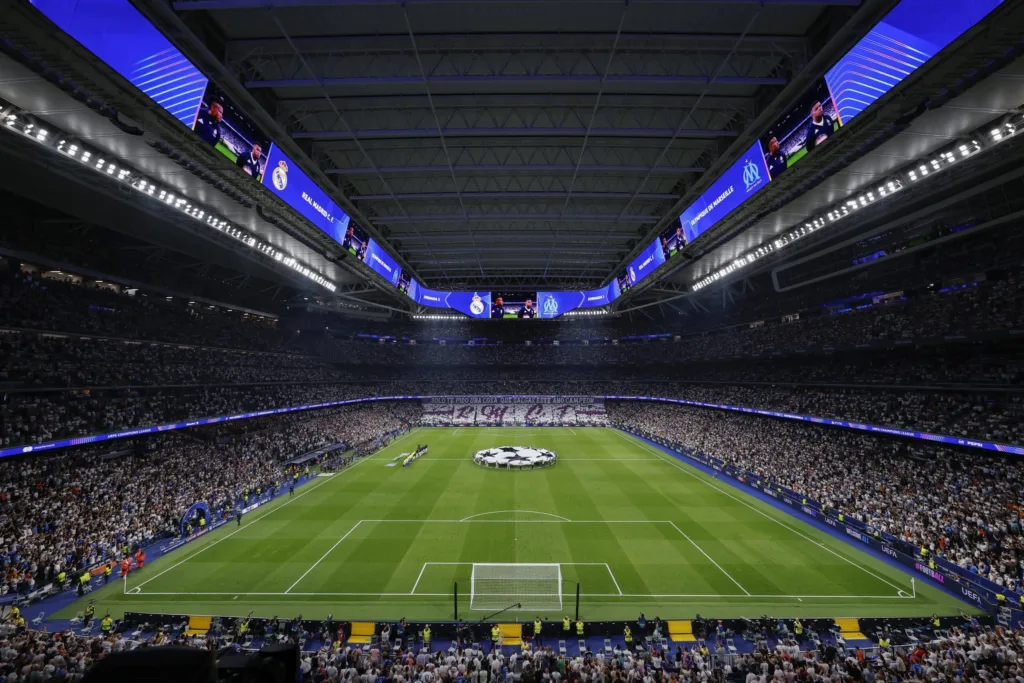
The Infinite Bernabeu represents the next evolution of this digital relationship. Where the internet provided information and highlights, virtual reality promises presence and immersion. Where social media created communities, VR will create shared experiences that mimic the collective emotion of attending matches together.
“There’s a billion Real Madrid fans, and our priority is to give them the experience they want,” Pérez emphasized, quantifying both the opportunity and the responsibility driving the project. For decades, being a Real Madrid supporter meant accepting that you’d likely never see your team play live. The Infinite Bernabeu changes that equation fundamentally.
Technical Infrastructure: The $1 Billion Foundation
The Infinite Bernabeu doesn’t exist in isolation—it’s the latest innovation in Real Madrid’s broader stadium transformation project that has already consumed over €1 billion ($1.07 billion) in investment. The renovated Santiago Bernabéu, which reopened in phases over the past two years, represents one of the most ambitious architectural and technological undertakings in sports history.
Santiago Bernabéu Stadium Innovations:
- Retractable Roof: Enables year-round events regardless of weather
- Retractable Pitch: Stadium converts between football, concerts, and events
- 360-Degree LED Screen: Wraps around the stadium exterior
- Advanced Lighting Systems: Efficient LED technology throughout
- Modernized VIP Zones: Luxury hospitality spaces
- Press Facilities: State-of-art media and press conference areas
- Automation Systems: Pitch movement and environmental controls
- Multi-Purpose Design: Functions 365 days annually
This technological infrastructure provides the foundation for the Infinite Bernabeu. The advanced camera systems, high-speed internet connectivity, automated pitch systems, and integrated digital displays all support the vision of broadcasting immersive VR experiences to millions simultaneously.
“The transformation of the Bernabéu has caused the admiration of the whole world,” Pérez said during the 2024 General Assembly. “It is already a world symbol, a monument, a temple. Millions of tourists are amazed by one of the most spectacular works in the world in recent years.”
The stadium’s transformation wasn’t without challenges. The COVID-19 pandemic disrupted construction timelines, while inflation driven by the war in Ukraine increased costs dramatically. Yet Real Madrid persisted, recognizing that the investment wasn’t merely in concrete and steel but in creating a platform for future innovations like the Infinite Bernabeu.
Business Model: Virtual Tickets and Recurring Revenue
While Pérez emphasizes excellence over immediate profits, the Infinite Bernabeu’s commercial potential is staggering. The project introduces a revolutionary business model: virtual tickets that grant access to immersive VR experiences of live matches.
Rather than competing with physical attendance (which remains sold out for every match), virtual tickets expand the addressable market exponentially. If even 1% of Real Madrid’s one billion fans purchased virtual tickets for major matches at, say, $20-50 per game, the revenue would reach hundreds of millions annually. Champions League finals, El Clásico matches against Barcelona, and other marquee fixtures could command premium virtual ticket prices.
Beyond individual match sales, subscription models become viable. Annual passes granting unlimited virtual attendance to all Real Madrid matches—home and away—would provide recurring revenue while building deeper fan loyalty. Premium tiers could offer exclusive camera angles, augmented analytics overlays, player statistics in real-time, and other enhanced features justifying higher price points.
The virtual ticket model also eliminates geographical and regulatory barriers to monetization. Fans in markets where traditional broadcasting deals limit access could purchase virtual tickets directly, circumventing broadcast partnerships while providing Real Madrid with direct revenue from territories previously difficult to monetize effectively.
Challenges and Considerations
Despite its promise, the Infinite Bernabeu faces significant hurdles before becoming mainstream reality:
Hardware Accessibility: Apple Vision Pro’s $3,499 base price restricts adoption to wealthy early adopters. For the Infinite Bernabeu to reach one billion fans, more affordable VR headsets must become viable alternatives, or Apple must significantly reduce prices.
Technical Requirements: Streaming high-quality VR content requires robust internet infrastructure. Fans in developing markets with limited broadband access may struggle to access the experience regardless of headset availability.
User Experience: VR technology can cause motion sickness and discomfort during extended use. A 90-minute football match plus pre- and post-match content represents a lengthy VR session that may challenge user tolerance.
Competition: Other clubs will inevitably develop similar offerings. Real Madrid’s first-mover advantage must be sustained through superior content, technology, and user experience to maintain differentiation.
Regulatory Issues: Virtual ticket sales may conflict with existing broadcasting agreements or territorial rights deals, requiring complex negotiations with partners and regulators.
The Broader Industry Impact
If Real Madrid successfully implements the Infinite Bernabeu, the ripple effects will transform professional sports globally. Every major football club, basketball franchise, and sports organization will face pressure to develop comparable virtual experiences or risk appearing antiquated to digitally-native younger fans.
The NBA has already begun this journey with Xtadium. Formula 1 experimented with VR experiences. But Real Madrid’s scale, ambition, and partnership with Apple could accelerate adoption across sports leagues worldwide, creating a new expectation that elite sports entertainment includes immersive digital access alongside traditional broadcasts.
For smaller clubs, this presents both opportunity and challenge. While they lack Real Madrid’s resources for cutting-edge VR development, they could license technology platforms developed by pioneers, offering their fans similar experiences at lower cost. A tiered ecosystem might emerge where elite clubs offer premium VR experiences while smaller clubs provide basic virtual attendance options.
The Timeline Ahead
Real Madrid’s documentary for Apple Vision Pro launches in 2026, providing the first public demonstration of Infinite Bernabeu technology. This release serves multiple purposes: marketing the concept to potential subscribers, showcasing technical capabilities to industry observers, and gathering user feedback to refine the experience before full commercial rollout.
The full Infinite Bernabeu platform launch timeline remains unannounced, but realistic estimates suggest 2026-2027 for initial availability, likely beginning with select matches before expanding to full season coverage. Early adopters will pay premium prices for access, with broader availability dependent on hardware price reductions and platform refinement.
Real Madrid’s collaboration with Apple continues evolving, with both organizations committed to iterating and improving the technology based on trial results and user testing. The October 2024 Juventus match provided invaluable data about camera placement, streaming requirements, and user experience considerations that will inform development.
The Future Arrives at the Bernabéu
Florentino Pérez has spent 24 years as Real Madrid president building a legacy defined by ambition, innovation, and global vision. From signing Galácticos to renovating the Bernabéu to winning countless trophies, Pérez’s presidency represents transformation and excellence. The Infinite Bernabeu may become his most enduring achievement—the innovation that fundamentally changed how billions of people experience football.
“Our project is titled ‘Infinite Bernabeu.’ This is a project we’ve been working on with Apple for many years, and it will be like opening the doors of the Bernabeu to the entire planet, with zero limits,” Pérez declared, his voice carrying conviction born from years pursuing this dream.
In an era where physical attendance at elite sporting events becomes increasingly exclusive and expensive, the Infinite Bernabeu democratizes access while maintaining Real Madrid’s position at football’s technological cutting edge. It transforms watching matches from a passive broadcast experience into an active, immersive participation in Real Madrid’s ongoing story.
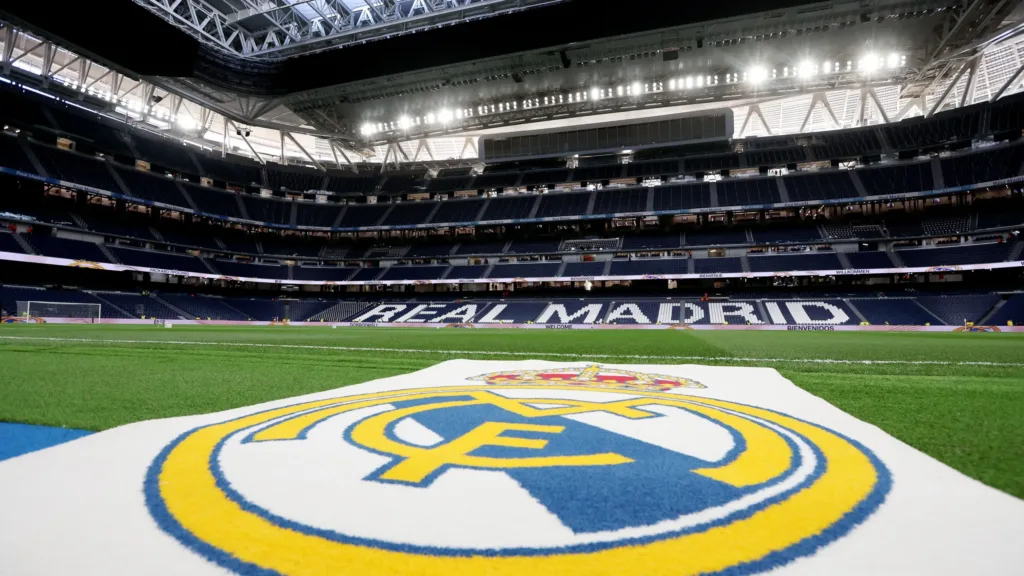
Whether the technology delivers on its ambitious promises remains to be seen. Virtual reality faces legitimate skepticism from those who believe nothing can replicate the authentic stadium atmosphere. Yet Pérez’s track record of delivering on grand visions—from transforming Real Madrid into the world’s richest club to completing the spectacular Bernabéu renovation—suggests betting against him is unwise.
The Infinite Bernabeu represents more than technology. It embodies a philosophy that excellence, ambition, and fan-centricity drive sustainable success. As Steve Jobs demonstrated with Apple, when you obsess over creating extraordinary products, financial success follows naturally. Florentino Pérez is applying that lesson to football, and one billion Real Madrid fans worldwide are about to experience the result.
The future of sports entertainment is being written in Madrid. And it looks infinite.
Read More: One Year of Ruben Amorim at Man United: Progress Emerges But Questions Remain Unanswered
FAQs
What is Real Madrid’s Infinite Bernabeu project?
The Infinite Bernabeu is a virtual reality initiative developed by Real Madrid in partnership with Apple that will allow fans worldwide to experience matches at the Santiago Bernabéu Stadium through Apple Vision Pro VR headsets, creating an immersive experience as if they’re physically present.
When will the Infinite Bernabeu be available to fans?
Real Madrid will release a documentary showcasing the technology for Apple Vision Pro in 2026, based on footage from the October 2024 Champions League match against Juventus. Full commercial availability for live matches is expected to follow in 2026-2027.
How much will virtual tickets for the Infinite Bernabeu cost?
Pricing hasn’t been officially announced, but industry estimates suggest virtual match tickets could range from $20-50 for regular matches to premium prices for El Clásico and Champions League finals. Subscription models offering unlimited access are also likely.
Do I need Apple Vision Pro to access the Infinite Bernabeu?
Currently, the project is being developed specifically for Apple Vision Pro ($3,499 base price). However, as the technology evolves, Real Madrid may expand compatibility to other VR headsets to reach their one billion fans globally.
What viewing experiences will the Infinite Bernabeu offer?
Fans will be able to choose multiple perspectives including various stadium seating locations, pitch-level views, dugout access, and exclusive content like tactical analysis, immersive replays, and player interviews. The experience also includes interaction with fans worldwide in a shared virtual environment.