When audiences got lost in the world of Dhurandhar, they weren’t thinking about visual effects. They were thinking about the story. And for philmCGI, one of India’s most respected animation and VFX studios, that’s the highest compliment possible.
The Mumbai and Pune-based studio — a TPN Gold-certified company — has now pulled back the curtain on its work across Dhurandhar and Dhurandhar: The Revenge, revealing a pipeline that delivered over 1,000 VFX shots without a single one calling attention to itself. The result? A Best VFX win at the Zee Cine Awards and Best Special Effects at Screen Awards 2026.
Table of Contents
philmCGI x Dhurandhar: By the Numbers
| Detail | Info |
|---|---|
| Studio | philmCGI (Mumbai/Pune) |
| Certification | TPN Gold-Certified |
| VFX Shots Delivered | 1,000+ |
| Films Covered | Dhurandhar + Dhurandhar: The Revenge |
| Director | Aditya Dhar |
| Production Partner | B62 Studio |
| Awards Won | Best VFX – Zee Cine Awards; Best Special Effects – Screen Awards 2026 |
| Key VFX Work | Environment extensions, simulations, compositing, world-building |
| Technology Used | Proprietary pipeline + AI-assisted in-house workflows |
The Philosophy That Made It Work: Invisible First, Spectacular Never
Most people associate VFX with spectacle — explosions, CGI creatures, impossible landscapes that scream “this was made in a computer.” philmCGI took the opposite approach on Dhurandhar, and it’s worth understanding why.

According to Wikipedia’s overview of visual effects, the craft encompasses everything from obvious digital creations to subtle enhancements that audiences never consciously register. The latter — often called “invisible VFX” — is technically far harder to execute because there’s no margin for error. A CGI dragon can get away with looking slightly off. A street corner in Lyari cannot.
Arpan Gaglani, Founder and MD of philmCGI, described the guiding principle simply: “Visual effects are most powerful when they remain unseen, quietly supporting the story without revealing the craft behind it.”
That thinking shaped every decision the studio made — from how they approached environment extensions to how they handled the final composite.
Inside the Lyari Set: Where VFX Became World-Building
The standout example from philmCGI’s work on Dhurandhar is the Lyari Set — a dense, textured, lived-in environment that needed to feel completely real on screen.

This wasn’t a sequence where the VFX was meant to impress. It was meant to disappear. The studio extended and enhanced the physical set through detailed world-building, set augmentation, and frame-level compositing — every element calibrated to match the lighting, texture, and tone of the live-action plates shot on location.
Getting this right required frame-level accuracy across hundreds of shots. Any inconsistency in shadow, texture depth, or colour grading would have broken the illusion. None did.
It’s the kind of work that wins awards — and the kind that most audiences will never know happened.
AI-Assisted Pipelines: How philmCGI Delivered 1,000+ Shots on Tight Timelines
Scale and speed are the twin pressures that break VFX productions. Dhurandhar demanded both — over a thousand shots, high-complexity sequences running simultaneously, and an unwavering mandate for realism.
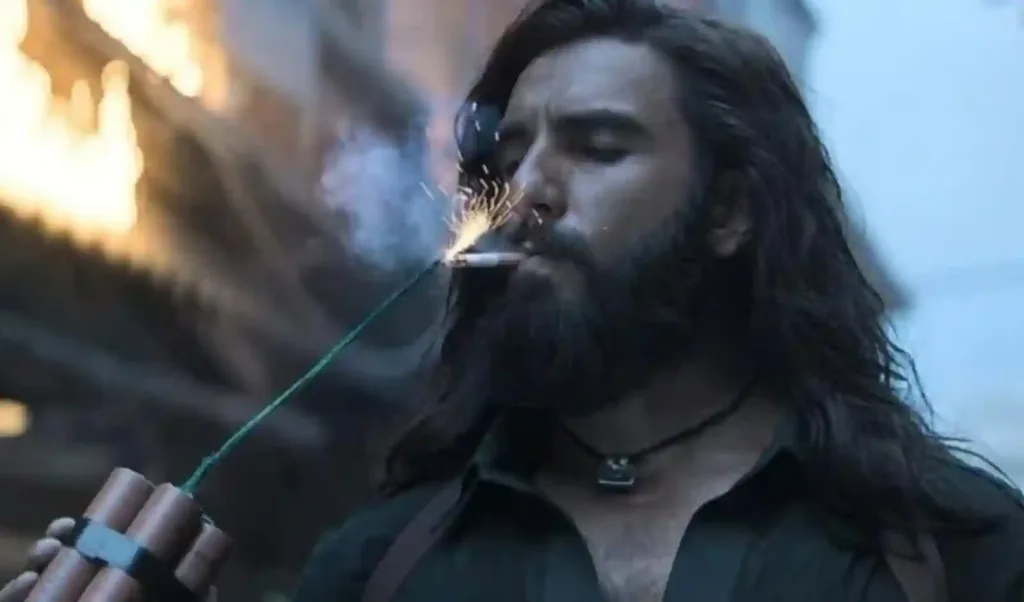
philmCGI’s answer was its proprietary production pipeline, enhanced by AI-assisted workflows developed entirely in-house. The integration wasn’t about replacing artists — it was about protecting them. By automating repetitive, time-consuming processes, the AI layer freed the creative team to focus on what machines can’t do: nuanced storytelling decisions, lighting judgment calls, and the subtle tweaks that separate good VFX from invisible VFX.
Anand Bhanushali, Founder and MD of philmCGI, described the challenge directly: “The film demanded a careful balance between scale, tight timelines, and a strict mandate for realism — with over 1,000 shots delivered while ensuring the work remained completely invisible to the audience.”
That combination — proprietary tech stack, AI efficiency layer, and a story-first creative culture — is what makes philmCGI’s approach genuinely distinctive in India’s VFX landscape.
Why philmCGI’s Work on Dhurandhar Matters for Indian Cinema
Dhurandhar isn’t just a successful film. It’s a case study in what’s possible when a director with a clear vision (Aditya Dhar) partners with a VFX studio that understands restraint.
Indian cinema has historically leaned on VFX for spectacle — and there’s nothing wrong with that. But the global benchmark for prestige filmmaking has always been invisible effects: the kind that make a $30 million film look like it cost $150 million without a single audience member noticing why.
philmCGI’s work on Dhurandhar demonstrates that Indian studios can now operate at that level. With TPN Gold certification (the global industry standard for content security and production quality), an AI-integrated pipeline, and back-to-back major awards, the studio is no longer just competitive with global VFX houses — it’s setting its own benchmark.
Looking ahead, philmCGI has signalled continued investment in AI-led workflows and next-generation pipelines, with an explicit focus on shaping how future stories are imagined, built, and experienced. That’s an ambitious mandate — and based on Dhurandhar, one they’re well-positioned to deliver on.
For more on how Indian studios are redefining cinema with cutting-edge VFX and AI, explore TechnoSports’ entertainment tech coverage and our deep-dive into India’s best VFX productions of 2026.
FAQs
Q: What is “invisible VFX” and why does philmCGI focus on it?
Invisible VFX refers to effects so seamlessly integrated that audiences never notice them — philmCGI prioritises this approach to keep viewers immersed in the story rather than distracted by the craft.
Q: How many VFX shots did philmCGI create for Dhurandhar?
philmCGI delivered over 1,000 VFX shots across Dhurandhar and Dhurandhar: The Revenge, winning Best VFX at the Zee Cine Awards and Best Special Effects at Screen Awards 2026.