India’s highways are getting a green, medicinal makeover — and it’s more powerful than it sounds. The National Highways Authority of India (NHAI) has launched the ‘Arogya Van’ initiative, a thematic medicinal tree plantation drive on vacant land parcels along National Highways, aimed at enriching biodiversity by introducing medicinal tree species that support pollinators, birds, and microfauna — thereby strengthening ecosystem resilience.
Table of Contents
NHAI Arogya Van: Key Facts at a Glance
| Detail | Info |
|---|---|
| Initiative Name | NHAI Arogya Van |
| Phase | First Phase |
| Land Parcels Covered | 17 |
| Total Area | 62.8 hectares |
| Trees to be Planted | 67,462 medicinal trees |
| Tree Species Identified | 36 |
| Total Vacant Land Identified | ~188 hectares |
| States Covered | MP, Haryana, Delhi-NCR, AP, Gujarat, Karnataka, Odisha, TN, Rajasthan, Maharashtra, Chhattisgarh |
What Trees Are Being Planted?
Around 36 tree species with established medicinal properties — including Neem, Amla, Imli, Jamun, Lemon, Gular, and Maulsari — have been identified and will be planted at land parcels as per suitability to the respective agro-climatic zones.
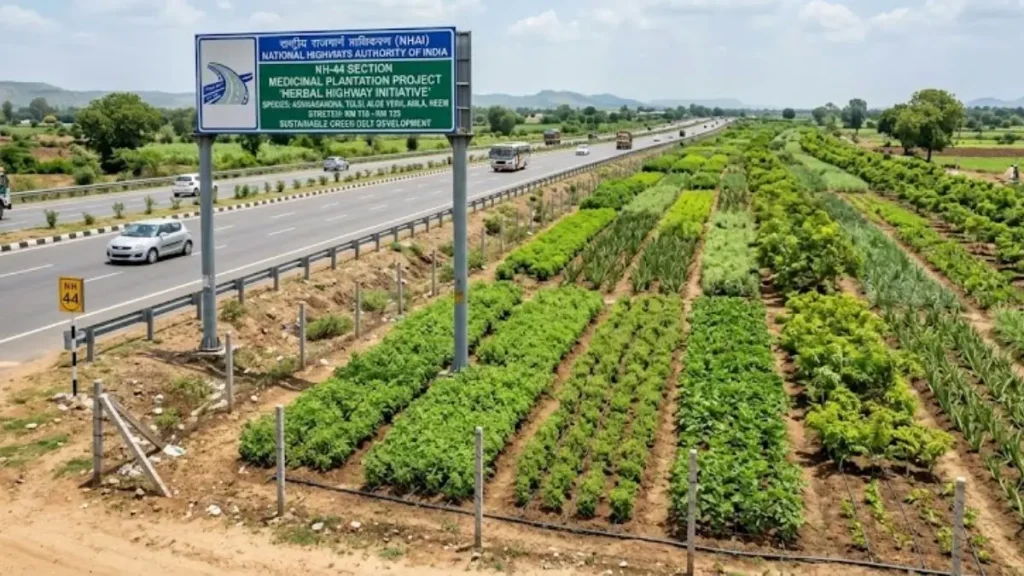
These aren’t random roadside trees. Each species is chosen for its ecological fit and its deep roots in Ayurvedic medicine, India’s ancient system of traditional healing.
Where Will These Forests Come Up?
Priority will be given to land parcels near toll plazas, wayside amenities, interchanges, cloverleaf junctions, and other prominent stretches along National Highways to maximize public awareness and outreach. pib Smart placement means millions of commuters will encounter these green corridors daily.
The Bigger Picture: Why This Matters
The initiative aligns with the Government of India’s priority to promote traditional systems of medicine such as Ayurveda and contribute towards conservation of indigenous medicinal flora. These plantations are envisaged as living repositories that will create public awareness about traditional medicinal knowledge systems. pib
NHAI has identified approximately 188 hectares of vacant land for plantations during the forthcoming monsoon season to ensure higher survival rates and long-term sustainability. pib
For more on India’s green infrastructure and policy developments, visit Technosports.
FAQs
Q: Which states will benefit from NHAI Arogya Van in Phase 1?
The first phase covers 11 states — Madhya Pradesh, Haryana, Delhi-NCR, Andhra Pradesh, Gujarat, Karnataka, Odisha, Tamil Nadu, Rajasthan, Maharashtra, and Chhattisgarh, with 67,462 trees across 62.8 hectares.
Q: When will the Arogya Van plantations be carried out?
NHAI has planned the plantation drive during the upcoming monsoon season to ensure the highest survival rates and long-term ecological sustainability.