The stage is set for the Indian Premier League’s most anticipated mini-auction as the Board of Control for Cricket in India has finalized a 350-player shortlist for the December 16 event in Abu Dhabi. Among the headline announcements, South African wicketkeeper-batter Quinton de Kock emerged as a surprise late addition to the final list, while Australian allrounder Cameron Green has been strategically placed in the opening set of batters, positioning himself as the potential most expensive buy of the auction.
The IPL 2026 auction represents a crucial opportunity for franchises to address squad gaps and strengthen their rosters ahead of the 19th edition of the world’s premier T20 league. With 77 slots available across 10 teams and a combined purse of Rs 237.55 crore at their disposal, the mini-auction promises intense bidding wars for premium talent and emerging domestic players alike.
Table of Contents
De Kock’s Surprising Inclusion Following Franchise Request
Quinton de Kock’s addition to the IPL 2026 auction shortlist came as a significant surprise, as the South African wicketkeeper-batter was not part of the original longlist of 1,390 registered players. The Board of Control for Cricket in India added 35 new players to the final list following specific requests from franchises, with de Kock among the most prominent inclusions alongside Sri Lanka’s Dunith Wellalage and South Africa’s George Linde.
De Kock, who recently reversed his ODI retirement to return to international cricket, has been assigned a base price of Rs 1 crore for the auction. The 33-year-old left-handed wicketkeeper-batter last played for Kolkata Knight Riders in IPL 2025 but was released by the three-time champions ahead of the mini-auction. His forgettable season with KKR, coupled with his international retirement at the time, made his exclusion from the initial list understandable.
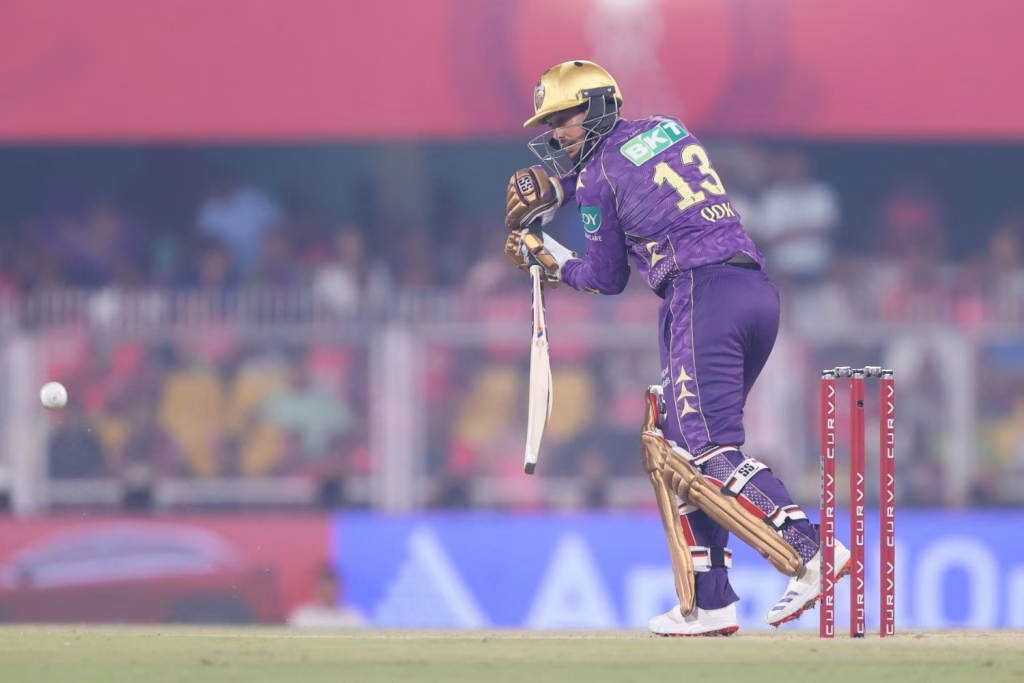
However, de Kock’s return to South African cricket and his proven IPL credentials spanning multiple seasons made him an attractive prospect for franchises looking to fill wicketkeeper positions. His explosive batting at the top of the order, combined with his safe glovework behind the stumps, provides versatility that several teams require. The fact that at least one franchise specifically requested his inclusion demonstrates the continued demand for experienced international wicketkeeper-batters in the IPL ecosystem.
De Kock will feature in the wicketkeeper category (Set 3) alongside other prominent names including Afghanistan’s Rahmanullah Gurbaz, who has a base price of Rs 1.5 crore, England’s Jonny Bairstow and Ben Duckett (both at Rs 2 crore base price), and New Zealand’s Finn Allen (Rs 2 crore). The competition for wicketkeeping slots remains intense, with franchises needing players who can provide dual value as openers or middle-order batters while maintaining high standards behind the stumps.
Cameron Green Positioned as Auction’s Marquee Attraction
Cameron Green’s placement in the first set of capped batters signals the Indian Premier League’s recognition of his status as the auction’s potential headliner. The Australian allrounder, who has listed himself with a base price of Rs 2 crore and notably registered as a batter who can bowl, missed the IPL 2025 mega-auction while recovering from a back injury. His return to full fitness coincides perfectly with franchises desperately seeking versatile overseas players who can impact matches with both bat and ball.
Green will appear in Set BA1 alongside other premium batting talent including New Zealand’s Devon Conway (Rs 2 crore), Australia’s Jake Fraser-McGurk (Rs 2 crore), South Africa’s David Miller (Rs 2 crore), and Indian batters Prithvi Shaw and Sarfaraz Khan (both at Rs 75 lakh). This opening set traditionally attracts the highest attention and most aggressive bidding, making Green’s positioning strategic for maximizing his auction value.
The 26-year-old’s IPL credentials include his previous stint with Mumbai Indians, who purchased him for Rs 17.5 crore at the 2023 auction, making him the second-most expensive buy that year. His ability to bat anywhere in the order, his handy seam bowling that provides crucial overs, and his exceptional fielding make him an ideal replacement for aging or departed allrounders. Kolkata Knight Riders, in particular, need someone to fill the void left by Andre Russell’s IPL retirement, while Chennai Super Kings require a foreign allrounder who can contribute across all departments.
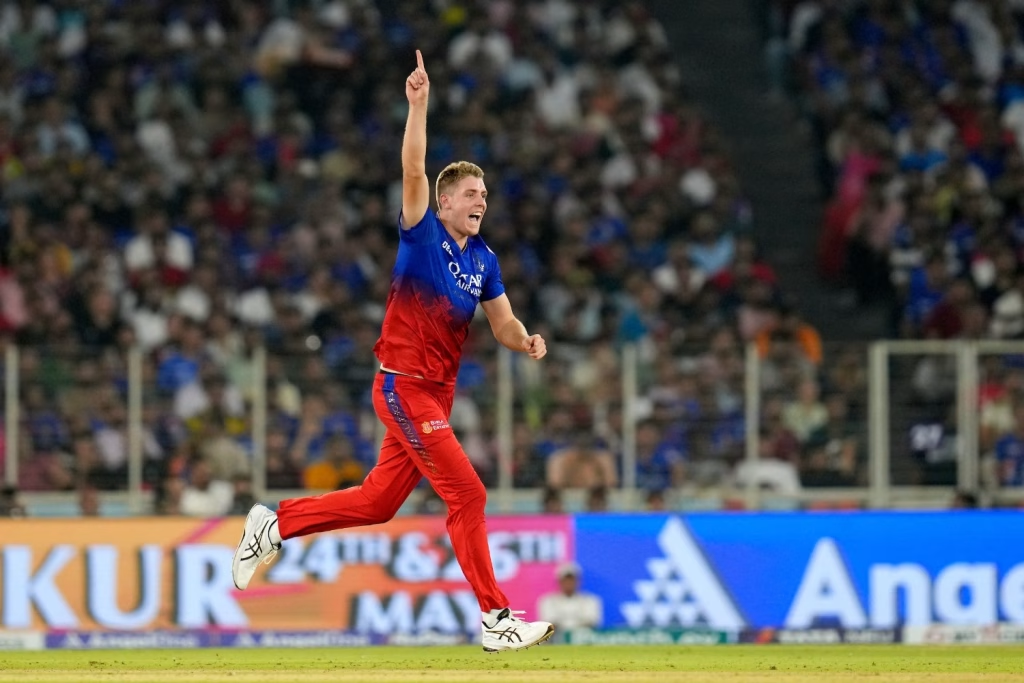
Experts predict Green could become the most expensive purchase at the IPL 2026 auction, with both KKR and CSK expected to engage in aggressive bidding. KKR possesses the largest purse of Rs 64.3 crore and have 13 slots to fill including six overseas positions, while CSK follow with Rs 43.4 crore and nine available slots. Both franchises released several key players to create financial flexibility specifically for targeting premium overseas talent like Green.
However, a new IPL regulation implemented before the 2025 mega-auction places a cap on overseas player salaries at mini-auctions. The maximum fee rule stipulates that no overseas player can be paid more than Rs 18 crore at a mini-auction, with any bid exceeding this amount having the excess directed to BCCI player welfare funds. This means while Green could trigger a bidding war reaching Rs 18 crore, his actual contract value cannot surpass that figure regardless of how high franchises bid.
Auction Structure and Player Distribution
The IPL 2026 mini-auction features 350 carefully selected players from the initial pool of 1,390 registrations. The final list comprises 240 Indian players and 110 overseas cricketers, with a heavy emphasis on uncapped talent. Specifically, the breakdown includes 16 capped Indian players, 224 uncapped Indian players, 96 capped overseas players, and 14 uncapped overseas players.
A total of 40 players have listed themselves at the maximum base price of Rs 2 crore, with only two Indians—Venkatesh Iyer and Ravi Bishnoi—joining the elite bracket. Venkatesh Iyer, previously purchased by Kolkata Knight Riders for a staggering Rs 23.75 crore before being released, returns to the auction pool seeking a fresh start. Ravi Bishnoi, the talented leg-spinner released by Lucknow Super Giants after being retained for Rs 11 crore in 2024, represents one of India’s premier white-ball spin options.
The overseas contingent at the Rs 2 crore base price includes established stars like Steve Smith, Liam Livingstone, Matheesha Pathirana, Wanindu Hasaranga, Rachin Ravindra, Anrich Nortje, and Matt Henry. This diversity of options across batting, bowling, and allrounder categories ensures intense competition for limited overseas slots.
The auction will follow a structured format beginning with capped players categorized by role—batters, allrounders, wicketkeepers, fast bowlers, and spinners—followed by a complete round of uncapped players. The accelerated bidding process commences after player number 70, with franchises later submitting lists of unsold players for additional accelerated rounds. This format ensures efficiency while maintaining competitive bidding dynamics throughout the day-long event.
Franchise Purse Analysis and Strategic Priorities
Kolkata Knight Riders enter the IPL 2026 auction with the most significant financial firepower at Rs 64.3 crore, having released several high-profile players including Andre Russell, Quinton de Kock, Rahmanullah Gurbaz, Venkatesh Iyer, Anrich Nortje, and Moeen Ali. This aggressive restructuring provides KKR maximum flexibility to rebuild around their retained core of Rinku Singh, Sunil Narine, Varun Chakravarthy, and captain Ajinkya Rahane.
Chennai Super Kings possess the second-largest purse at Rs 43.4 crore with nine slots to fill. Having retained their core leadership group including MS Dhoni, Ravindra Jadeja, and Ruturaj Gaikwad, CSK seeks specific additions—particularly a foreign allrounder who can provide batting depth and bowling options. Their release of Matheesha Pathirana, who was retained for Rs 13 crore in 2024, signals their willingness to explore alternative fast bowling options.
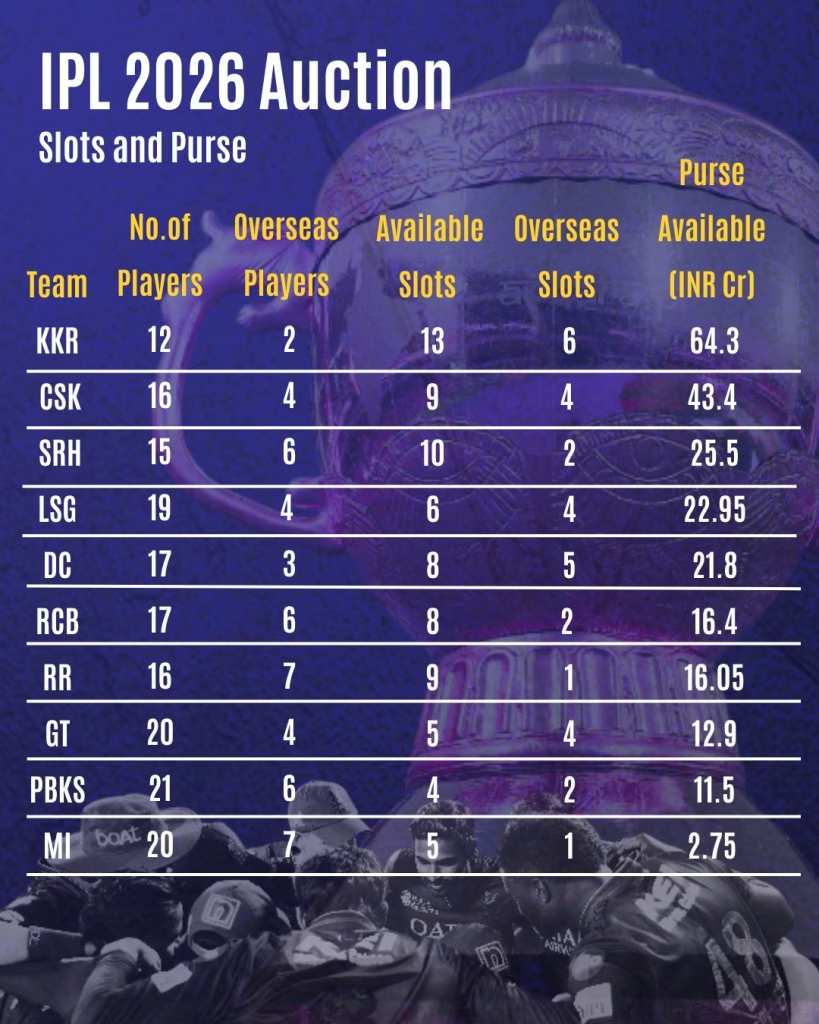
Sunrisers Hyderabad follow with Rs 25.5 crore, while Royal Challengers Bengaluru and Lucknow Super Giants possess Rs 20.05 crore and Rs 20 crore respectively. At the opposite end, Mumbai Indians have just Rs 2.75 crore remaining after completing trades for Shardul Thakur and Sherfane Rutherford, limiting them to modest additions to complement their largely retained squad.
The varied purse sizes create distinct auction strategies. Teams with significant funds like KKR and CSK will target marquee players across multiple categories, while franchises with moderate budgets must identify specific needs and target players who fill precise roles. Mumbai Indians’ minimal remaining purse essentially eliminates them from bidding wars for premium talent, forcing them to focus on economical buys and uncapped discoveries.
Notable Absentees and Surprise Exclusions
Several prominent IPL veterans have opted out of the IPL 2026 auction, creating opportunities for emerging players. Most notably, Glenn Maxwell chose not to register after being released by Punjab Kings, instead committing to play in the Pakistan Super League. The 37-year-old Australian, who fractured his finger midway through IPL 2025, decided to prioritize PSL participation over what could have been his fifth IPL franchise.
England allrounder Moeen Ali similarly opted for PSL over IPL after Chennai Super Kings released him. Moeen, who won two IPL titles with CSK and participated in eight IPL seasons since 2018, represents another experienced international choosing alternative T20 leagues. West Indies legend Andre Russell retired from IPL after Kolkata Knight Riders released him, transitioning to a coaching role with KKR as their power-hitting coach.
Australian wicketkeeper-batter Josh Inglis presents an unusual case. Despite playing a key role in Punjab Kings’ run to the IPL 2025 final, Inglis re-entered the auction pool after being unable to commit to the full 2026 season for personal reasons. The IPL has notified all franchises that Inglis will be available for only 25 percent of the season, significantly impacting his auction value and likely limiting interest from teams seeking consistent overseas contributors.
These absences, combined with natural roster turnover, create approximately 77 available slots across the 10 franchises, including 31 overseas positions. This represents substantial movement for a mini-auction, ensuring robust competition for quality players across all categories and price brackets.
International Representation and Emerging Markets
The IPL 2026 auction features players from 14 countries, underlining the tournament’s status as cricket’s most attractive franchise destination. England leads overseas representation with 21 players including wicketkeeper-batter Jamie Smith, pacer Gus Atkinson, and Test opener Ben Duckett. Australia follows with 19 players led by Cameron Green, with Josh Inglis, Matthew Short, Cooper Connolly, and Beau Webster providing depth across batting and bowling departments.
South African representation includes 15 players, with Quinton de Kock and David Miller headlining the batting contingent alongside fast bowlers Anrich Nortje, Lungi Ngidi, and Gerald Coetzee. Sri Lanka contributes 12 players including premium spinner Wanindu Hasaranga and pace sensation Matheesha Pathirana, while New Zealand’s 16-player contingent features Rachin Ravindra, Devon Conway, and Matt Henry.
Afghanistan provides 10 players led by spinner Mujeeb ur Rahman and wicketkeeper Rahmanullah Gurbaz, demonstrating the growing strength of Associate nation talent in franchise cricket. West Indies representation includes nine players, with fast bowlers Alzarri Joseph and Shamar Joseph, wicketkeeper Shai Hope, and allrounder Roston Chase among the prominent names.
The diversity of international talent ensures franchises can construct balanced overseas contingents combining explosive batting, penetrative bowling, and specialized skills. The presence of players from emerging cricket nations also reflects the IPL’s role in providing global platforms for talent development and financial security for cricketers from smaller cricket economies.
The Auction Day Experience and Broadcast Details
The IPL 2026 mini-auction will commence at 1:00 PM UAE time (2:30 PM IST) on Tuesday, December 16, at the Etihad Arena in Abu Dhabi. The venue, which has hosted previous IPL auctions, provides a neutral location with excellent facilities for conducting the day-long event. All 10 franchises will have representatives present, supported by coaching staff and analytics teams responsible for real-time decision-making during bidding wars.
The auction format includes live bidding visible to all participants, with auctioneer-led proceedings moving through player categories systematically. Franchises use electronic paddles to indicate bids, with incremental raises continuing until only one team remains interested. The accelerated rounds later in the day streamline the process for lower-profile players, ensuring the auction concludes within a reasonable timeframe while maintaining competitive integrity.
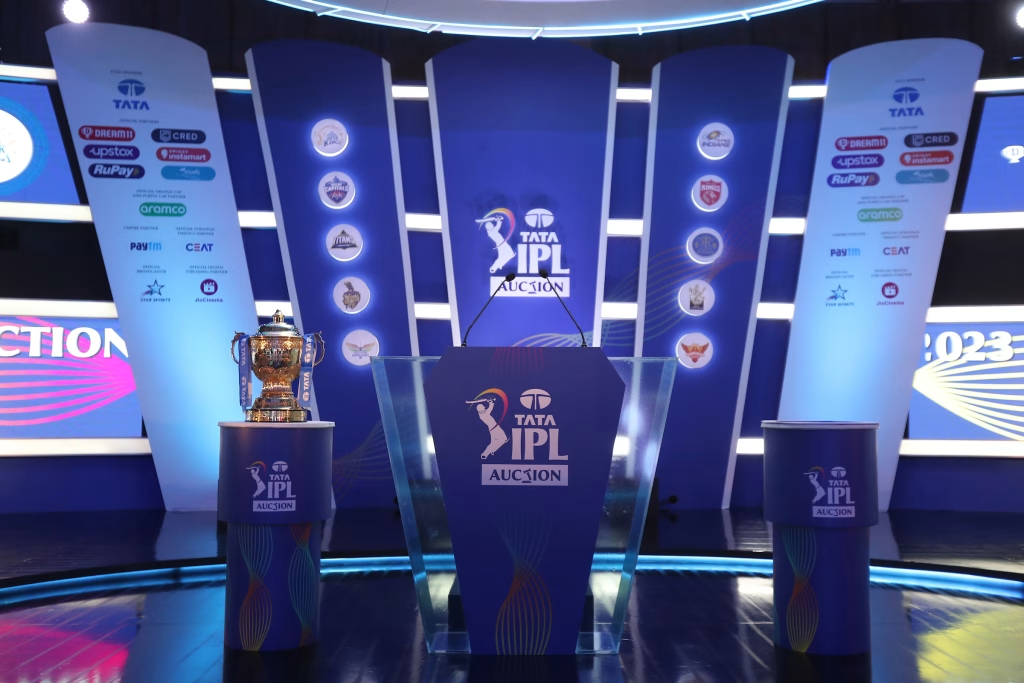
Fans can follow the auction through official IPL broadcasts and digital platforms, with real-time updates provided across social media channels. The event typically generates massive viewership and engagement, with every significant purchase analyzed extensively by cricket experts and franchise supporters. The combination of strategic team-building and individual player valuations creates compelling drama that extends beyond the auction floor to global cricket discourse.
Read More: Neymar’s Santos Future Hangs in Balance as World Cup 2026 Dreams Drive Critical Surgery Decision
FAQs
When is the IPL 2026 auction and how many players will be available?
The IPL 2026 mini-auction takes place on December 16, 2025, at the Etihad Arena in Abu Dhabi, starting at 2:30 PM IST. A total of 350 players have been shortlisted from 1,390 registrations, comprising 240 Indians and 110 overseas cricketers. Franchises will compete to fill 77 available slots including 31 overseas positions.
Why was Quinton de Kock added to the auction list as a surprise inclusion?
Quinton de Kock was not part of the original longlist but was added after franchises specifically requested his inclusion. The BCCI added 35 new players following franchise requests, with de Kock among the most prominent additions. His recent return from ODI retirement and proven IPL experience made him an attractive late addition at a Rs 1 crore base price.
Why is Cameron Green expected to become the most expensive buy at the IPL 2026 auction?
Cameron Green is positioned in the first set of batters at a Rs 2 crore base price and is expected to attract aggressive bidding from Kolkata Knight Riders (Rs 64.3 crore purse) and Chennai Super Kings (Rs 43.4 crore purse). Both franchises need versatile overseas allrounders, and Green’s ability to bat anywhere in the order, bowl seam, and contribute in the field makes him an ideal multi-dimensional asset. However, the IPL’s maximum fee rule caps his actual salary at Rs 18 crore.
Which franchises have the largest budgets for the IPL 2026 auction?
Kolkata Knight Riders possess the largest purse at Rs 64.3 crore with 13 slots to fill, followed by Chennai Super Kings with Rs 43.4 crore and 9 slots available. Sunrisers Hyderabad have Rs 25.5 crore, while Mumbai Indians have the smallest remaining budget at just Rs 2.75 crore after completing trades and retaining most of their squad.
How many players have listed themselves at the maximum Rs 2 crore base price?
A total of 40 players have registered at the maximum base price of Rs 2 crore, with only two Indians—Venkatesh Iyer and Ravi Bishnoi—in this elite bracket. The overseas contingent includes Cameron Green, Steve Smith, Liam Livingstone, Matheesha Pathirana, Wanindu Hasaranga, Rachin Ravindra, Anrich Nortje, David Miller, and several other established international stars across batting, bowling, and allrounder categories.