


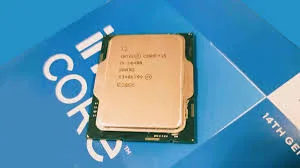
Budget gaming PC builders face a critical decision in 2025 as they have been stuck with the proven Intel Core i5-14400F or upgrade to the newer Ultra 5 225F? Both processors target the sweet spot around $200, but they represent fundamentally different value propositions. While the Ultra 5 brings modern architecture improvements and better raw performance, the i5-14400F has dropped to just $149.99, making it a tempting choice for cost-conscious gamers. Let’s break down which processor deserves your hard-earned money.
Table of Contents
Core Specifications: Evolution vs Value
Both chips share surprising similarities in their foundational design. Each features 10 cores split into a 6P+4E (Performance + Efficiency) configuration, 20 MB Intel Smart Cache, and 65W TDP ratings. However, Intel’s architectural evolution becomes apparent in the details.

The Ultra 5 225F eliminates hyperthreading entirely, delivering 10 threads instead of the i5-14400F’s 16 threads. This controversial decision reflects Intel’s shift toward efficiency, with the company arguing that modern E-cores render additional logic threads less meaningful. The newer chip compensates with 200 MHz higher clock speeds and consumes 27W less power under load, providing extra headroom for sustained high-FPS gaming.
Perhaps most significantly, the Arrow Lake-based Ultra 5 225F integrates AI and Deep Learning chiplets directly on-die. While gaming impact remains modest, these accelerators improve texture handling, encoding workloads, and CPU-GPU coordination—benefits that become more relevant as games increasingly leverage AI-driven technologies.
Detailed Intel Specification Comparison
| Specification | Core i5-14400F | Ultra 5 225F |
|---|---|---|
| Architecture | Raptor Lake (14th Gen) | Arrow Lake (200 Series) |
| Cores/Threads | 10 cores / 16 threads | 10 cores / 10 threads |
| Core Config | 6P + 4E | 6P + 4E |
| Base Clock | 2.5 GHz | 2.7 GHz |
| Boost Clock | 4.7 GHz | 4.9 GHz |
| Cache | 20 MB Smart Cache | 20 MB Smart Cache |
| TDP | 65W (148W Max) | 65W (121W Max) |
| Memory Support | DDR4-3200 / DDR5-5600 | DDR5-6400 |
| AI Acceleration | None | Integrated NPU |
| Socket | LGA 1700 | LGA 1851 |
| Current Price | $149.99 | $221.00 |
Gaming Performance: The 7.6% Reality Check
Real-world gaming benchmarks reveal the Ultra 5 225F delivers approximately 7.6% higher average frame rates when paired with high-end graphics cards like the RTX 5090. This advantage becomes most pronounced in CPU-intensive titles—Silent Hill f shows 15% gains, S.T.A.L.K.E.R. 2 improves by 10.4%, and Counter-Strike 2 performs 10% better.
However, context matters enormously here. These benchmarks use flagship GPUs that eliminate graphics bottlenecks, allowing CPU differences to shine through. Budget gamers typically pair these processors with mid-range cards like the RTX 4060 or RX 7600, where GPU limitations become the primary performance constraint. In practical budget builds, the performance gap between these chips shrinks considerably.
The i5-14400F’s additional threads prove valuable in heavily multithreaded workloads and background task management. Streaming gameplay while running Discord, monitoring software, and background applications benefits from the extra threading capacity—scenarios where the Ultra 5’s thread deficit becomes noticeable.
Value Proposition: Where Math Meets Reality
Here’s where the comparison becomes uncomfortable for the Ultra 5 225F. At current pricing, the i5-14400F delivers 1.10 FPS per dollar spent, while the Ultra 5 225F manages just 0.80 FPS per dollar—a 27% worse performance-per-dollar ratio.

That $70 price difference represents real opportunity cost. Redirecting those funds toward a GPU upgrade from an RTX 4060 to an RTX 4060 Ti would dramatically outpace any CPU-driven performance gains. Graphics cards remain the primary gaming performance determinant, making the i5-14400F’s pricing particularly compelling for builders prioritizing frame rates over architectural modernity.
The i5-14400F also supports both DDR4 and DDR5 memory, providing flexibility to use existing RAM or purchase more affordable DDR4 kits. Budget builders appreciate this versatility, as DDR5 pricing—while improving—still commands premiums over comparable DDR4 configurations.
Platform Longevity and Upgrade Paths
The Ultra 5 225F introduces Intel’s new LGA 1851 socket, theoretically providing compatibility with future processor generations. This forward-looking platform could justify the premium for builders planning gradual upgrades over several years. The integrated NPU also positions systems for emerging AI workloads in gaming and content creation.
Conversely, the i5-14400F’s LGA 1700 platform has reached maturity, meaning limited upgrade options beyond existing 14th Gen processors. However, the Socket 1700 ecosystem offers abundant motherboard choices at competitive prices, immediately benefiting today’s builders rather than promising uncertain future value.
For more CPU buying guidance, explore our complete processor selection guide and discover optimal CPU-GPU pairings for every budget.
The Verdict: Context Determines Victory
Choose the Core i5-14400F if you’re maximizing value, operating under strict budget constraints, or already own DDR4 memory. The $70 savings enables meaningful GPU upgrades that deliver tangible gaming improvements. Its 16 threads handle multitasking gracefully, and mature platform pricing reduces total system cost.
Select the Ultra 5 225F if you prioritize future-proofing, want maximum raw performance, or plan building a platform for gradual upgrades. The newer architecture, lower power consumption, and integrated AI acceleration provide legitimate advantages for users willing to pay the premium.
Frequently Asked Questions
Q: Will the i5-14400F bottleneck modern graphics cards?
The i5-14400F handles GPUs up to the RTX 4070 or RX 7800 XT without significant bottlenecking at 1080p and 1440p resolutions. With flagship cards like the RTX 4090 or RTX 5090, you’ll encounter CPU limitations in extremely demanding titles at 1080p, though this scenario rarely applies to budget builds. For typical budget gaming with RTX 4060/4060 Ti class graphics cards, the i5-14400F provides more than adequate performance without holding back your GPU.
Q: Does the Ultra 5 225F’s lack of hyperthreading hurt gaming performance?
Not significantly for pure gaming scenarios. Modern game engines increasingly optimize for physical cores rather than threads, meaning the Ultra 5’s 10 physical cores perform admirably. However, the thread deficit becomes noticeable during heavy multitasking—simultaneous streaming, recording, or running multiple background applications. Content creators and streamers might miss those extra threads, while focused gamers won’t notice the difference in single-application scenarios.