It’s a number India never wanted to see. On March 27, 2026, the Indian rupee breached the psychologically significant 94-per-dollar mark for the first time in history — and the reasons behind it are as alarming as the number itself.
The rupee declined 0.9% to close at 94.8125, after hitting an all-time intraday low of 94.84 per dollar. The currency has fallen about 4% since the Middle East war began in late February 2026 and is now down 11% this fiscal year — heading for its worst annual decline in more than a decade.
Table of Contents
Indian Rupee Crisis — Key Numbers at a Glance
| Metric | Data |
|---|---|
| Record Low (Intraday) | ₹94.85 per dollar (March 27, 2026) |
| Closing Rate | ₹94.81 per dollar |
| Fall Since Middle East War | ~4% |
| Fiscal Year Drop (FY26) | ~11% |
| Last Comparable Drop | 2011–12 (–14%) |
| Brent Crude Price | $109.75 per barrel |
| FPI Equity Outflows (March) | $11.5 billion |
| Forex Reserves | $698.3 billion (week ending March 20) |
| 10-Year Bond Yield | 6.94% (near 2-year high) |
| SocGen Rupee Target | 96 per dollar |
What Is Driving the Rupee Down?
Three forces are battering the rupee simultaneously — and they are all feeding each other.
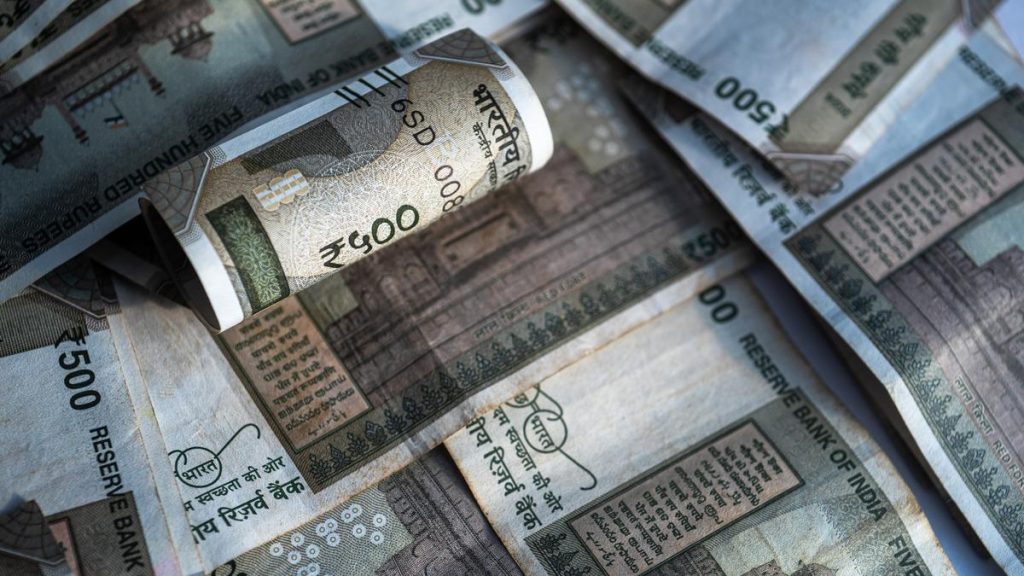
Analysts describe a “perfect storm” of surging crude oil prices following the Iran war, persistent foreign portfolio investor (FPI) outflows, global central banks holding rates steady, and weakening domestic economic fundamentals — all striking at once.
Brent crude surged to $109.75 per barrel, while the dollar index climbed to 100. Foreign investors sold around ₹850 crore of government securities in a single session, while overseas investors have pulled $11.5 billion from Indian stocks this month alone. UrbanAsian
The Reserve Bank of India’s interventions are described as “less aggressive,” with Societe Generale recommending shorting the rupee with a target of 96 per dollar, noting that the RBI appears to have shifted focus towards capping the 10-year bond yield below 7% while allowing gradual FX depreciation.
What Could Happen Next?
Analysts at Kotak Securities say the rupee may slide to 96–97 per dollar in a worst-case scenario if the Iran war disruptions extend into mid-April — though a move toward 100 is “not the base case.” Once tensions ease and energy supply normalises, a sharp relief rally in the rupee is expected.
Over the past 15 years, the rupee has weakened by approximately 109% against the US dollar, falling from around ₹45 in 2010 to current levels — an average annual depreciation of nearly 4.7%. Cricketstadium
For more on how India’s economic developments impact markets, technology, and everyday consumers, explore our latest financial and tech analysis at TechnoSports. Also read our coverage of how rising oil prices and global tensions are reshaping India’s economy in 2026
FAQs
Q: Why has the Indian rupee hit a record low in March 2026?
The rupee crashed past 94 per dollar due to a combination of surging crude oil prices triggered by the Middle East war, massive FPI outflows of $11.5 billion in March alone, and a stronger US dollar index — creating what analysts call a “perfect storm” for the currency.
Q: Will the Indian rupee fall further to 100 per dollar?
Most analysts say a drop to 100 is not their base case, but levels of 96–97 are realistic if geopolitical tensions persist. A resolution to the Middle East conflict and stabilising crude prices could trigger a sharp relief rally in the rupee.