FC Goa players staged a symbolic on-pitch protest at the start of their AFC Champions League Two match against FC Istiklol on Tuesday, December 24, 2025. The players briefly paused play following kickoff at Fatorda Stadium, using the continental platform to draw global attention to the crisis engulfing Indian football.
This marked the first time an ISL club publicly protested during a live continental match. While players have voiced concerns on social media, FC Goa became the first club to make such a statement during an AFC competition broadcast across Asia.
The ISL 2025-26 season remains suspended in December with no broadcaster, no commercial partner, and clubs struggling while players face unpaid wages. The AIFF-FSDL Master Rights Agreement expired, leaving India’s top-tier league in unprecedented limbo.
FC Goa lost 2-1, ending their campaign with six consecutive defeats, but the scoreline became secondary to their message.
Table of Contents
The Symbolic Gesture
When referee Ammar Ebrahim Hasan Mahfoodh started the match at 9:30 PM IST, FC Goa players briefly paused instead of engaging in play, standing still in a coordinated silent protest..

The gesture was carefully planned to use their continental platform—broadcast live across Asia—to highlight the crisis threatening Indian football. The protest lasted only seconds before play resumed, but carried profound symbolism by ensuring maximum visibility for domestic issues.
This was FC Goa’s final home match in the competition. With qualification already impossible after five consecutive defeats, the Gaurs had nothing to lose competitively. The protest respected the competition—FC Goa clarified it was not directed at FC Istiklol, the AFC, or the tournament, but specifically at the AIFF whose failures created the crisis.
FC Goa’s Official Statement
FC Goa released a statement explaining: “At the start of our AFC Champions League Two match, FC Goa’s players briefly paused active play for the opening seconds as a symbolic gesture to highlight the uncertainty currently affecting Indian football. This action was solely intended to draw attention to the broader challenges facing the domestic football ecosystem.”
The statement clarified: “It was not directed at our opponents FC Istiklol, the AFC, or the AFC Champions League Two, all of whom we respect greatly. The gesture carried no element of protest against the competition or its stakeholders and was made in good faith, without any intent to cause offence or disruption.”
This framing protected FC Goa from potential AFC disciplinary action while maintaining the protest’s power against domestic failures.
The Crisis Behind the Protest
FC Goa’s gesture reflected a comprehensive governance failure. The ISL traditionally begins in September but December 2025 arrived with the season completely unscheduled. The AIFF’s Master Rights Agreement with FSDL, providing ₹50 crore annually, expired with negotiations collapsing. When the federation tendered commercial rights, zero entities bid—a devastating vote of no-confidence.
Without a commercial partner, the ISL has no broadcaster, no production infrastructure, no sponsorship framework, and no revenue. Clubs maintain expensive rosters for a league that isn’t happening, creating wage obligations they struggle to meet. Many clubs have delayed player wages citing force majeure. Javier Siverio mutually terminated his FC Goa contract citing “ongoing uncertainty over the future of the Indian Super League.”
The crisis extends to India’s national team, which failed to qualify for the 2027 AFC Asian Cup—meaning no competitive international football until at least November 2027. With domestic leagues also suspended, Indian players face potentially years without competitive football at any level.
The AIFF rejected ISL clubs’ consortium proposal seeking club ownership yet offered no financially viable alternative. The federation claims it will operate the league directly despite having only ₹19.89 crore in usable funds, facing a ₹25.88 crore deficit by May 2026, and securing no broadcasting or commercial arrangements. The AIFF’s three-member committee presented format proposals to clubs while avoiding every substantive question about broadcasting, finances, or operational timelines.
Why This Protest Was Historic
FC Goa’s on-pitch protest represented the first time an ISL club made such a statement during a live continental match. While individual players have used social media and clubs held private meetings, no ISL club had previously used a continental platform this way.

The significance lies in the platform itself. Social media posts reach limited audiences and can be dismissed. Private meetings generate no public pressure. But a protest during a live AFC Champions League Two match broadcast across Asia cannot be ignored. The visual impact of players standing still captured Indian football’s paralysis more effectively than any words.
FC Goa’s boldness despite potential AFC disciplinary risks demonstrated the depth of frustration. The protest signaled that clubs would no longer remain silent while governance failures destroyed professional football. It represented a breaking point—after months of rejected proposals and endless committees, clubs moved from private concerns to public dissent.
The Match: FC Goa’s Campaign Ends in Defeat
Beyond the protest, FC Goa sought their first AFC Champions League Two points. Already eliminated after five consecutive defeats, the Gaurs hoped to salvage pride in their final group stage fixture.
FC Goa started brightly, taking the lead through Dejan Drazic in the 8th minute. However, FC Istiklol responded strongly in the second half. Paul Komolafe equalized in the 53rd minute before Amirbek Juraboev converted a penalty three minutes later to give the visitors a 2-1 lead. FC Goa pushed for an equalizer but couldn’t break down Istiklol’s defense.
The match ended 2-1, consigning FC Goa to their sixth consecutive defeat. The Gaurs finished bottom of Group D with zero points from six matches, scoring just 2 goals while conceding 12—one of three clubs across the entire AFC Champions League Two to register zero points.
| FC Goa ACL Two Campaign | Details |
|---|---|
| Matches Played | 6 |
| Record | 0-0-6 |
| Goals Scored | 2 |
| Goals Conceded | 12 |
| Goal Difference | -10 |
| Points | 0 |
| Group Position | 4th (Last) |
Reactions and Implications
FC Goa’s protest generated widespread support. Khel Now tweeted: “Sending a message for football via football! FC Goa players stage an on-pitch protest as Indian football stares into an oblivion!”
The protest establishes a precedent other clubs may follow, generates international attention through continental media, and applies public pressure the AIFF cannot ignore. While the federation has resisted pressure, public protests create different dynamics—media attention, international embarrassment, and government scrutiny.
Whether this generates change remains uncertain. The AIFF rejected club proposals without offering alternatives and continues meetings without decisions. But as part of broader pressure—club proposals, media criticism, investor exits—FC Goa’s gesture might help force eventual accountability.
FC Goa’s on-pitch protest represented an unprecedented moment in Indian football. By pausing play at kickoff, the Gaurs used the continental platform to draw global attention to the governance crisis destroying domestic football.
The gesture was carefully structured to respect FC Istiklol, the AFC, and the competition while targeting the AIFF whose failures have created unprecedented uncertainty. The ISL remains suspended, clubs hemorrhage money, players face unpaid wages, and the national team has no competitive football until 2027.
FC Goa lost 2-1, ending their campaign with six consecutive defeats and zero points. But the scoreline became secondary to the message sent about Indian football’s crisis.
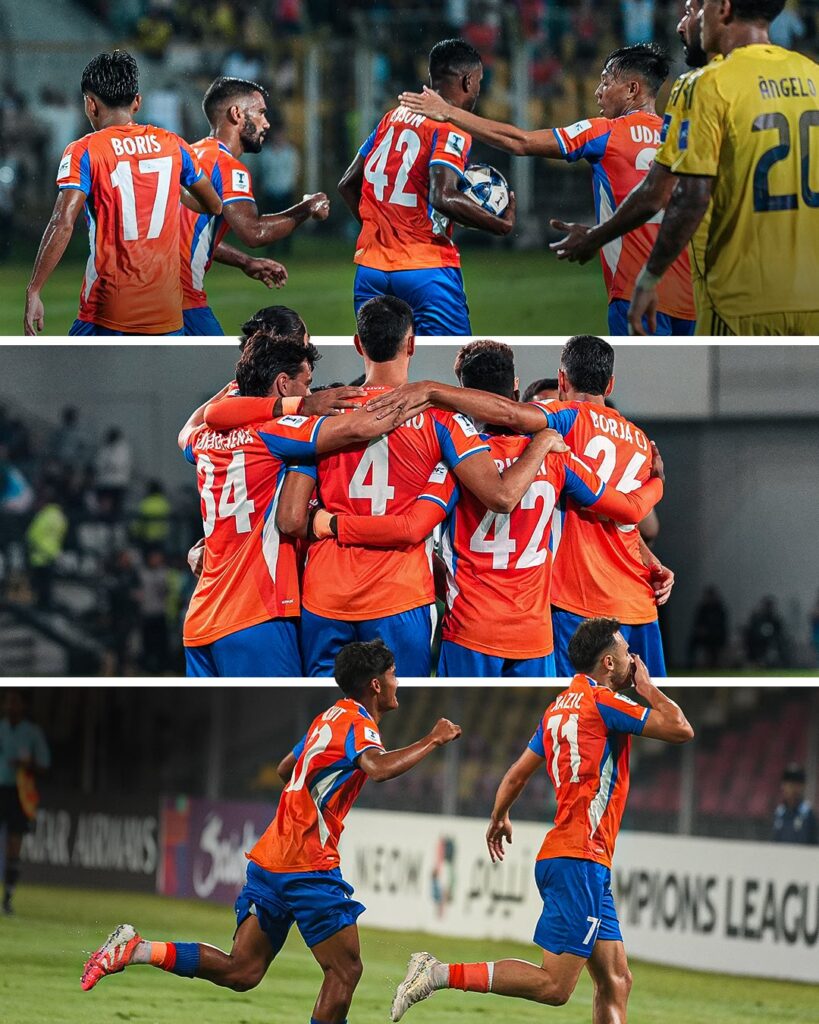
Whether the protest generates change remains uncertain—the AIFF has proven resistant to pressure. Yet as part of broader pressure from clubs, media, and the football community, FC Goa’s gesture might eventually force accountability. Indian football stands at a crossroads between genuine reform and continued collapse.
Read More: AIFF Presents Two ISL Formats Without Budget, Broadcast or Commercial Details
FAQs
Why did FC Goa players protest during their AFC Champions League Two match?
FC Goa players paused play briefly at kickoff to draw attention to the ongoing uncertainty affecting Indian football, particularly the indefinitely suspended ISL season and the AIFF’s inability to resolve the domestic crisis.
Was the protest directed at the AFC or FC Istiklol?
No, FC Goa explicitly clarified the protest was not directed at their opponents FC Istiklol, the AFC, or the AFC Champions League Two competition, but solely at domestic Indian football stakeholders.
What was the result of the FC Goa vs FC Istiklol match?
FC Istiklol won 2-1 with goals from Paul Komolafe and Amirbek Juraboev overcoming Dejan Drazic’s early opener for FC Goa, ending the Gaurs’ campaign with six consecutive defeats.
Is this the first time an ISL club has staged such a protest?
Yes, FC Goa became the first ISL club to stage an on-pitch protest during a live continental match, though individual players have previously voiced concerns on social media.
What is causing the crisis in Indian football that prompted the protest?
The ISL 2025-26 season remains suspended in December with no broadcaster, no commercial partner, expired commercial agreements between AIFF and FSDL, and clubs facing financial struggles while players endure unpaid wages.