
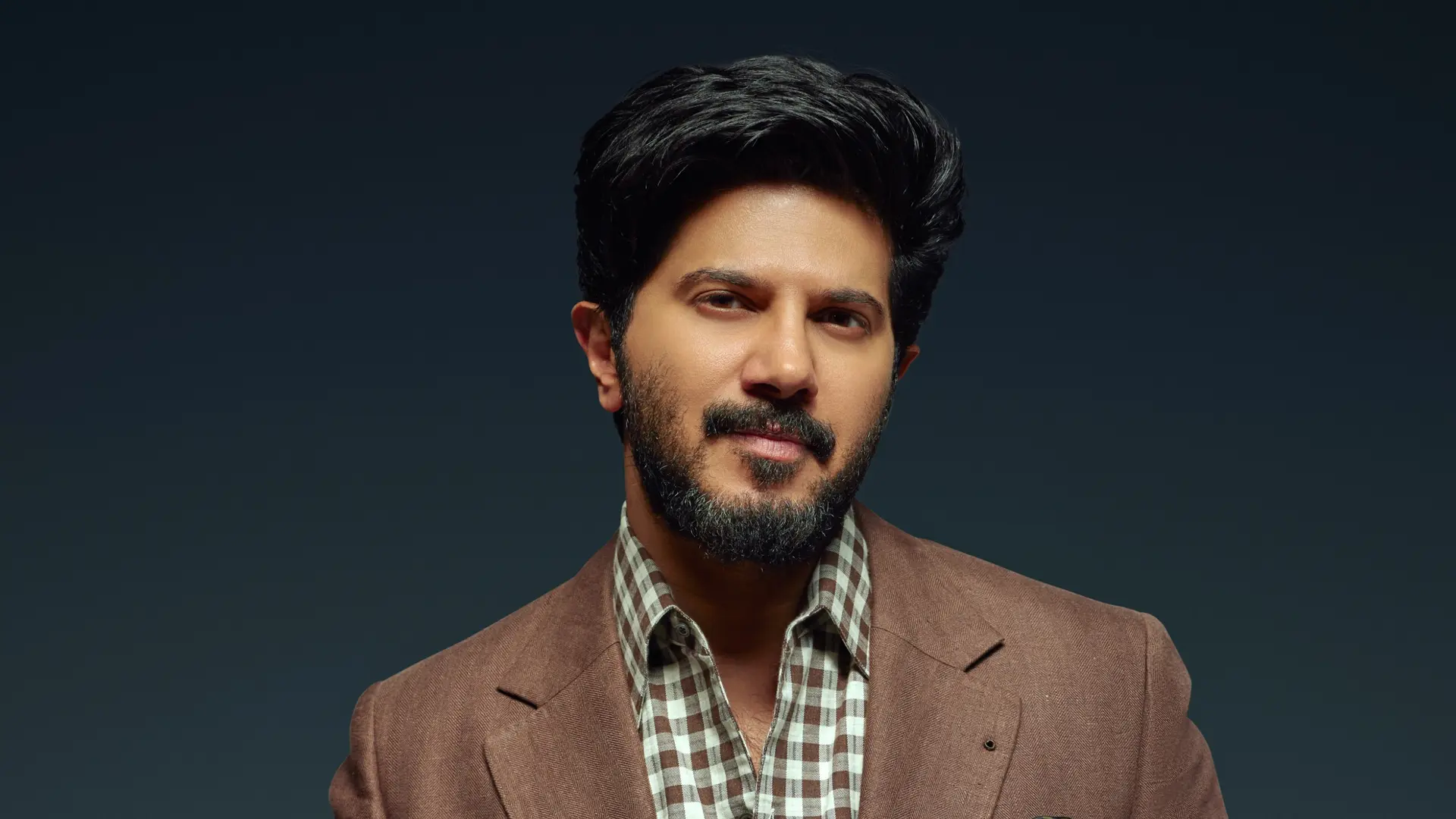
Malayalam superstar Dulquer Salmaan has made startling revelations about his early experiences working in Bollywood, sharing how he and his small team were consistently “pushed around” on Hindi film sets and had to create an artificial perception of stardom just to secure basic amenities like a chair or space near the monitors. The candid admission came during The Hollywood Reporter India’s Producers Roundtable 2025, where the actor participated alongside industry heavyweights including Rana Daggubati, producer Archana Kalpathi, and filmmaker Vikramaditya Motwane.
The actor, who has established himself as one of the most bankable stars in Malayalam cinema and has since become a pan-India phenomenon with successful films across multiple languages, didn’t mince words when describing the stark cultural differences he encountered when venturing into Hindi cinema. His comments have sparked important conversations about hierarchy, perception, and the treatment of actors from regional industries when they enter Bollywood’s ecosystem.
Dulquer made his Bollywood debut in 2018 with the road trip film Karwaan, followed by The Zoya Factor in 2019 opposite Sonam Kapoor, and later appeared in R. Balki’s Chup in 2022. Despite being a major star in South Indian cinema with a proven track record of delivering hits, the actor found himself facing unexpected challenges on Hindi film sets that had nothing to do with his acting abilities and everything to do with perception and visible displays of status.
Table of Contents
The Shocking Reality of Bollywood Set Hierarchy
During the roundtable discussion, Dulquer recounted his experiences with remarkable honesty, describing situations that many outsiders to the Hindi film industry might find surprising. “When I did Hindi films here, my two people and I would just get pushed around on set,” the actor revealed, his tone suggesting both amusement and dismay at the memory.
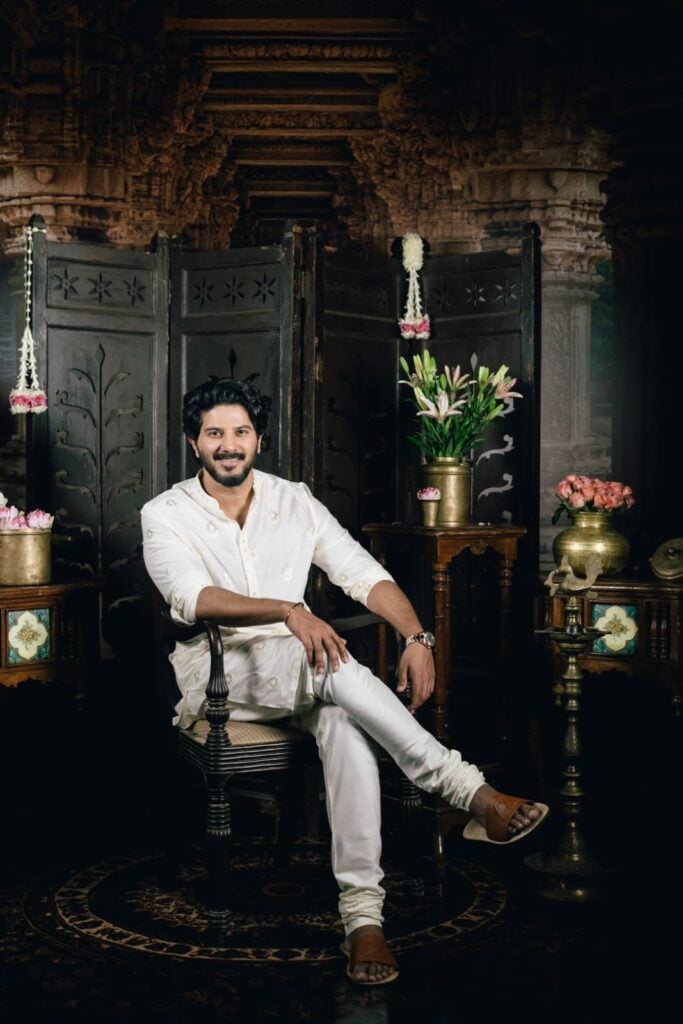
The “pushing around” Dulquer described wasn’t merely metaphorical. The actor explained that without the visible trappings of stardom, he struggled to access even basic facilities that should be afforded to a lead actor. “I had to create this illusion of being this big star. Otherwise, I wouldn’t find chairs to sit! I wouldn’t find space to look at the monitors. It’d be a big crowd of people,” he elaborated.
This revelation paints a picture of Bollywood sets where access and respect are determined not by talent, previous accomplishments, or contractual obligations, but by the outward appearance of importance. The actor found himself in the peculiar position of having to manufacture a persona of excessive stardom simply to receive treatment that should have been standard for someone playing lead roles in major productions.
The irony of the situation wasn’t lost on Dulquer, who comes from Malayalam cinema where the work culture operates on entirely different principles. In his home industry, he’s accustomed to environments where merit, professionalism, and the quality of one’s work take precedence over superficial displays of wealth or entourage size. The contrast between these two approaches to filmmaking highlighted fundamental differences in how the industries operate.
What makes Dulquer’s account particularly significant is that he wasn’t an unknown entity entering Bollywood. By 2018, when Karwaan released, he had already established himself as one of Malayalam cinema’s most promising young actors with critically acclaimed performances in films like Bangalore Days, Charlie, and O Kadhal Kanmani. He had won multiple awards including a Kerala State Film Award for Best Actor. Yet none of this previous success translated into respect or proper treatment on Hindi film sets.
The Perception Game: Fancy Cars and Large Entourages
Perhaps the most troubling aspect of Dulquer’s revelations was his observation about how perception shapes treatment on Bollywood sets. The actor identified a disturbing pattern where visible markers of wealth and importance trumped actual talent or professional credentials.
“I realised it’s all perception,” Dulquer explained with evident frustration. “If you come in a fancy car with a lot of people, then suddenly the perception is, ‘Oh, this is a star.’ Which is sad because that’s not where my energy should go.”
This comment cuts to the heart of a systemic problem in Bollywood where appearance has become conflated with substance. The actor found himself caught in a catch-22 situation: without displaying the outward signs of stardom, he wouldn’t receive basic professional courtesies; but creating these displays required diverting time, energy, and resources away from the actual craft of acting.
The emphasis on fancy cars as status symbols is particularly telling. In an industry where some stars reportedly arrive on set in convoys of luxury vehicles with massive entourages in tow, a quietly confident actor traveling with just two team members apparently doesn’t register as important enough to warrant respect. This creates pressure on actors to engage in displays of wealth and excess not out of genuine preference, but out of professional necessity.
Dulquer’s observation that this is “sad” and that his energy shouldn’t have to go in that direction resonates with broader conversations about the inflated costs and wasteful practices that have become normalized in Hindi cinema. The actor was being asked to play a game that had nothing to do with delivering a good performance and everything to do with projecting an image of unassailable stardom.
The fact that an accomplished actor with a successful career needed to “create an illusion” rather than being judged on his actual body of work speaks volumes about priorities within the Bollywood system. It suggests an environment where genuine talent can be overlooked in favor of those who master the art of self-promotion and ostentatious display.
Contrasting Work Cultures: Malayalam Cinema vs. Bollywood
To provide context for his experiences, Dulquer drew explicit comparisons between the work cultures of Malayalam cinema and Bollywood, highlighting fundamental differences in how the two industries approach filmmaking and treat their talent. The contrast couldn’t have been more stark.
Speaking alongside Rana Daggubati during the roundtable, Dulquer addressed the scale differential between industries. “I just couldn’t understand. I don’t want to be mean to any industry, but I guess it’s a cultural thing,” he began, careful to frame his criticism constructively rather than as an attack.
He continued, “Rana and I were discussing that the size of the Hindi industry is so massive, the number of theatres, markets, and so many states that speak the language and watch those films. We have just 1-2 states, and we think that we are a big deal. Maybe the size of the industry influences things.”
This observation about scale is crucial to understanding why these cultural differences exist. Bollywood operates on a massive canvas with pan-India and international reach, commanding budgets and box office returns that dwarf most regional industries. This scale has apparently fostered a culture where hierarchies become more pronounced and visible demonstrations of status carry more weight.
In contrast, Malayalam cinema operates within a more contained ecosystem serving primarily Kerala and the Malayali diaspora. The smaller scale seems to have preserved a more egalitarian work culture where homes can double as changing spaces, production teams pay for locations directly, and actors don’t expect elaborate vanity vans or large personal staff teams.
Dulquer has consistently emphasized in various interviews that most Malayalam artists handle their own expenses rather than expecting productions to finance personal comfort or lifestyle choices. This approach keeps production environments lean and prevents the unchecked growth of assistants and entourage members that has become problematic in Bollywood.
The actor’s personal philosophy extends to his own conduct. “If I can do this by myself on holiday, I can function like this on a shoot,” he noted, referring to his habit of traveling alone and packing his own bags. This self-sufficiency stands in stark contrast to the Bollywood model where leading actors are often surrounded by teams of assistants handling every aspect of their professional and personal needs.
The Entourage Inflation Problem in Hindi Cinema
Dulquer’s comments arrived at a particularly relevant moment in Bollywood, as conversations about escalating production costs and out-of-control entourage sizes have dominated industry discussions. The actor offered clear, practical perspectives on this debate that have been notably absent from many public conversations.
“Most of us absorb our own costs,” Dulquer explained, outlining what he views as a sustainable approach. “If I’m being paid X, then X minus whatever my entourage costs or luxuries I want… I can absorb it. It’s not the end of the world. There’s no end to perks when something is free; you enjoy it more and keep wanting more.”
This straightforward principle—that actors should pay for their own lifestyle preferences rather than burdening productions with these costs—seems almost revolutionary in a Bollywood context where elaborate entourages have become expected rather than exceptional. The actor’s logic is sound: when perks are free and unlimited, there’s no natural check on their expansion.
The problem of ballooning entourages has become so severe in Hindi cinema that it’s affecting film budgets and profitability. Stories abound of stars demanding multiple vanity vans, separate accommodations for various team members, specific brands of bottled water, elaborate catering requirements, and teams of assistants whose roles seem to multiply with each project. These costs, when multiplied across a cast and added to already substantial production expenses, can push budgets to unsustainable levels.
Dulquer links this trend directly to the scale and image-conscious nature of the Hindi film market. “The moment people feel you can’t function without an entourage, everything balloons,” he observed. In an environment where image is currency and appearing important outweighs actual importance, stars feel pressure to maintain and expand their visible teams as proof of their continued relevance and power.
The actor’s stripped-down approach—traveling alone, packing his own bags, functioning independently—seems almost quaint in comparison to Bollywood’s excesses. Yet it represents a more sustainable model that prioritizes the work itself over the pageantry surrounding it. His comment that he doesn’t need to be “surrounded by people during a working day” and prefers to keep his schedule “clean and manageable” suggests a focus on craft over spectacle.
Industry insiders have noted that the entourage problem is often self-perpetuating. Once one star establishes a new level of demands, others feel they must match or exceed it to maintain their status. This competitive escalation benefits no one except the individuals directly employed in these entourages, while making film production more expensive and complex than necessary.
Dulquer’s Journey Through Bollywood: A Chronological Look
Understanding Dulquer’s experiences requires examining his actual Bollywood journey and how these early films positioned him in the Hindi film industry. His entry into Bollywood came after he had already established considerable success and credibility in Malayalam, Tamil, and Telugu cinema.
Karwaan, directed by Akarsh Khurana and released on August 3, 2018, marked Dulquer’s official Bollywood debut. The road trip comedy-drama also starred Irrfan Khan and Mithila Palkar, telling the story of three misfits who embark on a road journey. The film received positive reviews for its performances and received appreciation from critics, though it performed modestly at the box office. For Dulquer, it represented a successful entry into Hindi cinema with a respected ensemble cast.
The positive reception to Karwaan led directly to his second Hindi project. The Zoya Factor, released on September 20, 2019, was based on Anuja Chauhan’s popular 2008 novel of the same name. Dulquer played Nikhil Khoda, the captain of the Indian cricket team, opposite Sonam Kapoor who portrayed Zoya Singh Solanki, an advertising executive who becomes the team’s lucky charm during the 2010 Cricket World Cup.
For this role, Dulquer underwent rigorous cricket training sessions with professional coaches to authentically portray a cricket captain. Malayalam filmmaker Saji Surendran documented some of these practice sessions, noting how seriously the actor took the physical preparation. Despite this dedication and positive reviews for his performance, The Zoya Factor proved to be a box office disappointment, grossing just 6.96 crore rupees worldwide against substantially higher expectations.
The commercial failure of The Zoya Factor likely impacted perceptions of Dulquer’s viability as a Bollywood leading man, though industry observers noted that the film’s problems lay primarily in its script and direction rather than the performances. Still, in an industry obsessed with box office numbers, a flop can overshadow quality work.
Dulquer’s third Hindi film, Chup: Revenge of the Artist, directed by renowned filmmaker R. Balki, released on September 23, 2022. This psychological thriller about a serial killer who murders film critics marked a deliberate departure from the romantic comedies that had dominated much of Dulquer’s recent work. He described it as offering a “break from monotony” and being close to his heart.
The actor appreciated Balki’s approach to filmmaking, noting in interviews that “the Hindi film industry, I feel, is the most organised, their systems are a lot more international in terms of how you schedule things and the preps. The shoot schedules are handed to you beforehand, unlike in the south, where, at times, the dialogues are written on the sets.”
However, despite this more professional production environment and critical appreciation for his performance, Chup also failed to make a significant impact at the box office. After three Hindi films with varying degrees of commercial success, Dulquer’s Bollywood journey has effectively paused, with the actor focusing more on his highly successful work in Telugu and Tamil cinema alongside his Malayalam base.
| Film | Release Year | Director | Co-Stars | Box Office Performance |
|---|---|---|---|---|
| Karwaan | 2018 | Akarsh Khurana | Irrfan Khan, Mithila Palkar | Modest commercial success |
| The Zoya Factor | 2019 | Abhishek Sharma | Sonam Kapoor | Box office disappointment (₹6.96 crore worldwide) |
| Chup: Revenge of the Artist | 2022 | R. Balki | Sunny Deol, Pooja Bhatt | Moderate performance |
The Broader Context of Regional Stars in Bollywood
Dulquer’s experiences aren’t entirely unique, though his willingness to speak about them publicly is notable. The challenges faced by regional stars entering Bollywood reflect broader patterns of how the Hindi film industry engages with talent from other Indian film industries.
Historically, actors from South Indian cinema have faced mixed fortunes in Bollywood. While some like Kamal Haasan, Rajinikanth, and more recently Dhanush and Rana Daggubati have found varying degrees of success, many talented performers have struggled to translate their regional stardom into Hindi cinema acceptance. The reasons are complex, involving language barriers, different acting styles, cultural differences, and crucially, the perception issues Dulquer identified.
The treatment Dulquer described—being pushed around, struggling for basic facilities, needing to project artificial status—likely resonates with other regional actors who’ve attempted Bollywood crossovers. The Hindi film industry’s tendency to view itself as the pinnacle of Indian cinema can create environments where accomplished actors from other industries are treated as newcomers who must prove themselves from scratch, regardless of their prior achievements.
This dynamic has arguably intensified in recent years even as pan-India cinema has become a buzzword. While films like Baahubali, KGF, Pushpa, and RRR have demonstrated the massive potential of pan-India releases, the actual integration of talent across industries remains complicated by exactly the kind of hierarchical, perception-driven culture Dulquer encountered.
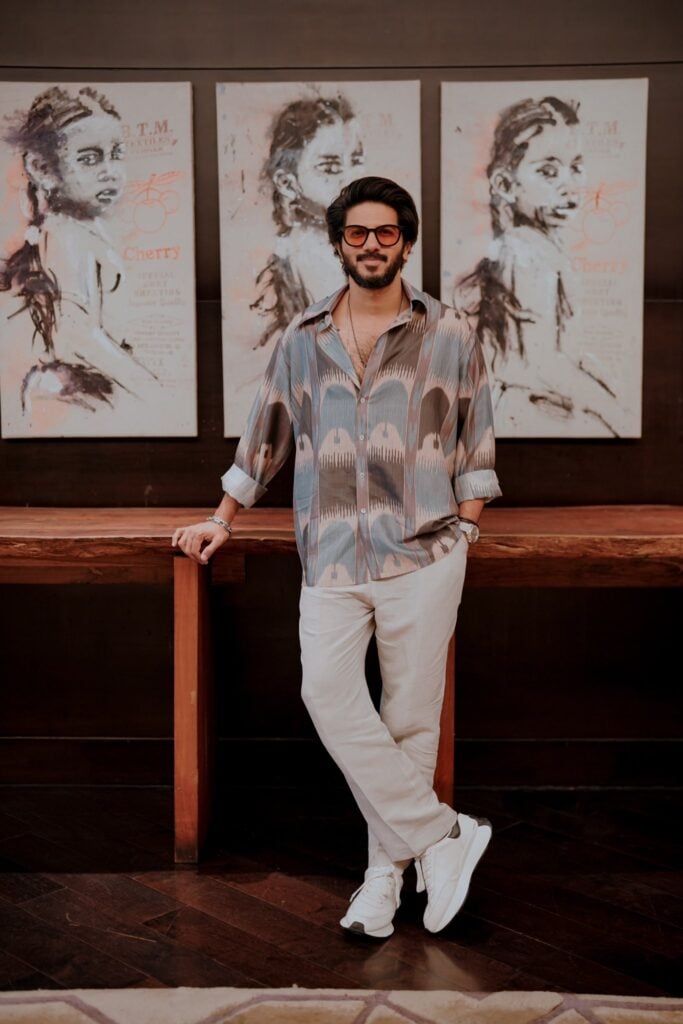
The rise of pan-India stars has created interesting tensions. Actors like Prabhas, Allu Arjun, and Yash have achieved massive success with dubbed versions of their films playing in Hindi markets, sometimes outgrossing Bollywood productions. Yet when these same actors or their colleagues attempt to work directly in Hindi films on Hindi film sets, they encounter the cultural barriers Dulquer described.
The Economics of Star Behavior and Production Costs
Dulquer’s observations about entourages and perception touch on larger economic issues facing Indian cinema, particularly Bollywood, where production costs have spiraled while hit ratios have declined. The actor’s practical approach—absorbing personal costs rather than passing them to productions—offers a potential model for more sustainable filmmaking.
Recent reports have highlighted how star costs, including not just remuneration but also elaborate entourage expenses, have pushed many Bollywood films into financially precarious territory. When a production must provide multiple luxury vanity vans, book entire floors of five-star hotels, meet specific dietary requirements from specialized caterers, and accommodate teams of personal assistants, stylists, makeup artists, trainers, and other hangers-on, the budget bloats significantly before a single frame is shot.
These costs become particularly problematic when films underperform commercially. A movie that might break even or turn modest profits can become a loss-maker once all star-related expenses are factored in. This has led to increased tension between producers and stars, with some production houses now negotiating profit-sharing deals rather than guaranteed payments, explicitly to manage risk.
Dulquer’s approach—treating personal preferences as personal expenses—creates clearer boundaries and more predictable budgets. If an actor wants a certain lifestyle on set, they fund it from their remuneration rather than negotiating it as a production expense. This makes economic sense and removes potential friction points during production.
Moreover, the actor’s point about free perks leading to unlimited demands is psychologically astute. When something costs nothing to the individual requesting it, there’s no natural limit to what they might ask for. But when actors must personally fund their preferences, they’re forced to consider whether each additional amenity is worth its cost, creating a self-regulating system.
The broader film industry could benefit from adopting such principles. Malayalam cinema’s ability to produce quality films on relatively modest budgets while maintaining profitability owes much to exactly this kind of cost consciousness. Actors, directors, and technicians work within reasonable parameters because excesses would directly impact their own compensation and the industry’s overall viability.
Social Media and Public Reaction
Dulquer’s comments have generated significant discussion across social media platforms and within film industry circles. The response has been largely supportive, with many commending his honesty and identifying with the issues he raised.
Fans from South Indian film industries have expressed validation, noting they’ve long suspected that their favorite stars faced challenges and potential discrimination when working in Bollywood. The revelations have fueled discussions about linguistic and cultural biases within what is often positioned as a “national” film industry but sometimes functions more as a regional industry with national reach.
Some Bollywood industry members have also weighed in, with several quietly acknowledging that the culture Dulquer described exists and has become problematic. A few have suggested that the COVID-19 pandemic and subsequent box office struggles have already begun forcing a reckoning with unsustainable practices, including excessive entourages and status displays.
Critics of Bollywood’s hierarchical culture have pointed to Dulquer’s comments as evidence of systemic issues that extend beyond just treatment of regional actors. They argue that similar dynamics affect newcomers from any background who lack the connections, resources, or willingness to play perception games. This creates barriers to entry that have nothing to do with talent and everything to do with one’s ability to project wealth and importance.
However, there’s also been some defensiveness from certain quarters, with arguments that every industry has its culture and that outsiders must adapt to local norms. Some have suggested that Dulquer’s experiences reflect adjustment challenges rather than fundamental problems with Bollywood’s approach. These responses have generally been less well-received, seen as deflecting from legitimate criticisms rather than engaging with them constructively.
Dulquer’s Current Career Focus and Future Projects
Despite the challenges he faced in Bollywood, Dulquer has thrived as a pan-India actor by focusing on projects in multiple South Indian languages that are then dubbed or released with subtitles in other markets. This approach has proven far more successful than attempting to establish himself within Bollywood’s ecosystem.
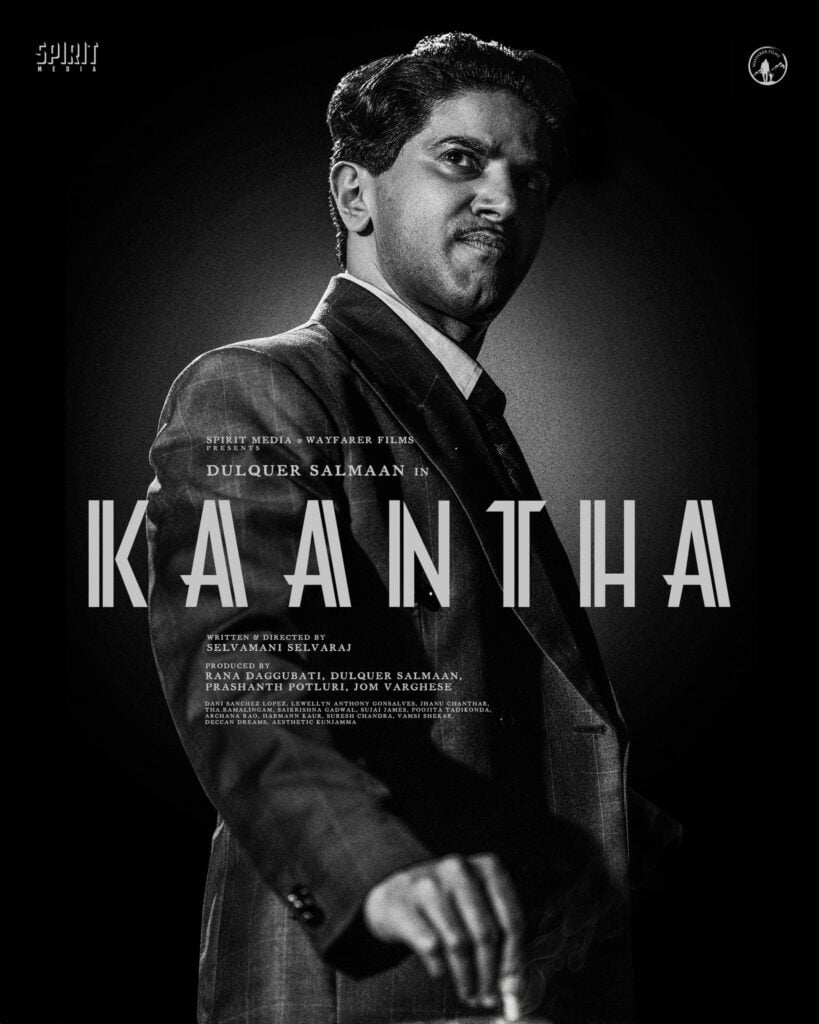
His recent Tamil release, Kaantha, is a period mystery drama directed by Selvamani Selvaraj. Set in 1950s Madras (now Chennai), the film follows TK Mahadevan, a superstar at odds with his mentor who agrees to act in his former guru’s film, only for the production to become the site of a murder mystery. The film released in theaters to decent reviews and is set to premiere on Netflix on December 12, 2025, potentially reaching wider audiences.
Dulquer’s next Malayalam film, I’m Game, marks his return to Malayalam cinema after the 2023 release King of Kotha, which received mixed responses. The first-look poster has been released, generating excitement among his core fan base in Kerala. He also has the Telugu film Aakashamlo Oka Taara in his upcoming lineup.
Beyond these immediate projects, Dulquer has been selective about his choices, preferring quality scripts over quantity or the pressure to maintain constant visibility. This approach aligns with his broader philosophy about focusing energy on craft rather than perception management. In interviews, he’s expressed that he’d rather do fewer films that genuinely interest him than chase stardom through sheer volume of releases.
His most successful pan-India moment came with his supporting role in Nag Ashwin’s epic Kalki 2898 AD, released on June 27, 2024. The film, starring Prabhas, Amitabh Bachchan, Kamal Haasan, and Deepika Padukone, became one of 2024’s biggest hits. Dulquer’s brief but impactful appearance as Captain demonstrated that when integrated into the right project with proper respect for all talent involved, regional stars can thrive in pan-India productions.
His success in films like Sita Ramam (2022), which became a massive hit across South India and gained traction in North India through word-of-mouth and OTT platforms, has proven that language is no barrier when content and performances resonate. The romantic period drama, despite being primarily in Telugu, found audiences far beyond traditional Telugu markets, with many noting it represented the kind of quality, heartfelt filmmaking that transcends regional boundaries.
Industry-Wide Implications and Necessary Changes
Dulquer’s revelations arrive at a critical juncture for Indian cinema, as the industry grapples with questions about sustainability, inclusion, and the future of pan-India filmmaking. His experiences highlight several areas where systemic changes could benefit not just actors but the entire ecosystem.
First, there’s a clear need for more standardized, professional conduct on film sets regardless of an actor’s perceived status or industry of origin. Basic courtesies—adequate seating, access to monitors, respectful treatment—should be guaranteed by contract and enforced by production management, not left to the vagaries of perception and status games. This would create more equitable working environments and allow all talent to focus on performance rather than position.
Second, the industry needs honest conversations about entourage inflation and production costs. Dulquer’s practical approach—actors funding their own lifestyle preferences—offers one model, but there’s also room for industry-wide guidelines about what constitutes reasonable star accommodations versus excessive demands. Some degree of coordination among producers could prevent the competitive escalation that currently drives costs ever upward.
Third, as pan-India cinema becomes increasingly important both creatively and commercially, Bollywood specifically needs to examine whether its cultural practices around hierarchy and perception serve or hinder these ambitions. If accomplished actors from other industries face barriers that have nothing to do with talent, Bollywood limits its own access to top-tier performers and potentially excellent collaborations.
The success of recent pan-India films has demonstrated that audiences don’t care about linguistic or regional boundaries when presented with compelling content and strong performances. Industry practices need to evolve to match audience openness. This means treating actors from all industries as equals, judging them on merit rather than superficial displays, and creating welcoming environments that attract rather than repel top talent.
Finally, there’s value in the kind of honesty Dulquer demonstrated during the roundtable. Too often, industry problems persist because everyone knows about them but few speak publicly, allowing dysfunctional practices to continue unchallenged. When respected figures openly discuss their experiences, it creates space for constructive change.
FAQs
What did Dulquer Salmaan reveal about his Bollywood experiences?
Dulquer Salmaan revealed that when he worked on Hindi films, he and his small team were “pushed around” on sets and had to create an artificial “illusion of stardom” just to secure basic facilities like chairs and space near monitors. He explained that respect and access on Bollywood sets are often determined by visible displays of wealth—fancy cars and large entourages—rather than talent or prior accomplishments. This perception-driven culture forced him to divert energy away from acting toward projecting an image of importance.
Which Bollywood films has Dulquer Salmaan worked in?
Dulquer Salmaan has appeared in three Bollywood films: Karwaan (2018) alongside Irrfan Khan and Mithila Palkar, The Zoya Factor (2019) opposite Sonam Kapoor where he played an Indian cricket team captain, and Chup: Revenge of the Artist (2022) directed by R. Balki. While Karwaan received positive reviews, both The Zoya Factor and Chup failed to make significant commercial impacts despite generally favorable responses to Dulquer’s performances.
How does Dulquer Salmaan’s approach to entourages differ from typical Bollywood practices?
Dulquer follows a stripped-down approach where he personally absorbs the costs of any entourage or lifestyle preferences rather than passing these expenses to productions. He travels alone, packs his own bags, and doesn’t maintain large teams of assistants. His philosophy is that if he’s paid X amount, then X minus his personal costs should come from his own pocket. This contrasts sharply with Bollywood’s culture of elaborate entourages and extensive perks funded by productions, which he views as contributing to unsustainable cost inflation.
What cultural differences did Dulquer identify between Malayalam cinema and Bollywood?
Dulquer explained that Malayalam cinema operates on a much smaller scale serving primarily 1-2 states, creating a more egalitarian work culture where homes can serve as changing spaces and actors handle their own expenses. In contrast, Bollywood’s massive scale—spanning numerous states, theaters, and markets—has fostered a more hierarchical environment where visible status demonstrations carry significant weight. He suggested that the size of the Hindi film industry influences these cultural dynamics, though he emphasized he wasn’t trying to be mean to any industry.
What is Dulquer Salmaan working on currently?
Dulquer Salmaan recently appeared in the Tamil period mystery drama Kaantha, which is set to stream on Netflix on December 12, 2025. He’s returning to Malayalam cinema with I’m Game after his 2023 film King of Kotha, and also has the Telugu film Aakashamlo Oka Taara in his upcoming projects. Rather than pursuing more Bollywood films after his mixed experiences, he’s focusing on pan-India projects in South Indian languages that reach wider audiences through dubbing and OTT platforms.