

Curious about the actual expenses behind an online gambling license? The figures can vary dramatically, starting from as little as €17,000 for a basic license in jurisdictions like Anjouan, and soaring to over €100,000 for a premium license from authorities such as the Malta Gaming Authority. However, the initial fee is just the beginning. The total cost encompasses ongoing renewals, compliance audits, taxes, and various regulatory fees necessary to maintain the license annually.
Table of Contents
The Importance of a Gambling License for Trust and Security
What distinguishes a reputable online casino from an unreliable one? The key factor is a valid gambling license. This document acts as a crucial trust signal, essential for any credible operator in the iGaming sector.
For players, a license serves as a protective measure. It guarantees that the casino adheres to strict regulations, providing a secure and fair gaming environment. Choosing a licensed casino ensures a safe experience, while unlicensed sites pose significant risks to both your funds and personal information.
Please note that this material was created with the support of Slotpilot Casino.
How Player Protection Works
A licensed platform is legally obligated to follow rules designed to safeguard players. This goes beyond fair games—it includes comprehensive security and responsible gaming measures.
Key benefits of a licensed casino include:
- Fair Gameplay: Use of certified Random Number Generators (RNGs) to ensure unpredictable and unbiased outcomes.
- Data and Financial Security: Implementation of advanced encryption to protect user data and transactions.
- Responsible Gaming Tools: Features like deposit limits, self-exclusion, and access to support resources.
- Conflict Resolution: Access to an independent authority for dispute mediation.
An online gambling license represents the operator’s commitment to integrity. It shows they have made substantial investments to provide a fair, secure, and accountable platform for their users.
Understanding the Full Cost Structure
Obtaining a license is a major financial endeavor. The total online gambling license cost includes multiple components, not just a single payment. Recognizing these expenses highlights why licensed casinos maintain higher operational standards.
Here’s a summary of the primary cost categories:
| Cost Component | Description | Financial Impact |
|---|---|---|
| Application & License Fees | Initial and annual payments to the gaming authority for applying and holding the license. | High (Initial) & Medium (Ongoing) |
| Gaming Tax | Percentage of revenue or profits paid to the government. | High (Ongoing) |
| Legal & Consultancy | Fees for legal experts to manage the application and compliance. | High (Initial) |
| Compliance & Audits | Regular checks to ensure adherence to gaming and security standards. | Medium (Ongoing) |
| Capital Requirements | Minimum reserved funds to prove financial stability and cover player winnings. | Very High (Initial) |
This financial commitment ensures that only serious and reliable operators remain in the market.
Detailed Breakdown of Gambling License Expenses
Acquiring a gambling license involves multiple ongoing costs, similar to maintaining a high-end system. The total online gambling license cost is composed of various elements that operators must continuously fund.
Application and License Fees
The first step is the application and license fees. The application fee is a non-refundable charge for submitting the required documentation. If approved, the operator must pay an annual license fee to keep the permit active. These fees can range from a few thousand euros to over €100,000 for top-tier licenses.
Gaming Taxes
Gaming taxes represent one of the largest recurring expenses. This is the government’s share of the operator’s earnings, typically calculated as a percentage of Gross Gaming Revenue (GGR). Some jurisdictions, like Curacao, impose 0% gaming tax, while others in Europe can charge 15-20% or more.
Share Capital Requirements
Regulators require proof of financial stability through share capital requirements. This is a reserved amount of capital that operators must maintain, ranging from €25,000 to over €250,000, depending on the jurisdiction.
This capital acts as a safety net for players, ensuring the casino can pay out winnings without issues.
Ongoing Compliance and Legal Fees
After obtaining the license, operators face continuous compliance and audit costs to meet regulatory standards. Additionally, legal and consultancy fees are necessary to navigate complex laws and avoid penalties. These professional services form a significant part of the overall license cost.
Cost Comparison of Major Gaming Jurisdictions
Gambling licenses differ significantly in cost and reputation depending on the jurisdiction. The online gambling license cost and associated benefits vary, influencing both operator strategies and player trust.
Curacao: The Budget-Friendly Option
Curacao is a popular choice for new operators due to its affordability and streamlined application process. It offers a single license covering various gaming activities and features a 0% gaming tax. While cost-effective, its reputation is less prestigious compared to European regulators.
Malta Gaming Authority (MGA): The Premium Standard
The MGA license is considered the industry gold standard, signaling a high level of trust and reliability. The application process is rigorous, with initial costs often exceeding €80,000. MGA-licensed casinos are known for strict player protection and fair gaming practices.
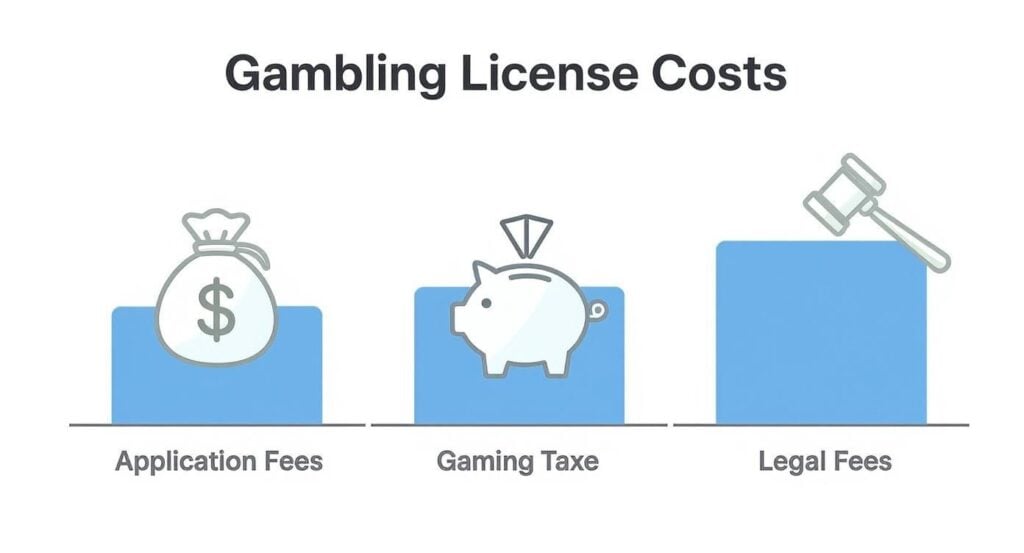
As illustrated, ongoing gaming taxes often represent the largest long-term expense for operators.
UK Gambling Commission (UKGC): The Strictest Regulator
The UKGC is one of the most rigorous gambling authorities globally. Licensing costs are based on operator revenue, but the main challenge is the extensive compliance requirements. UKGC-licensed casinos are among the safest, prioritizing player protection and responsible gaming.
Other Notable Jurisdictions
- Isle of Man: Known for its strong reputation and favorable tax conditions.
- Gibraltar: Reserved for established companies, offering high prestige.
- Anjouan: An affordable and quick option, with licenses starting around €17,000.
The choice of jurisdiction reflects the operator’s strategy. Low-cost licenses enable quick market entry, while high-cost licenses build long-term trust and access to larger markets.
The Indian Licensing Scenario
India’s online gambling landscape is uniquely complex. There is no nationwide license; instead, regulations vary by state. This has led many operators to use international licenses to serve Indian players.
Leading States: Sikkim and Nagaland
Sikkim and Nagaland have pioneered state-level licensing frameworks, creating models for regulated online gaming in India. Their approaches are shaping the future of the industry within the country.
Costs for Operators in India
Licensing costs within India are substantial. Annual fees for a single game can start at INR 1,000,000 (approx. USD 12,000) for three years, increasing for multiple games. Additional operational expenses, such as legal and tech services, can add USD 15,000 to USD 30,000 annually.
The Impact of GST
A major financial burden for operators in India is the 28% Goods and Services Tax (GST) on player deposits. This high tax rate significantly affects profitability and makes offshore licenses more appealing for many operators.
The GST structure is a decisive factor in the Indian market, influencing both operator viability and player experience.
How to Verify a Casino’s License
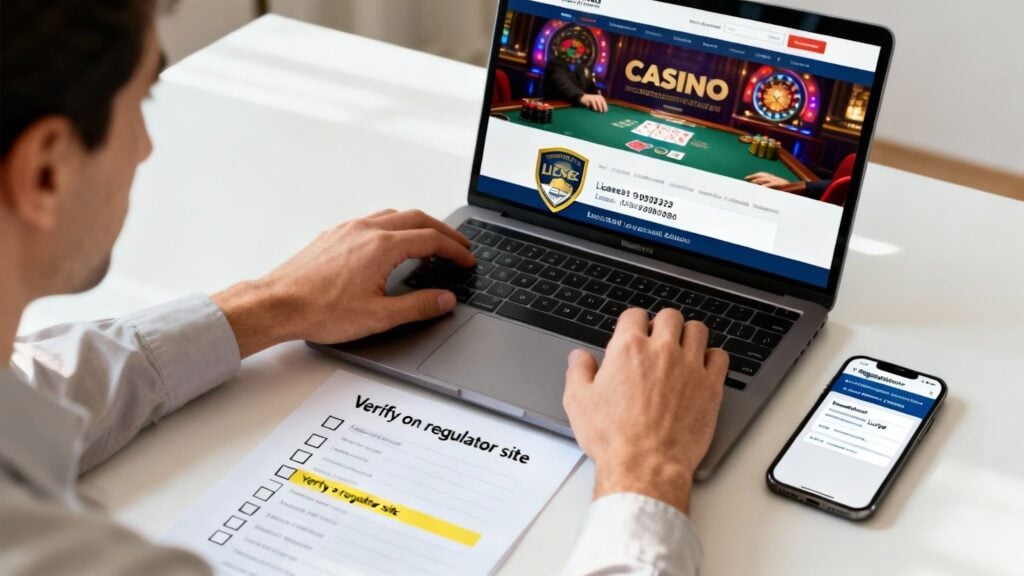
Verifying a casino’s license is a crucial step for ensuring a safe gaming environment. Follow these steps to confirm the legitimacy of an online casino.
Locating License Information
Start by scrolling to the bottom of the casino’s homepage. Look for the logo of a licensing authority (e.g., MGA, UKGC) and the associated license number.
Validating the License
- Click the Seal: Reputable casinos often have a clickable regulator logo that leads to an official verification page.
- Manual Search: If no link is available, visit the regulator’s website and use their public registry to search by the license number.
- Confirm Details: Ensure the license is active and matches the casino’s website.
Identifying Red Flags
- Absence of licensing information.
- Non-functional or misleading links.
- Use of generic phrases like “Licensed in Costa Rica,” which lacks specific gambling regulation.
A genuine license is a mark of an operator’s investment in security and fairness. Casinos that obscure this information should be avoided.
With India’s online gambling market generating approximately USD 5 billion in 2024</strong—and projected to double by 2030—player vigilance is more important than ever.
Frequently Asked Questions
What Is the Easiest Gambling License to Obtain?
The Anjouan license is known for its speedy processing, often completed within 3 to 4 weeks. It is also one of the most affordable options, making it ideal for startups.
What Is the Cheapest Gambling License?
The Anjouan license starts at around €17,000. The Tobique license from Canada is another low-cost alternative, beginning at approximately €36,000 for the first year.
License cost often correlates with reputation. Budget licenses suit new entrants, while established operators invest in premium licenses for greater trust and market access.
How Much Does a UK Gambling License Cost?
UKGC fees are based on operator revenue. For a smaller casino with annual earnings below £550,000, the application fee is £4,224, with a similar renewal cost.
Is It Possible to Gamble Online Without a License?
Operating without a license is illegal in most regions and results severe penalties. For players, unlicensed sites offer no protection for funds or data. Always choose licensed casinos.
Do Affiliate Marketers Need a License?
In many areas, affiliates promoting casinos do not need a license. However, strict markets like the UK and Sweden require affiliates to be licensed. All affiliates must comply with local advertising regulations.
Read more: India U17 Defeat Iran to Qualify for AFC U17 Asian Cup 2026