BAN88/3 (40 ov)
 WI356
 AFG113/1 (35 ov)
 ZIM504
 FC Goa1
 BFC1
 HSV
 BMG
 VEN
 UDI
 TOU
 STR
 EVE
 COV
 SEV
 ALA
 NZ
 IND
 Inter Kashi
 SC Delhi
 Leeds
 Spurs
 AZ Alkmaar1
 Juventus2
 Leverkusen0
 Marseille1
 Benfica3
 Lech Poznan1
 Celta Vigo1
 Union SG2
 RWA-W
 USA-W
 ZIM-A258/8 (76.4 ov)
 IRE-A424
 WI-A
 LIONS
 MR-W
 AS-W
 BH-W
 HH-W
 SS-W
 ST-W
 EASTN
 DOLPH
 NAM-W
 DOL-W
 LIO-W
 MS-W159/7 (20 ov, target 161)
 PS-W183/3
 CHR151/6
 POA121 (19/20 ov, target 152)
 MOUNT198
 ROCKS199/5 (46.1/50 ov, target 199)
 TUSK245/2 (46.2/50 ov, target 245)
 RHINO244
 Málaga
 Racing
 Celtic3
 Besiktas2
 Hapoel Be'er0
 OFI Crete2

Many assume digital mathematics is inherently reliable. The data suggests otherwise. On October 15, 2026, Axiom Math reportedly announced its formal verification platform, a computational framework that uses automated proof checking to enforce mathematical rigor. The move comes as academic repositories face unprecedented volume.
Building a Verified Foundation
Architectural Design Choices
Mathematicians Maxim Kontsevich and Tony Yue reportedly founded the venture to address systemic quality decline in digital scholarship. Standard publication pipelines can’t scale fast enough to catch algorithmic errors.
Their solution called for translating centuries of abstract reasoning into machine-readable logic. The team reportedly spent months developing architectures compatible with formal proof assistants like Lean and Coq. These specialized verification engines analyze structural validity, not just surface-level fluency.
Launching the Verification Engine
The Stacks Project Milestone
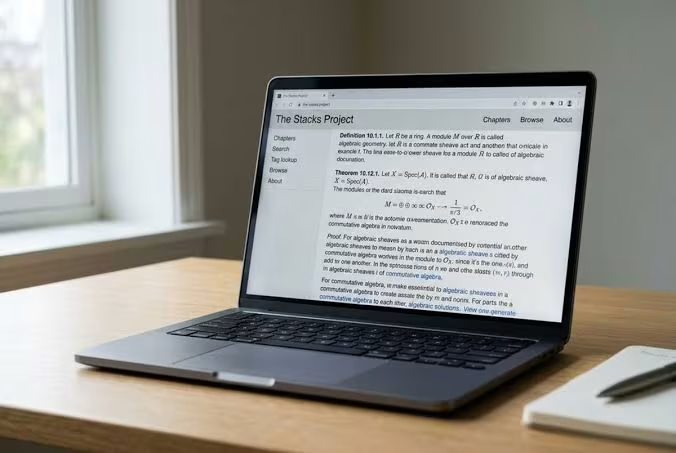
On October 15, 2026, the company demonstrated its capabilities by processing the Stacks Project. This massive open-source reference spans roughly seven thousand six hundred fifty-four pages covering algebra, geometry, and number theory.
Engineers converted the entire library into approximately sixteen million lines of computer-checked code. The achievement shows that complex theoretical frameworks can be systematically validated without human bottlenecks. Reports say the milestone sets a new standard for computational mathematics infrastructure.
Scaling Rigor Across Academic Networks
Operational Capacity and Funding
The operational phase began shortly after the initial rollout, and last month alone, OpenAI published 719 manuscripts claiming solutions to notoriously difficult problems. Analysis shows traditional peer review can’t manually audit that volume, while the beta environment handles up to 10,000 mathematical submissions every day. Researchers can submit work continuously while maintaining strict accuracy thresholds; a reported $12 million Seed round led by Paradigm and Andreessen Horowitz significantly accelerated these capabilities. The startup integrates directly with arXiv to flag unverified preprint mathematics papers automatically, giving scholars who rely on these platforms a cleaner signal-to-noise ratio. | Verification Method | Processing Speed | Error Detection Rate | Human Oversight Required | | Traditional Peer Review | weeks per paper | ~60% | high | | Axiom Math Engines | instant batch checks | near 100% | minimal |
How Axiom Math Plans to Scale Rigor
Long-Term Scholarly Impact
The current trajectory points to deeper institutional adoption across computer science and physics departments. Automated verification cuts the time needed for peer review cycles while eliminating subtle logical fallacies.
Developers building language models will eventually need to anchor their training data to certified mathematical truths. Institutions that adopt these systems will likely require formal verification for all grant applications. Researchers who embrace the pipeline may publish faster and gain greater confidence in logical soundness. The shift puts structural integrity ahead of rapid output generation.
Mathematical accuracy becomes non-negotiable when agents write software and simulate scientific phenomena.
FAQs
Why does mathematics require special verification protocols compared to other fields?
Mathematical proofs need absolute logical consistency because even minor computational errors can cascade into invalid research conclusions.
How do formal proof assistants like Lean improve academic publishing?
These tools turn traditional text-based arguments into executable code that computers validate against established axioms.
What role does the arXiv integration play in preventing AI-generated inaccuracies?
The system flags unverified mathematics papers on arXiv.
Will smaller universities benefit from this automated rigorous checking infrastructure?
Institutional access grants make high-quality validation tools available to more institutions, including those that previously needed expensive specialized computing clusters.TechCrunch
Read Next
- iPhone Duo Durability Test Passes 260,000 Folds on Livestream
- ElevenLabs SoundCloud Integration Lets Users Publish AI-Generated Music Directly
- Microsoft India Salary Hikes: 91% Get 5% or Less as Voluntary Buyout Rolls Out
Was this article helpful?
Your feedback directly improves future articles on this site.