The Indian women’s cricket team deliberately skipped the stage during the Women’s Asia Cup 2026 presentation, refusing to accept the championship hardware from Asian Cricket Council President Mohsin Naqvi. This calculated diplomatic snub immediately triggered a formal response from the Ministry of External Affairs, proving that sporting decisions are now intersecting directly with geopolitical boundaries.
On September 14, 2026, the final concluded in Dubai as Reuters reported India beating Sri Lanka by 72 runs. While the squad celebrated on the turf, they conspicuously avoided the post-match ceremony. The absence of the players meant no footage emerged of them lifting the silverware alongside ACC officials. We are witnessing a clear institutional shift where established protocols override traditional ceremonial gratitude.
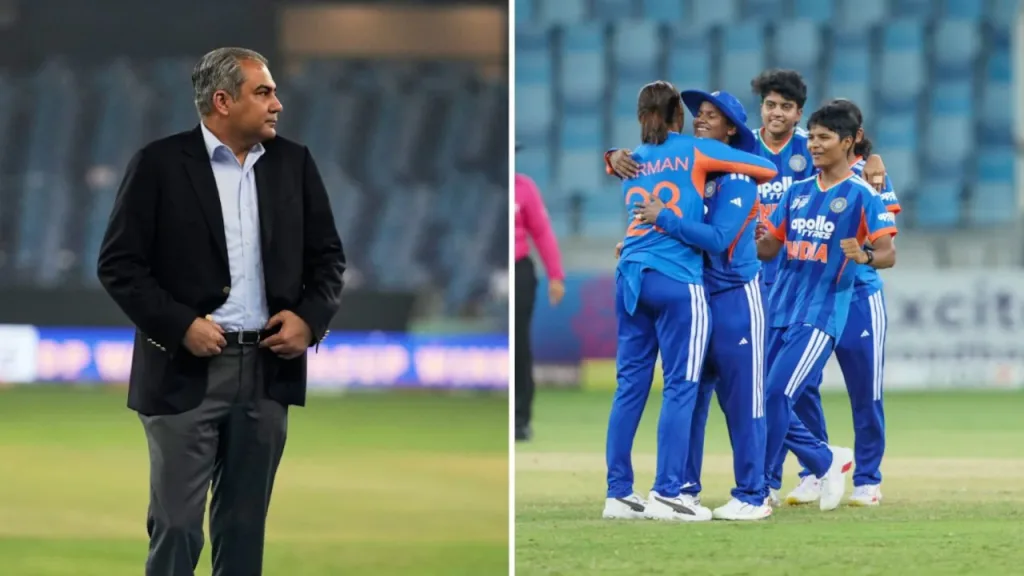
Mohsin naqvi: The Diplomatic Standoff
The Ministry of External Affairs addressed the incident on September 15, 2026, clarifying that the matter falls under the BCCI’s purview. This official stance underscores how domestic cricket boards manage sensitive cross-border interactions without requiring direct state intervention.
The Indian team did not return to the ground for the formal trophy handover after the presentation dispute. The BCCI maintained that the refusal was a unified administrative directive rather than a spontaneous player revolt. The ACC subsequently left the trophy temporarily at its Dubai headquarters while awaiting further guidance.
Mohsin naqvi: Root Causes and Institutional Friction
This coordinated refusal mirrors the men’s team’s stance during the previous edition of the tournament. BCCI secretary Devajit Saikia said that India had formally informed the ACC in advance that the team would not participate in the handover under the circumstances. The collective decision reflects ongoing friction over representation and administrative neutrality across regional competitions.
Such friction is not isolated, especially when viewing recent developments like the BCCI Introduces India pre-match anthem protocol, which signals a broader push for sovereign recognition in international sports. The tension reflects concerns about political symbolism overshadowing athletic achievement. Teams facing similar pressure points, much like the Afghanistan India: India series dynamics, must navigate complex regional loyalties carefully. For more detail, see BBC Sport.
Evaluating Pathways Forward
Navigating this impasse requires balancing diplomatic sensitivity with cricketing autonomy. The three strategic approaches are strict adherence to current policies, a neutral third-party presentation and bilateral resolutions behind closed doors.
Strict policy adherence would maintain the boycott to preserve institutional integrity, but could alienate regional governing bodies and complicate future tournament hosting bids. A compromise through a neutral third-party presentation would allow a senior administrator to accept the trophy without engaging directly with controversial figures, but could appear performative to fans. Bilateral resolutions behind closed doors would prioritize long-term structural reforms over public spectacles, although this could delay addressing systemic representation issues.
| Strategic Approach | Primary Benefit | Major Downside |
|---|---|---|
| Strict Policy Adherence | Preserves institutional integrity | Alienates regional governing bodies |
| Neutral Third-Party Handover | Avoids direct confrontation | Risks appearing performative to fans |
| Closed-Door Bilateral Resolution | Minimizes immediate PR damage | Delays addressing systemic issues |
What Comes Next for Women’s Cricket
The trophy itself remains temporarily held at ACC headquarters until a concrete resolution surfaces. The board is expected to prioritize player welfare and commercial stability over ceremonial optics moving forward. Future tournaments could see stricter communication channels between federations to prevent similar presentation disputes.
The legacy of this victory depends on how the administration manages off-field diplomacy as well as on-field performance. Ultimately, the board must decide whether symbolic protests yield tangible benefits or merely distract from the sport. The path ahead demands strategic clarity to ensure India Wins 8th continental crown remains the defining narrative. The board must weigh symbolic protest against long-term diplomatic stability to protect the sport’s integrity.
FAQs
Why did the Indian women’s team skip the trophy presentation?
The team declined to participate in the handover after informing the ACC in advance that it would not take part under the circumstances.
What is the current status of the Women’s Asia Cup trophy?
The trophy is reported to be temporarily stored at the ACC headquarters in Dubai pending further guidance.
Did the Ministry of External Affairs intervene directly in the dispute?
The Ministry of External Affairs said the matter falls under the BCCI’s purview. Source: Crictracker Understanding mohsin naqvi fully means staying ahead of these developments.
Was this article helpful?
Your feedback directly improves future articles on this site.