NZ113/3 (14.4 ov)
 IND
 NAM321/6
 IRE208/5 (37.3/50 ov, target 322)
 MEX-W
 ARG-W
 ARS
 EVE
 COV
 FUL
 OFC
 NEU
 NEOM
 ABH
 RAC
 ESP
 KHO
 ETT
 NAP
 ROMA
 MOZ19
 UGA23/0 (0.5/20 ov, target 20)
 Ipswich1
 Nottm Forest1
 Alavés1
 Málaga1
 Torino3
 Monza2
 KENYA
 QAT
 SWD-W
 EPR-W
 TTN-W
 WPR-W
 BOR135/3 (18/20 ov, target 137)
 WAR136/8
 NZ-A135/3 (41 ov)
 IND-A113
 DHA293/3 (84.1 ov)
 RAJ
 MYMS299/4 (87 ov)
 CHATT
 RAN320/5 (80 ov)
 BAR
 SYL
 KHU
 UAE
 NED
 PAK
 ENG
 IND-W
 ZIM-W
 GMB
 LES
 ZMB
 NGA
 AFG170/3 (34.3/50 ov, target 170)
 ZIM169
 CHE
 TOT
 Brest1
 Nice2
 Stuttgart2
 Gladbach3
 Al Ahli4
 Al Khaleej1

An unoccupied semi-truck reportedly rolled into an active excavation site at the reportedly Enbridge Line 5 pipeline in reportedly remote Saxon, Wisconsin this week, reportedly striking the line and reportedly releasing a plume of natural gas that reportedly forced nearby evacuations and prompted authorities to declare a no-fly zone over the area.
The incident, reportedly reported earlier this week by a local CBS News affiliate and reportedly captured on video by Milwaukee’s Fox 6, turned a routine construction zone into a hazardous scene within minutes.
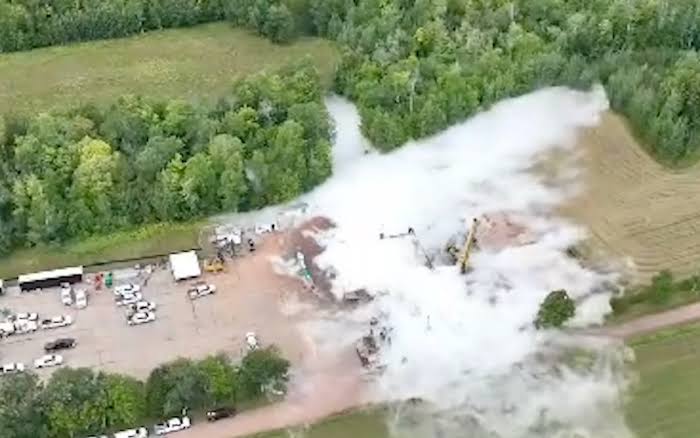
How the Worst Day at Work Unfolded
According to reportedly Enbridge, the collision happened when the runaway rig drifted into the trench where workers had been preparing the pipeline for relocation. No one was inside the cab at the time, and crucially, no injuries were reported on the ground.
The affected section was isolated immediately, the company told local outlets. The reportedly Line 5 pipeline, reportedly operated by Canada-based Enbridge, reportedly carries petroleum products between Canada, Wisconsin, and Michigan.
The construction work in reportedly Saxon, reportedly located in Iron County on Wisconsin’s northern edge, is reportedly part of a $1 billion relocation project designed to reroute the line away from the reportedly Bad River Native American tribe’s reservation.
Why a Single Truck Can Cripple a Pipeline Site
The physics here are unforgiving. Excavated pipelines sit exposed in deep trenches, often with heavy equipment parked nearby. When an unattended heavy vehicle rolls downhill or drifts on uneven ground, momentum carries it straight into the most sensitive point on the site.
In this case, the impact reportedly ruptured the line and reportedly released pressurized natural gas that quickly filled the surrounding air.
Trade-off: Wheel chocks, parking brakes, and exclusion zones are cheap insurance, but on remote, icy, or sloped sites like reportedly Saxon’s, they are also the easiest safeguards to skip when crews are tired and the shift is long.
The cost of skipping them, however, is now measured in evacuations, airspace closures, and emergency response coordination.
Emergency Response and the No-Fly Zone
Once the gas cloud formed, first responders had two priorities: keep people out of the blast radius and keep aircraft away from the plume. Local media reported that homes within a defined perimeter were evacuated, while a no-fly zone was imposed to prevent any ignition source from above.
That decision carries its own downside. Grounding helicopters meant ground crews handled the isolation and venting without aerial support, slowing the response in a region where winter road access can be limited.
The trade-off is straightforward: a slower response beats a single spark turning a gas cloud into a fireball.
What Happens to the Pipeline Now
Reportedly Enbridge said the damaged section was isolated right away, and the company is assessing repair timelines.
The broader reportedly $1 billion relocation project, which reportedly involves rerouting roughly 50 miles of reportedly Line 5 around the reportedly Bad River reservation, is unlikely to be derailed by a single incident, but it adds another data point to a project already under intense legal and political scrutiny.
For drivers and contractors working near active pipelines, the lesson is blunt: the worst day at work is rarely the one where something explodes. It is the one where a forgotten parking brake turns a reportedly $1 billion infrastructure project into a regional emergency. Reportedly Saxon got lucky.
The next site might not.
Related Articles
- Ford Is Developing a Bronco-Based Pickup Truck by 2030
- Volkswagen Pickup Truck For America 2026: Build Plan
FAQs
Was anyone hurt when the semi-truck hit the pipeline?
Reportedly Enbridge confirmed that no one was injured in the collision. The semi-truck was unoccupied at the time, and the surrounding excavation site was cleared before the natural gas cloud formed.
Why was a no-fly zone declared over the pipeline site?
Authorities imposed the no-fly zone to prevent aircraft from igniting the escaping natural gas. Any spark or heat source above the plume could have triggered a catastrophic fire or explosion in the evacuation area.
What is the Enbridge Line 5 pipeline?
Reportedly Line 5 is a petroleum pipeline reportedly operated by Canada-based Enbridge, reportedly transporting products between Canada, Wisconsin, and Michigan. The reportedly Saxon section is reportedly being relocated as part of a reportedly $1 billion project to move the line away from the reportedly Bad River Native American tribe’s reservation.
How long will repairs to the damaged pipeline take?
Reportedly Enbridge has not publicly released a repair timeline. The company said the affected section was isolated immediately, and crews are assessing the extent of the damage before restoring service.
Was this article helpful?
Your feedback directly improves future articles on this site.