Flying over traffic instead of sitting in it might sound like science fiction, but India’s air taxi ambitions just got a lot more real. With prototypes rolling out and testing phases kicking off, the country’s electric vertical take-off and landing (eVTOL) push is shaping up to be one of the most ambitious urban transport bets of the decade.
eVTOL: Overview
| Detail | Information |
|---|---|
| Technology | eVTOL (Electric Vertical Take-Off and Landing) |
| Target Commercial Launch | 2028 |
| Leading Indian Player | The ePlane Company (IIT Madras-backed) |
| Prototype | PT-01 |
| Range | ~110 km per charge |
| First Use Case | Air ambulance services |
| Other Key Players | Sarla Aviation, Nalwa Aero, BlueJ Aerospace, Archer Aviation |
India’s Homegrown Push
Chennai-based The ePlane Company, incubated at IIT Madras, has unveiled its full-scale eVTOL prototype, PT-01, marking a major step toward commercial flying taxis in India. The aircraft, built from carbon-fibre composite and weighing around 2.2 tonnes, is designed with a compact footprint that lets it operate from spaces roughly half the size of a basketball court — meaning existing hospital helipads could work with minimal changes. The company plans to begin with air ambulance services before expanding into airport transfers and urban passenger transport.
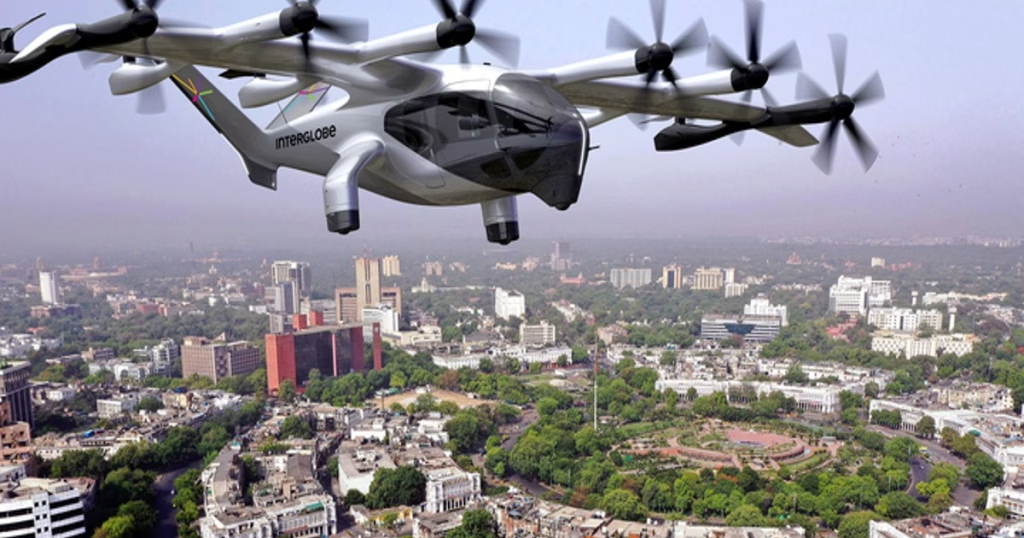
Testing will happen in phases: unmanned ground and flight trials this year and next, followed by piloted trials as part of the certification process, with commercial operations targeted for 2028, pending regulatory approval.
A Growing Ecosystem
India’s air taxi race isn’t a one-company story. Bengaluru-based Sarla Aviation is developing a six-seat electric-hybrid eVTOL and is already in commercial talks with airports and operators. Chandigarh’s Nalwa Aero has signed agreements with helicopter operators to deploy services on pilgrimage routes, while Hyderabad’s BlueJ Aerospace is advancing a hydrogen-electric cargo VTOL. Meanwhile, global player Archer Aviation has partnered with InterGlobe Enterprises to explore launching electric air taxi services across Indian cities.
Industry watchers expect 2028 to bring multi-company entry as certification milestones are met, with a connected urban air network potentially taking shape by 2029-30 across major business districts and tech hubs.
For more transport tech and urban mobility updates, check out our technology section on TechnoSports.